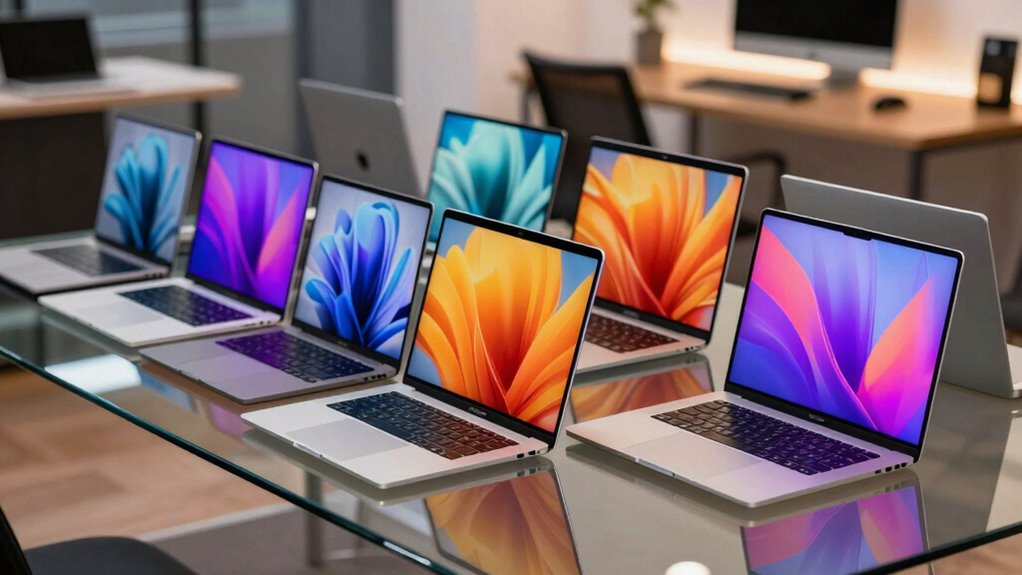

The best 2TB MacBook Pro for most buyers is the 14-inch M5 Pro model: it pairs a current-generation chip and generous built-in storage with a more portable design than the 16-inch alternatives. For demanding graphics and memory-heavy work, the 16-inch M5 Max with 128GB RAM is the standout, while a renewed M1 Max can suit buyers who want substantial memory and storage without choosing a current-generation machine. The main tradeoffs are portability versus screen space, newer performance versus renewed-model value, and whether your workload can use Max-level graphics and memory. Older Intel and renewed options also call for closer checks on software support, condition, and battery health. Read on for the full comparison and guidance on choosing the right 2TB MacBook Pro for your work.

Get gifts for the two of you delivered free with Prime
- Fast, free delivery on millions of items
- Prime Video, Amazon Music and more included
- Member-only deals all year
Key Takeaways
- The 14-inch M5 Pro is the most balanced pick: it offers current-generation performance and 2TB storage in a smaller format than the 16-inch M5 Pro.
- The 16-inch M5 Max with 128GB RAM targets unusually demanding work: its memory and graphics headroom set it apart, but many buyers will not need that much capacity.
- Renewed M1 Max models make a distinct alternative: their 64GB RAM configurations may appeal to memory-heavy workflows, though age and device condition deserve extra scrutiny.
- Screen size changes the daily experience: 14-inch models favor mobility, while the 16-inch options provide more workspace without an external monitor.
- The Intel 2018 model is the outlier: its age and Intel platform make it a specialized choice, not a like-for-like substitute for Apple silicon models.


| 2tb macbook pro laptop | Display | Memory | Storage | Graphics |
|---|---|---|---|---|
| Apple 14.2-inch MacBook Pro wi | 14.2-inch Liquid Retina XDR | 24GB unified memory | 2TB SSD | 16-core GPU |
| Apple 2021 MacBook Pro with M1 | 14-inch Liquid Retina XDR | 64GB RAM | 2TB | — |
| Apple 2021 MacBook Pro 14-inch | 14-inch Retina LED | 64GB | 2TB SSD | 24-core integrated GPU |
| Apple 16-inch MacBook Pro with | 16.2-inch Liquid Retina XDR | 24GB | 2TB SSD | — |
| Apple 2026 MacBook Pro Laptop | 16.2-inch Liquid Retina XDR | 36GB unified memory | 2TB SSD | — |
| Apple MacBook Pro 16.2-inch | 16.2-inch Liquid Retina XDR, 120Hz ProMotion | 32GB unified memory | 2TB SSD | 38-core GPU |
| Apple MacBook Pro 14-inch | 14-inch LED | 18GB unified memory | 2TB SSD | 14-core integrated Apple GPU |
| Apple MacBook Pro 15-inch | 15.4-inch Retina, 2560 × 1600 | 32GB LPDDR4 | 2TB SSD | AMD Radeon Pro 560X 4GB GDDR5; Intel UHD Graphics 630 |
| Apple 16-Inch MacBook Pro Lapt | 16-inch Retina display | 128GB unified memory | 2TB SSD | 40-core GPU |
| 2021 Apple MacBook Pro with M1 | 16.2-inch Liquid Retina XDR | 64GB | 2TB SSD | — |
More Details on Our Top Picks
Apple 14.2-inch MacBook Pro with M5 Pro, 15-core CPU, 16-core GPU, 24GB Memory, and 2TB SSD
I rank this 14.2-inch model first for buyers who want a current-generation MacBook Pro with 2TB of built-in storage without stepping up to a larger chassis. Its M5 Pro chip, 16-core GPU, and 24GB of unified memory suit demanding creative work, while the Liquid Retina XDR display and broad port selection make it a flexible everyday workstation. Compared with the 16-inch M5 Pro MacBook Pro, this one gives up screen area and some graphics headroom for a more compact 3.52-pound design. The M5 Max model offers more GPU power and memory, but that extra capacity may be unnecessary for many editors and developers. My main reservations are the modest 24GB memory allocation for unusually large projects and warranty details that must be requested from customer service.
Pros:- M5 Pro with a 16-core GPU provides strong performance for demanding creative applications.
- 2TB SSD offers ample room for project files and media without relying as heavily on external storage.
- Liquid Retina XDR display supports bright, detailed viewing.
- Thunderbolt 5, HDMI, SDXC, and MagSafe 3 cover a broad range of work setups.
Cons:- 24GB of unified memory is less suited to unusually large workloads than the M1 Max renewed options with 64GB.
- The 3.52-pound weight is noticeable for frequent travel compared with lighter laptops.
- The listed warranty details need to be requested from customer service.
Best for: Creative professionals and developers who need a current M5 Pro, a 2TB SSD, and a more manageable screen size for desk-to-travel use.
Not ideal for: Buyers who routinely work with very large video, 3D, or AI workloads and would benefit from the M5 Max model’s 36GB memory and 32-core GPU.
- Chip:Apple M5 Pro, 15-core CPU
- Graphics:16-core GPU
- Display:14.2-inch Liquid Retina XDR
- Memory:24GB unified memory
- Storage:2TB SSD
- Ports:Three Thunderbolt 5, MagSafe 3, SDXC, HDMI, headphone jack
- Wireless:Wi-Fi 7 and Bluetooth 6
- Weight:3.52 pounds
Our verdict“Choose this model for a compact, current-generation 2TB MacBook Pro that balances demanding performance with a useful port selection.”
Apple 2021 MacBook Pro with M1 Max Chip (14-inch, 64GB RAM, 2TB SSD, Space Gray, Renewed)
This renewed 2021 MacBook Pro is the memory-first alternative in this group: its 64GB of RAM can suit large creative projects and heavy multitasking, while the M1 Max and 2TB SSD provide a capable foundation for professional work. Against the newer 14.2-inch M5 Pro MacBook Pro, it trades a newer chip generation and Wi-Fi 7 for substantially more listed memory. That makes it worth comparing when keeping large workloads in memory matters more than having the latest platform. The tradeoffs are meaningful: it is renewed, may have cosmetic wear or non-original accessories, and the listed 6.9-pound weight is unusually high for a 14-inch machine. The supplied specifications also identify a 2560 x 1600 display resolution, so buyers should verify display details before purchase.
Pros:- 64GB RAM supports memory-heavy workflows and extensive multitasking.
- M1 Max chip is designed for demanding professional and multimedia work.
- 2TB SSD provides substantial onboard space for project files.
- Listed battery life is up to 17 hours.
Cons:- Renewed condition may include cosmetic imperfections.
- Accessories may not be original.
- Listed weight of 6.9 pounds is heavy for a 14-inch model.
Best for: Multimedia professionals who prioritize 64GB of memory and 2TB of storage, and are comfortable buying a renewed 2021 laptop.
Not ideal for: Travelers seeking a lightweight 14-inch laptop, or buyers who want a new machine with the latest chip generation and clearly specified warranty coverage.
- Model year:2021
- Chip:Apple M1 Max
- Memory:64GB RAM
- Storage:2TB
- Display:14-inch Liquid Retina XDR
- Display resolution:2560 x 1600 pixels
- Battery life:Up to 17 hours
- Condition:Renewed
- Weight:6.9 pounds
Our verdict“Pick this renewed model if 64GB of memory matters more to your work than a newer chip or lighter travel setup.”
Apple 2021 MacBook Pro 14-inch with M1 Max, 64GB RAM, 2TB SSD (Renewed)
This renewed M1 Max configuration closely matches the other 2021 14-inch option, so its clearest distinction is the seller-provided condition policy: the battery is rated to retain more than 80% of original capacity, and a 90-day replacement or refund window is stated. It keeps the same useful combination of 64GB RAM and a 2TB SSD, which can make it a better fit than the 24GB M5 Pro models for projects that consume substantial memory. Compared with the other renewed M1 Max listing, this one provides more explicit battery and return information, but neither listing offers a new-device condition. It is not Apple certified, includes compatible replacement accessories, and the listed 6.9-pound weight is a serious portability drawback. Check the display details, too: the supplied resolution is 2560 x 1600.
Pros:- 64GB RAM and a 24-core GPU suit demanding multitasking and graphics work.
- 2TB SSD provides substantial onboard storage for active projects.
- Battery is rated to retain more than 80% of its original capacity.
- 90-day replacement or refund eligibility is stated.
Cons:- Renewed and not Apple certified, with compatible rather than original accessories.
- Battery capacity may be only slightly above 80% of new.
- Listed 6.9-pound weight limits its appeal as a portable 14-inch laptop.
Best for: Budget-conscious creative workers who need 64GB RAM and 2TB storage and value a stated battery-capacity floor and 90-day remedy.
Not ideal for: Buyers who require Apple-certified refurbished condition, original accessories, a lightweight laptop, or a new-generation processor.
- Model year:2021
- Processor:Apple M1 Max, 10-core CPU
- Graphics:24-core integrated GPU
- Memory:64GB
- Storage:2TB SSD
- Display:14-inch Retina LED
- Battery condition:Rated above 80% of original capacity
- Warranty:90-day limited warranty
- Condition:Renewed; not Apple certified
Our verdict“Choose this renewed M1 Max listing over the other 2021 option if its stated battery threshold and 90-day remedy are priorities.”
Apple 16-inch MacBook Pro with M5 Pro, 18-core CPU, 20-core GPU, 24GB memory, and 2TB SSD
This 16-inch M5 Pro model is the screen-first choice for buyers whose work benefits from a roomy built-in display. Its 16.2-inch Liquid Retina XDR panel, 18-core CPU, and 20-core GPU give it more screen and graphics capability than the 14.2-inch M5 Pro MacBook Pro, while the same 24GB memory and 2TB SSD keep the configuration focused on a substantial internal drive rather than maximum RAM. Compared with the M5 Max 16-inch model, it gives up GPU cores and memory headroom, but remains a better match for professionals who need a large workspace without prioritizing the highest graphics tier. The larger chassis is less convenient to carry, and Apple Intelligence features are described as beta with availability varying by region or language.
Pros:- 16.2-inch Liquid Retina XDR display provides more workspace than the 14.2-inch M5 Pro model.
- 18-core CPU and 20-core GPU support demanding professional tasks.
- 2TB SSD offers ample internal space for creative files.
- Display supports up to 1600 nits peak brightness and up to 1000 nits sustained brightness.
Cons:- 24GB memory is less generous than the 36GB in the M5 Max 16-inch model and 64GB in the renewed M1 Max options.
- The large-screen chassis is less convenient for frequent travel than the 14.2-inch model.
- Apple Intelligence features are in beta and may vary by region or language.
Best for: Video editors, designers, and office professionals who want a large, bright built-in display and 2TB storage for extended desk-based work.
Not ideal for: Frequent travelers who prefer a smaller laptop, or GPU-heavy creators who need the M5 Max model’s 32-core GPU and 36GB memory.
- Chip:Apple M5 Pro
- CPU:18-core
- GPU:20-core
- Memory:24GB
- Storage:2TB SSD
- Display:16.2-inch Liquid Retina XDR
- Peak brightness:Up to 1600 nits
- Sustained brightness:Up to 1000 nits
- Power adapter:140W USB-C
Our verdict“Choose this M5 Pro configuration if screen area and 2TB internal storage matter more than the M5 Max model’s added graphics and memory capacity.”
Apple 2026 MacBook Pro Laptop with M5 Max Chip, 16.2-inch Liquid Retina XDR Display, 36GB RAM, 2TB SSD, Space Black
For buyers who can put its GPU capacity to work, this 16.2-inch M5 Max model is the strongest graphics-focused option among the five. The 32-core GPU and 36GB of unified memory give demanding creative and AI workflows more headroom than the 24GB M5 Pro models, while its 2TB SSD keeps a large working library onboard. Compared with the 16-inch M5 Pro, it is a more capable choice for GPU-intensive projects, but that extra performance does not help every user enough to justify a larger, heavier laptop. The 64GB renewed M1 Max models offer more listed memory, though they come with older chips and renewed-condition tradeoffs. This M5 Max is a better fit for buyers who need current-generation graphics power than for those whose main requirement is simply a large SSD.
Pros:- M5 Max with a 32-core GPU targets demanding graphics and AI workloads.
- 36GB unified memory offers more headroom than the M5 Pro configurations in this roundup.
- 2TB SSD provides substantial internal storage for active projects.
- Thunderbolt 5, MagSafe 3, SDXC, and HDMI support a range of professional setups.
Cons:- Its high-end graphics configuration is unnecessary for many everyday workloads.
- The 16.2-inch size makes it less convenient to carry than the 14.2-inch M5 Pro model.
- Real-world battery longevity information is limited in the supplied product details.
Best for: Video, 3D, and AI professionals who can use a high-core-count GPU, need 36GB of memory, and want a 2TB internal drive.
Not ideal for: Students, general office users, or frequent travelers who do not need M5 Max graphics performance and would prefer a less demanding carry.
- Chip:Apple M5 Max
- CPU:18-core
- GPU:32-core
- Memory:36GB unified memory
- Storage:2TB SSD
- Display:16.2-inch Liquid Retina XDR
- Connectivity:Thunderbolt 5, MagSafe 3, SDXC, HDMI, headphone jack
- Wireless:Wi-Fi 7 and Bluetooth 6
- Camera:12MP Center Stage
Our verdict“Pick this M5 Max when GPU-heavy work warrants the extra capability; otherwise, the 16-inch M5 Pro is the more restrained large-screen choice.”
Apple MacBook Pro 16.2-inch (2023, Renewed) with M2 Max Chip, 32GB RAM, 2TB SSD, Space Gray
The 16.2-inch display, M2 Max graphics, and 2TB SSD make this renewed MacBook Pro a strong fit for creators who need room for large media libraries and demanding editing sessions. Its 12-core CPU and 38-core GPU suit video and 3D work better than the 14-inch M3 Pro model, while the latter is the more compact choice with a newer chip generation. The listed 32GB unified memory supports substantial projects, though it gives less headroom than the 64GB M1 Max model elsewhere in this lineup. HDMI, SDXC, and Thunderbolt 4 reduce adapter dependence at a desk or on location. The tradeoff is its renewed condition and 90-day warranty, which offer less reassurance than a new machine with a longer warranty.
Pros:- M2 Max with a 38-core GPU is suited to graphics-heavy editing and rendering
- 16.2-inch Liquid Retina XDR display with 120Hz ProMotion
- 2TB SSD and 32GB unified memory for sizable project libraries and multitasking
- HDMI, SDXC, Thunderbolt 4, and MagSafe 3 provide versatile connectivity
Cons:- Renewed condition can include cosmetic wear
- 90-day warranty is limited compared with the one-year coverage listed for the M5 Max model
- 32GB memory offers less headroom than the 64GB M1 Max option
Best for: Video editors and 3D creators who want a large XDR screen, strong GPU capability, 2TB of internal storage, and built-in media ports.
Not ideal for: Buyers who want a new laptop, a longer warranty, or more than 32GB of memory for especially large projects.
- Model year:2023
- Processor:Apple M2 Max, 12-core CPU
- Graphics:38-core GPU
- Memory:32GB unified memory
- Storage:2TB SSD
- Display:16.2-inch Liquid Retina XDR, 120Hz ProMotion
- Ports:3x Thunderbolt 4, HDMI, SDXC, MagSafe 3, headphone jack
- Condition and warranty:Renewed; 90 days
Our verdict“Choose this renewed M2 Max when a large display and strong GPU matter more than a new-unit warranty or the extra memory of the 64GB M1 Max.”
Apple MacBook Pro 14-inch (2023) with M3 Pro, 18GB RAM, 2TB SSD, Space Black (Renewed)
This 14-inch M3 Pro is the lineup’s more portable renewed choice: it keeps the full 2TB SSD while taking up less space than the 16-inch M2 Max and M1 Max models. Its 11-core CPU and 18GB unified memory suit developers, photographers, and office users who need a capable MacBook Pro without the larger chassis or higher memory allotment of the 64GB M1 Max. That lower memory capacity is the main boundary: large video timelines and complex 3D scenes are better matched to the M2 Max or M5 Max options. The listing describes professional inspection and a 90-day replacement or refund period, but not Apple certification, and accessories may be non-original. I’d choose it for portability and storage, not for the most memory-intensive workloads.
Pros:- 14-inch size is more convenient to carry than the 16-inch models
- 2TB SSD provides generous space for files and applications
- M3 Pro and 18GB unified memory fit everyday professional workloads
- 90-day replacement or refund eligibility is specified
Cons:- 18GB memory is limiting for unusually large creative projects
- Renewed unit is not Apple-certified, and accessories may be non-original
- Smaller display offers less workspace than the 16.2-inch models
Best for: Mobile developers, photographers, and business users who want 2TB of storage in a smaller MacBook Pro and do not need very high memory capacity.
Not ideal for: 3D artists and video editors working with large, memory-heavy projects, or buyers who require Apple-certified renewed status and original accessories.
- Model year:2023
- Processor:Apple M3 Pro, 11-core CPU
- Graphics:14-core integrated Apple GPU
- Memory:18GB unified memory
- Storage:2TB SSD
- Display:14-inch LED
- Color:Space Black
- Condition and warranty:Renewed; 90-day replacement or refund eligibility
Our verdict“Pick this model if you want a compact 2TB MacBook Pro for mobile professional work and can live with 18GB of memory and renewed-unit caveats.”
Apple MacBook Pro 15-inch (2018), Core i9, 32GB RAM, 2TB SSD, Space Gray (Renewed)
This 2018 Intel MacBook Pro earns a place for buyers who specifically need an Intel-based Mac with 32GB memory and a 2TB SSD. Its six-core Core i9 and Radeon Pro 560X graphics offer a different compatibility profile from the Apple silicon machines, including the M3 Pro and M2 Max models. But that older platform is a substantial compromise for anyone choosing a laptop mainly for current, demanding creative workloads: the listing specifies macOS 10.15 Catalina, and its four Thunderbolt 3 ports are an older connection standard than the Thunderbolt 4 ports on the M2 Max. The 15.4-inch Retina display gives useful workspace, yet its resolution and overall platform are dated beside the newer XDR options. I’d treat it as a targeted legacy-workflow pick, not a general alternative to the Apple silicon models.
Pros:- 32GB memory and 2TB SSD provide substantial capacity for its generation
- Six-core Intel Core i9 processor
- Dedicated Radeon Pro 560X graphics with 4GB GDDR5
- Four Thunderbolt 3 ports
Cons:- Listing specifies the older macOS 10.15 Catalina operating system
- Older Intel platform trails the newer M3 Pro and M2 Max options for current workflows
- Renewed condition and 90-day limited warranty provide less assurance than a new model
Best for: Mac users who need an Intel-based machine for legacy software or workflows and want 32GB memory with 2TB of storage.
Not ideal for: Buyers seeking a current macOS experience, modern Apple silicon performance, or a long-term primary laptop for intensive new creative work.
- Model year:2018
- Processor:Intel Core i9-8950HK, 2.9GHz, 6 cores
- Memory:32GB LPDDR4
- Storage:2TB SSD
- Display:15.4-inch Retina, 2560 × 1600
- Graphics:AMD Radeon Pro 560X 4GB GDDR5; Intel UHD Graphics 630
- Ports:4x Thunderbolt 3
- Operating system:macOS 10.15 Catalina
- Condition and warranty:Renewed; 90-day limited warranty
Our verdict“Choose this only when Intel compatibility is the reason you want a 2TB MacBook Pro; for modern creative work, I’d favor an Apple silicon model.”
Apple 16-Inch MacBook Pro Laptop Early 2026 with M5 Max Chip, 18-Core CPU, 40-Core GPU, 128GB RAM, 2TB SSD, Silver
For workloads that can use a very large memory pool, this M5 Max configuration’s 128GB unified memory is the defining reason to choose it. The 18-core CPU, 40-core GPU, and 2TB SSD place it above the renewed M2 Max and M1 Max options on listed core and memory capacity, making it the clearest fit here for exceptionally demanding creative or technical projects. That capacity is not automatically useful to every buyer: the 16-inch chassis is less convenient to carry, and the description gives limited detail about the display beyond its size and high resolution. Compared with the 36GB M5 Max model in this roundup, this configuration is aimed at users whose applications genuinely benefit from far more memory. I’d skip the added capacity if your work fits comfortably within a smaller unified-memory configuration.
Pros:- 128GB unified memory provides unusually high capacity for large workloads
- M5 Max combines an 18-core CPU with a 40-core GPU
- 2TB SSD offers substantial internal project storage
- Includes a 140W USB-C power adapter and one-year limited warranty
Cons:- Large 16-inch configuration is less convenient to carry
- Description provides limited display detail beyond the 16-inch size and high resolution
- High-end memory and chip configuration may be excessive for less demanding work
Best for: Professional creators, engineers, and developers running memory-intensive projects that can make use of 128GB unified memory.
Not ideal for: Students, frequent travelers, and general users who do not need extreme memory capacity or a large 16-inch laptop.
- Processor:Apple M5 Max, 18-core CPU
- Graphics:40-core GPU
- Memory:128GB unified memory
- Storage:2TB SSD
- Display:16-inch Retina display
- Power adapter:140W USB-C
- Cable:USB-C to MagSafe 3
- Warranty:1-year limited warranty
Our verdict“Choose this M5 Max when your professional workload benefits from 128GB of memory; otherwise, a lower-memory 2TB model is a more sensible fit.”
2021 Apple MacBook Pro with M1 Max Chip (16-Inch, 64GB RAM, 2TB SSD) Space Grey (Renewed)
This renewed 2021 model balances 64GB unified memory with the M1 Max and a 2TB SSD, giving it a distinct middle ground between the 32GB M2 Max configuration and the 128GB M5 Max. That memory makes it attractive for large creative projects and heavy multitasking, while its 16.2-inch Liquid Retina XDR display and HDMI, SDXC, Thunderbolt 4, and MagSafe 3 ports suit a desk-based or location-editing setup. Its older M1 Max generation is the main tradeoff: buyers prioritizing newer silicon should compare it with the M2 Max or M5 Max models, and those wanting a smaller machine may prefer the 14-inch M3 Pro. Because this is renewed and the supplied details do not specify warranty length, I’d weigh the memory advantage against the uncertainty of condition and coverage.
Pros:- 64GB unified memory supports substantial multitasking and large creative projects
- 2TB SSD provides ample internal storage
- 16.2-inch Liquid Retina XDR display
- HDMI, SDXC, Thunderbolt 4, MagSafe 3, and headphone jack offer broad connectivity
Cons:- M1 Max is an older generation than the M2 Max and M5 Max options
- Renewed condition can involve cosmetic wear
- Warranty length is not specified in the supplied product details
Best for: Video editors, musicians, and technical professionals who need 64GB of memory for large projects but do not require the newest chip generation.
Not ideal for: Buyers who want a new laptop, a clearly specified longer warranty, a lighter 14-inch system, or the newest Apple silicon generation.
- Model year:2021
- Processor:Apple M1 Max
- Memory:64GB
- Storage:2TB SSD
- Display:16.2-inch Liquid Retina XDR
- Connectivity:Thunderbolt 4, HDMI, SDXC, MagSafe 3, 3.5mm headphone jack
- Color:Space Grey
- Condition:Renewed
Our verdict“Pick this renewed M1 Max if 64GB of memory matters more than having the newest chip and you are comfortable with unspecified warranty coverage.”

How We Picked
I ranked these 2TB MacBook Pro laptops by how well their storage, chip generation, memory, display size, and likely ownership tradeoffs fit real work. The 2TB SSD is the shared baseline, so I gave more weight to the factors that distinguish the options: current versus older Apple silicon, Pro versus Max configurations, RAM capacity, and portability. I also treated renewed status as a meaningful tradeoff rather than assuming every used unit has the same condition or battery health.
The order favors a strong balance of current performance, practical portability, and broad usefulness, followed by models with a clearer specialist role. The 16-inch M5 Max with 128GB RAM ranks highly for workloads that can use its resources, but its high capacity is not an automatic advantage for everyday users. Renewed M1 and M2 models remain relevant for buyers prioritizing memory or a different ownership tradeoff, while the 2018 Intel model ranks last because it is the oldest platform in the group. The listed configurations guide this comparison; buyers should confirm the exact condition and configuration of any renewed unit before choosing.
| 2tb macbook pro laptop | Processor |
|---|---|
| Apple 14.2-inch MacBook Pro wi | — |
| Apple 2021 MacBook Pro with M1 | — |
| Apple 2021 MacBook Pro 14-inch | Apple M1 Max, 10-core CPU |
| Apple 16-inch MacBook Pro with | — |
| Apple 2026 MacBook Pro Laptop | — |
| Apple MacBook Pro 16.2-inch | Apple M2 Max, 12-core CPU |
| Apple MacBook Pro 14-inch | Apple M3 Pro, 11-core CPU |
| Apple MacBook Pro 15-inch | Intel Core i9-8950HK, 2.9GHz, 6 cores |
| Apple 16-Inch MacBook Pro Lapt | Apple M5 Max, 18-core CPU |
| 2021 Apple MacBook Pro with M1 | Apple M1 Max |
Factors to Consider When Choosing 2tb Macbook Pro Laptops
With 2TB of storage already specified, the choice is less about capacity and more about matching the laptop to the work and the way you use it. These broader checks can prevent overbuying a chip, choosing an awkward screen size, or treating a renewed configuration as equivalent to a new one.
Match the chip to sustained workloads
Think about the heaviest work you do repeatedly, not the most demanding task you might try once. Video effects, 3D rendering, complex image work, and large code builds can benefit more from higher graphics and processing capacity than browsing, office tasks, and light editing. A Pro chip is often the more balanced choice when those heavier tasks are occasional. Max chips make more sense when graphics throughput is a regular part of your workday. The common mistake is buying the largest chip because it sounds future-proof, even when the workflow cannot use the extra capacity. Save that headroom for work that can turn it into shorter exports or smoother previews.
Choose RAM for the size of your active projects
2TB SSD storage and RAM solve different problems. Storage holds files and applications; memory helps the computer keep active apps and project data readily available. Large video timelines, virtual machines, complex development environments, and high-resolution creative projects can put more pressure on RAM than a typical mixed-use workload. Before paying for a high-memory configuration, check how your current projects behave and whether your applications make effective use of extra memory. Buyers often focus on SSD capacity because it is easy to compare, then overlook memory until their work has grown. Since the listed configurations span 18GB to 128GB, treat RAM as a workload decision rather than a simple ranking of bigger numbers.
Decide whether 14 inches or 16 inches fits your routine
A smaller MacBook Pro is easier to carry between workspaces, while a larger display gives you more room for timelines, documents, and side-by-side windows. The difference matters most when you work away from an external monitor every day. If your laptop usually stays on a desk, the larger screen may reduce the need to rearrange windows. If you commute or travel often, the larger chassis can become a frequent burden even when its display is useful. A frequent buying mistake is judging screen size in isolation rather than considering the whole setup, including a dock, external display, and how often you work on the go. Choose the size that supports your normal routine, not just your most spacious workspace.
Treat renewed status as a separate ownership decision
Renewed models can provide access to older high-memory configurations, but the product name alone does not tell you the unit’s battery condition, cosmetic state, or service history. Read the seller’s condition details and return terms, and confirm the exact chip, memory, and storage before ordering. Ask whether the listing describes one fixed configuration or units that may vary. A renewed machine can be a sensible fit if you value its configuration and accept the possibility of more age-related wear. Do not compare it with a new laptop only by chip name or RAM; the condition of the individual machine also affects the ownership experience. This check is particularly relevant for the 2021 M1 Max and 2023 M2 Max listings in this group.
Consider software support and the age of the platform
Newer Apple silicon models and older Intel MacBook Pros are not interchangeable long-term choices. App compatibility, operating-system support, and performance expectations can shift as software evolves, so check the requirements of the tools you rely on. The 2018 Core i9 model may appeal when a specific Intel-era need matters, but its age makes it a poor default choice for buyers seeking a current general-purpose laptop. Older Apple silicon models sit between that Intel option and the M5 configurations, yet renewed condition still matters. Avoid choosing an older model just because its memory and storage figures look strong on paper. Confirm that your required applications and accessories work with the platform you select.
Check whether 2TB is useful capacity or excess
A 2TB internal SSD is most useful when large projects need to stay available locally, such as media libraries, creative assets, or work that must continue without external drives. If most files live in shared storage or on external media, the built-in capacity may be more than your routine requires. Local space can simplify travel and reduce dependence on connected drives, but it does not replace a backup plan. Buyers sometimes treat a large SSD as protection against data loss; it is not. Keep separate backups for important work and consider how often you archive finished projects. Since every laptop in this roundup has 2TB, use that shared feature as a starting point, then choose based on portability, memory, and performance.
Frequently Asked Questions
Is the 14-inch M5 Pro a better choice than a renewed 2021 M1 Max?
It depends on whether you prioritize a current-generation configuration or the renewed model’s 64GB of memory. The 14-inch M5 Pro is the more balanced starting point for buyers who want a newer platform in a portable size. The M1 Max may suit memory-heavy work, but it is a renewed 2021 machine, so condition and battery health need closer attention. Check whether your apps benefit more from the M1 Max configuration’s memory or from choosing the newer model. If buying renewed, read the specific listing details rather than relying on the model name alone.
Do I need the 16-inch M5 Max with 128GB RAM?
That configuration is aimed at workloads that can use substantial memory and graphics resources, such as demanding creative or technical projects. For everyday office work, browsing, and lighter editing, that much capacity may not change the experience enough to justify choosing it over a more balanced Pro model. Consider your largest projects, the apps you run together, and whether current memory use is already a constraint. The 16-inch screen also favors desk-based work over frequent carrying. Choose this model for a clear workload need, not just because it has the largest listed specifications.
Should I buy a renewed 2TB MacBook Pro for professional work?
A renewed MacBook Pro can make sense when its specific configuration fits your work and you are comfortable checking the unit’s condition. For professional use, ask about battery health, cosmetic grading, return terms, and whether the listed RAM and SSD are fixed for the exact unit. A strong chip and 2TB SSD do not reveal how much wear the battery or other components have experienced. If downtime would disrupt paid work, weigh that uncertainty against the appeal of an older high-memory model. Keep a backup plan regardless of which condition category you choose.
Is 2TB of internal storage enough for video and creative projects?
It can be enough for many workflows, especially when active projects stay on the laptop and completed work is archived elsewhere. Large footage libraries and multiple high-resolution projects can use storage quickly, so estimate your current project sizes rather than guessing. External SSDs and network storage can extend capacity, though they add devices and may be less convenient when traveling. Internal space is not a backup: keep another copy of important files in a separate location. If you already manage projects across external drives, a 2TB internal SSD may be a useful working space rather than your entire archive.
Is the 2018 Intel MacBook Pro still a sensible 2TB option?
It is a narrow choice for buyers who have a specific reason to stay with an Intel Mac, such as a required workflow or software constraint. For a general purchase in 2027, its age makes it less appealing than the Apple silicon options in this roundup, particularly for buyers who want a machine to serve for years. Check current software and operating-system compatibility before relying on it for paid or time-sensitive work. Also verify the renewed unit’s condition, since the model has had more time to accumulate wear. Its 2TB SSD and 32GB RAM do not remove the platform-age tradeoff.
Conclusion
For most buyers, I recommend the 14-inch M5 Pro as the best overall: it combines a current platform, 2TB storage, and a more portable size than the 16-inch choices. For a best value-style alternative, consider a renewed M1 Max if its 64GB RAM suits your workload and the specific unit’s condition checks out. The best premium pick is the 16-inch M5 Max with 128GB RAM for demanding work that can use its capacity. Beginners should start with the 14-inch M5 Pro rather than paying for Max-level resources they may not need. For a large built-in workspace, choose a 16-inch model; for an Intel-specific requirement, assess the 2018 option carefully, since it is the oldest platform here. My final choice would be the M5 Pro for broad use, with renewed and Max configurations reserved for buyers who can name the tradeoff they need.