
Relationship communication tools range from structured therapy workbooks to skill-building handbooks, and the right pick depends on whether a couple wants guided exercises, conflict repair techniques, or a deeper understanding of their own patterns. The Seven Principles for Making Marriage Work earns the best overall spot for pairing decades of clinical research with practical exercises couples actually finish. For time-pressed partners, The Couples Communication Workbook delivers a low-commitment 12-day format, while The Mechanism Between Us stands out for couples who keep repeating the same fights and want to understand why. The main tradeoff in this category: research-backed depth usually demands more reading time, while quick workbooks are easier to stick with but cover less ground. Read on for the full breakdown.

Get gifts for the two of you delivered free with Prime
- Fast, free delivery on millions of items
- Prime Video, Amazon Music and more included
- Member-only deals all year
Key Takeaways
- Structured, time-boxed programs (the 12-day and 12-week workbooks) had the highest likely completion rates, while dense research-backed books like The Seven Principles demand more effort but deliver deeper, more durable skills.
- The biggest differentiator among these tools was whether they teach a repeatable method (NVC’s four-step framework, the Gottman principles) versus offering one-off prompts and exercises that fade once the workbook ends.
- Tools that diagnose a couple’s specific patterns, like The Mechanism Between Us and The Couples Therapy Flip Chart, suit couples stuck in recurring conflict, whereas general communication guides work better for couples building skills preventively.
- Several similarly titled workbooks overlapped heavily in content; price, length, and exercise quality — not brand — separated the winners from the duplicates.
- Books rooted in established clinical frameworks (Gottman, Rosenberg’s Nonviolent Communication) carried more credibility than self-published workbooks, though the best workbooks translated those same ideas into easier daily practice.




| relationship communication tool | Format | Primary Focus | Structure |
|---|---|---|---|
| Practical At-Home Couples Ther | Paperback workbook | — | — |
| The Couples Communication Hand | Paperback / ebook | — | — |
| 12-Week Relationship Therapy W | Paperback workbook | — | — |
| Communication Skills for Coupl | Paperback | — | — |
| Emotional Intimacy for Couples | — | — | — |
| Couples Communication Workbook | Paperback workbook | Listening skills and conflict resolution | Guided daily exercises |
| The Seven Principles for Makin | Paperback book | Marriage stability and conflict patterns | Explanatory chapters with illustrative exercises |
| Nonviolent Communication: A La | Paperback book | Empathetic, blame-free expression of needs | Explanatory chapters with example dialogues |
| The Mechanism Between Us: Map | Book with integrated workbook | Communication, trust, and conflict resolution | Diagnostic chapters plus relationship exercises |
| The Couples Therapy Flip Chart | Spiral-bound psychoeducational flip chart | Disconnection patterns, conflict management, partnership growth | Session-ready visual panels with exercises |
| Love More | Paperback workbook | Communication skills and conflict reduction | Theme-based chapters with actionable prompts |
More Details on Our Top Picks
Practical At-Home Couples Therapy Workbook: Guided Relationship Toolkit for Honest Communication, Restored Intimacy, and Conflict Repair
This option stands out for pairing communication exercises with conflict repair and intimacy rebuilding in one structured toolkit, which makes it the most versatile pick here. Compared with The Couples Communication Handbook, which leans on reading and concept-building, this workbook pushes couples into guided, at-home practice — closer to the homework a therapist would assign than a self-help lecture. That said, the breadth is also the tradeoff: because it covers communication, intimacy, and repair simultaneously, couples dealing with one acute problem (say, chronic arguing) may prefer the tighter focus of the 12-Week Relationship Therapy Workbook. And like any workbook, it rewards consistency; buying it and shelving it delivers nothing. This pick makes the most sense for couples who want a do-it-yourself therapy substitute rather than passive reading material.
Pros:- Covers communication, intimacy, and conflict repair in one toolkit
- Exercise-based format drives real behavioral practice rather than passive reading
- At-home structure works well as a supplement or alternative to therapy
- Guided activities give couples a clear starting point for hard conversations
Cons:- Breadth across three focus areas dilutes depth on any single issue
- Results require consistent effort — inconsistent couples will see little change
- Limited author and content detail makes it harder to evaluate before buying
Best for: Couples who want a hands-on, therapist-style workbook covering communication, intimacy, and conflict repair together
Not ideal for: Couples hoping for a quick read or a single-issue fix — it demands sustained commitment across multiple topics
- Format:Paperback workbook
- Type:Guided exercise workbook
- Focus Areas:Communication, intimacy, conflict repair
- Use Setting:At-home, self-guided
- Audience:Committed couples
- Commitment Level:Ongoing, multi-week practice
Our verdict“Buy this if you and your partner want an all-in-one, homework-style workbook and are both willing to put in the reps.”
The Couples Communication Handbook: The Skills You Never Learned for the Marriage You Always Wanted
The framing here — skills you were never taught — makes this the gentlest on-ramp in the lineup. Where Practical At-Home Couples Therapy Workbook assumes both partners are ready to do structured exercises together, this handbook works for a single motivated reader who wants to learn communication fundamentals first. Compared with Nonviolent Communication, the classic in this space, it trades theoretical depth for plain-language, marriage-specific guidance, which is exactly what a beginner needs. The tradeoff is real, though: readers already versed in active listening or “I” statements will find the ground familiar, and it offers fewer fill-in-the-blank exercises than the workbooks in this roundup. This pick makes the most sense as a first book — the one you read before you and your partner attempt a 12-week program together.
Pros:- Accessible, easy-to-understand guidance for first-time readers
- Foundational skill-building that works even if only one partner reads it
- Marriage-focused framing keeps advice concrete and relatable
- Low barrier to entry compared with intensive workbooks
Cons:- Introductory content may feel repetitive to readers with prior exposure to communication concepts
- Fewer interactive exercises than workbook-style competitors
- Sparse detail on chapter structure and content makes pre-purchase evaluation hard
Best for: Couples or individuals new to relationship books who want approachable, foundational communication skills
Not ideal for: Experienced readers or couples mid-crisis who need exercise-driven repair work rather than introductory concepts
- Format:Paperback / ebook
- Type:Skills-based self-help guide
- Focus Areas:Communication skills, understanding, connection
- Reading Style:Instructional, concept-driven
- Audience:Couples and individual readers
- Difficulty:Beginner-friendly
Our verdict“Start here if communication skills are brand new territory — move to a workbook once the basics click.”
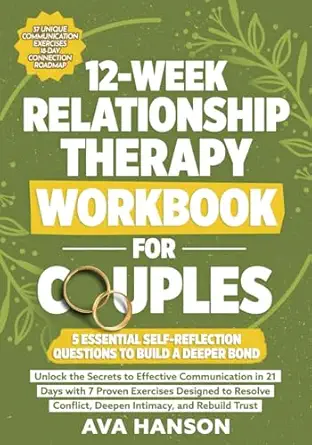
12-Week Relationship Therapy Workbook for Couples
What separates this title is the calendar: a defined 12-week arc with seven proven exercises gives couples deadlines, milestones, and a finish line. That structure is tighter than Practical At-Home Couples Therapy Workbook, which offers a toolkit you can dip into at any pace — helpful for self-starters, but easy to abandon. Compared with The Couples Communication Handbook, this option demands far more of both partners: it works only when two people commit to weekly sessions, not solo reading. The fixed program is also its limitation — couples with unpredictable schedules may fall behind and lose momentum, and those wanting flexibility should choose a dip-in workbook instead. For partners who thrive on accountability and want trust rebuilding on a timeline, this format turns vague intentions into a trackable plan, which is why it ranks as the best structured choice.
Pros:- Defined 12-week timeline creates accountability and momentum
- Seven focused exercises keep the program manageable rather than overwhelming
- Explicitly targets trust rebuilding alongside communication
- Therapy-style structure mimics a real counseling cadence
Cons:- Rigid schedule becomes a liability if life interrupts the weekly rhythm
- Requires buy-in from both partners to work at all
- Limited content details and no ratings available before purchase
Best for: Disciplined couples who want a fixed, week-by-week program with clear milestones for rebuilding trust and intimacy
Not ideal for: Couples with chaotic schedules or uneven motivation — the rigid 12-week format punishes inconsistency
- Format:Paperback workbook
- Program Length:12 weeks
- Exercise Count:7 guided exercises
- Focus Areas:Communication, conflict resolution, intimacy, trust
- Use Setting:Couple-based, scheduled sessions
- Commitment Level:High — weekly participation
Our verdict“Choose this only if both partners will honor a weekly commitment — the structure is the whole point.”
Communication Skills for Couples: Guide to Improve Communication, Resolve Conflict, Deepen Intimacy, Strengthen Marriage, and Create a Healthy Relationship
As a straightforward, affordably priced guide, this book earns its spot as the low-commitment entry point for couples testing whether self-help reading can help them at all. It covers the full arc — communication, conflict resolution, intimacy, marriage strength — but in a lighter, more digestible package than the Practical At-Home Couples Therapy Workbook, which asks for sustained exercise participation. Compared with Love More, Fight Less, another budget-friendly skills guide in this space, this title casts a slightly wider net, touching intimacy and marriage health alongside communication — broader, though inevitably shallower. The honest tradeoff: breadth over depth. A couple wrestling with a specific recurring conflict would get more from a targeted workbook, and outcomes here depend heavily on whether readers actually apply the strategies rather than skim them. For the price of a coffee, it’s a reasonable first experiment.
Pros:- Low price makes it a risk-free first purchase
- Broad coverage spans communication, conflict, intimacy, and marriage health
- Practical strategies are easy to apply without formal exercises
- Digestible for couples intimidated by longer programs
Cons:- Wide scope means shallow treatment of any single issue
- Effectiveness depends entirely on reader follow-through
- No standout differentiator from the crowded field of similar guides
Best for: Budget-conscious couples or skeptics who want an inexpensive first try at communication self-help
Not ideal for: Couples who already know their specific problem and need a targeted, exercise-heavy workbook instead of broad coverage
- Format:Paperback
- Type:Practical advice guide
- Focus Areas:Communication, conflict, intimacy, marriage health
- Price Tier:Budget
- Audience:Couples, married partners
- Commitment Level:Low — self-paced reading
Our verdict“A cheap, sensible toe-dip for undecided couples — but upgrade to a workbook once you know where the real problem sits.”
Emotional Intimacy for Couples: Communication Skills, Trust-Building Habits, and Practical Tools to Deepen Connection and Strengthen Your Relationship
Most titles in this roundup treat communication as the headline; this one flips the priority, positioning emotional intimacy as the goal and communication as the tool. That lens makes it a better fit for couples whose real complaint is distance or disconnection rather than arguing — a distinction that matters when choosing between this and The Couples Communication Handbook, which is stronger on conversational mechanics. Compared with Practical At-Home Couples Therapy Workbook, this offers more reflective, trust-building habits and fewer structured worksheet exercises, so it suits couples who prefer gradual daily practices over sit-down sessions. The tradeoff: couples in active, heated conflict may find the gentle tone insufficient — Love More, Fight Less or a conflict-focused workbook serves that situation better. This pick makes the most sense for partners who communicate adequately but still feel emotionally like roommates.
Pros:- Frames emotional intimacy as the goal, not a side benefit
- Trust-building habits support gradual, sustainable change
- Practical tools work without demanding formal workbook sessions
- Well suited to couples past the constant-arguing stage
Cons:- Too gentle for couples in active crisis or recurring conflict
- Fewer interactive exercises than workbook competitors
- No ratings or content-depth information available to verify quality
Best for: Couples whose core issue is emotional distance rather than conflict — those who talk fine but feel disconnected
Not ideal for: Couples in frequent heated conflict who need de-escalation and repair techniques first — the soft focus won’t cut it
Our verdict“Pick this when the problem isn’t how you talk but how close you feel — and skip it if fights are the main event.”
Couples Communication Workbook: 20 Minutes a Day for 12 Days to Improve Listening, Resolve Conflicts, and Strengthen Your Relationship
Most communication workbooks ask for open-ended commitment, which is exactly why busy couples abandon them by week two. This option flips that model with a strictly time-boxed 12-day program of 20-minute daily exercises, making it the lowest-friction entry point in this lineup. Compared with the 12-Week Relationship Therapy Workbook for Couples, you trade depth for finishability — four hours of total commitment versus a three-month curriculum. The focus on listening skills rather than broad relationship repair keeps the scope tight, which suits couples who argue past each other rather than couples in crisis. The tradeoff is real: content details are thin, so partners wanting research grounding may prefer The Seven Principles for Making Marriage Work. This pick makes the most sense for couples who have failed at longer programs before.
Pros:- Highly structured 20-minute daily format that is easy to sustain
- Narrow focus on listening skills produces quick, visible wins
- Only 12 days long, so completion rates stay high
- Low commitment makes it a good first step before heavier workbooks
Cons:- Limited depth compared with longer programs like the 12-Week Relationship Therapy Workbook
- Sparse content details make it hard to gauge effectiveness before buying
Best for: Busy couples who want a short, finishable daily exercise program rather than an open-ended workbook
Not ideal for: Couples wanting research-backed theory or deep conflict repair — the brevity leaves little room for either
- Format:Paperback workbook
- Program Length:12 days
- Daily Time Commitment:20 minutes
- Primary Focus:Listening skills and conflict resolution
- Structure:Guided daily exercises
- Intended Users:Couples
Our verdict“Choose this if you and your partner have struggled to finish longer workbooks and need a program you can actually complete in under two weeks.”
The Seven Principles for Making Marriage Work: A Practical Guide from the Country’s Foremost Relationship Expert
Where most entries in this roundup are exercise collections, this book earns its place as the evidence-based anchor of the list. Written from decades of clinical research by relationship expert John Gottman, it explains why marriages fail and which behaviors predict divorce — context that pure workbooks like the Couples Communication Workbook never provide. Compared with Nonviolent Communication, which teaches a transferable communication method, this one is marriage-specific and diagnostic: you learn to identify your relationship’s warning signs, not just phrase requests more gently. The drawback is that it reads more like a book than a program, so couples who want daily exercises and worksheets will need to pair it with a workbook. Some may also find the clinical tone less warm than newer self-help titles such as The Mechanism Between Us.
Pros:- Grounded in decades of clinical research rather than anecdote
- Helps couples identify predictive warning signs of relationship failure
- Author is a widely recognized authority in marriage research
- Principles apply across marriage stages, from newlyweds to long-term partners
Cons:- Fewer structured exercises than dedicated workbooks in this roundup
- Denser, more clinical tone than lighter self-help alternatives
Best for: Couples who want to understand the underlying science of marital success before doing exercises
Not ideal for: Partners who want a hands-on, fill-in-the-blanks program — this is primarily reading, not doing
- Format:Paperback book
- Author:John Gottman, PhD
- Approach:Research-based principles and diagnostics
- Primary Focus:Marriage stability and conflict patterns
- Structure:Explanatory chapters with illustrative exercises
- Intended Users:Married and committed couples
Our verdict“This is the pick for couples who want to understand the mechanics of a lasting marriage, ideally paired with a workbook for hands-on practice.”
Nonviolent Communication: A Language of Life
This is the only entry in the roundup whose lessons extend past your romantic relationship — the same framework works at work, with family, and in friendships. That breadth is its defining advantage over marriage-specific picks like The Seven Principles for Making Marriage Work, but it is also the tradeoff: you get a general communication methodology, not targeted couples exercises. The core four-step model teaches partners to express needs without blame, which resolves the accusatory patterns that workbooks like Love More, Fight Less address with couple-specific scripts. Where the Couples Communication Workbook gives you 12 days of structure, this book gives you a lifelong language skill that takes months of practice to internalize. This model is better suited to self-directed learners than to couples who want a guided program with a clear end date.
Pros:- Teaches a reusable four-step communication method for all relationships
- Directly addresses blame and accusation patterns in conflict
- Applicable to workplace, family, and personal interactions alike
- Long-established framework with a large practitioner community
Cons:- Not couple-specific, so it lacks partnered exercises found in dedicated workbooks
- Techniques require sustained practice before they feel natural
Best for: Individuals who want a transferable communication framework for all relationships, not just their partnership
Not ideal for: Couples seeking a structured, guided program — mastery here requires self-directed practice over months
- Format:Paperback book
- Author:Marshall B. Rosenberg, PhD
- Approach:Four-step nonviolent communication method
- Primary Focus:Empathetic, blame-free expression of needs
- Structure:Explanatory chapters with example dialogues
- Intended Users:Individuals and couples
- Applicability:Personal and professional relationships
Our verdict“Pick this if you want to change how you communicate everywhere, and accept that it is a skill-building book rather than a couples program.”
The Mechanism Between Us: Map the 5 Couple Types and Their Hidden Patterns to Improve Communication, Build Trust, and Resolve Conflict. Plus a Relationship Workbook to Reconnect with Your Partner
Most workbooks in this roundup hand every couple the same exercises. This one differentiates itself by first sorting couples into five types, then tailoring the guidance to the hidden patterns driving that dynamic — a diagnostic approach that stands out among generic alternatives like Communication Skills for Couples. The bundled relationship workbook means you get both the map and the exercises in one purchase, unlike The Seven Principles for Making Marriage Work, which requires supplementing with separate materials. The tradeoff is accessibility: this is denser self-help reading than the time-boxed Couples Communication Workbook, and couples in acute crisis may find typology theory an intellectual detour when they want immediate conflict tools. Compared with The Couples Therapy Flip Chart, it digs deeper into the ‘why’ behind disconnection at the cost of quick reference usability.
Pros:- Couple-type framework tailors advice instead of offering one-size-fits-all exercises
- Combines diagnostic reading with a practical workbook in a single purchase
- Addresses trust-building and conflict resolution alongside communication
- Deeper explanatory model than script-based workbooks like Love More, Fight Less
Cons:- Heavier, theory-forward reading than quick-start workbooks
- Appeals mainly to committed self-help readers; casual readers may stall
Best for: Reflective couples who want to understand their recurring dynamic as a couple type before choosing interventions
Not ideal for: Couples in acute conflict who need immediate de-escalation tools rather than typology theory
- Format:Book with integrated workbook
- Framework:Five couple types with pattern mapping
- Primary Focus:Communication, trust, and conflict resolution
- Structure:Diagnostic chapters plus relationship exercises
- Intended Users:Couples interested in self-help frameworks
- Unique Feature:Couple-type diagnostic model
Our verdict“Choose this if you and your partner keep repeating the same fights and want a framework that explains the pattern beneath them.”
The Couples Therapy Flip Chart: A Psychoeducational Tool to Help Couples Identify Patterns of Disconnection, Manage Relationship Conflict, and Create a Thriving Partnership
This is the odd one out in the lineup — not a book to read but a flip chart built for live conversation, originally designed for therapists to use in session. That origin is both its strength and its limitation. Compared with the Couples Communication Workbook, which couples work through privately, this format puts concepts in front of both partners simultaneously during a discussion, making disconnection patterns visible in real time. Compared with The Mechanism Between Us, it sacrifices narrative depth for instant, glanceable reference. Practitioners running couples sessions get the most value here; self-guided couples may find it requires facilitation skills to use well, since the exercises assume someone steering the conversation. It is also less useful as a standalone purchase — this works best alongside a book that supplies the underlying theory.
Pros:- Visual flip-chart format keeps both partners engaged simultaneously
- Designed for real-time use during difficult conversations
- Grounded in psychoeducational practice rather than pop psychology
- Faster to reference mid-session than any book in this roundup
Cons:- Built for professionals; self-guided couples may struggle without guidance
- Works best as a supplement rather than a standalone resource
Best for: Therapists, coaches, and counselors who need a session-ready visual tool for couples work
Not ideal for: Self-guided couples without facilitation experience — the format assumes someone is steering the conversation
- Format:Spiral-bound psychoeducational flip chart
- Designed For:Therapists and counselors working with couples
- Primary Focus:Disconnection patterns, conflict management, partnership growth
- Structure:Session-ready visual panels with exercises
- Intended Users:Clinicians and guided couples
- Unique Feature:In-session visual format
Our verdict“This belongs in a therapist’s office or a coach’s toolkit — solo couples should pick a workbook unless a professional is guiding them.”
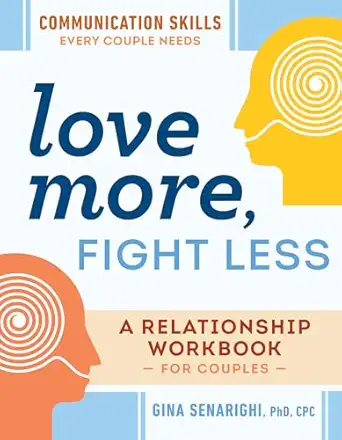
Love More, Fight Less: Communication Skills Every Couple Needs
Where The Seven Principles for Making Marriage Work leans on decades of research and dense chapters, Love More, Fight Less takes the opposite approach: short, actionable exercises designed to be put into practice the same week you read them. This pick makes the most sense for couples who argue in repeating loops and want conflict-reduction techniques rather than a full relationship theory. Compared with the Couples Communication Workbook: 20 Minutes a Day for 12 Days, it covers similar ground but with less rigid scheduling, so it suits partners with unpredictable routines. The tradeoff is depth — readers who want the clinical grounding of Gottman’s work, or the typology framework of The Mechanism Between Us, will find this thinner. It also only works if both partners actually do the exercises.
Pros:- Practical communication exercises you can apply immediately
- Flexible format that doesn’t demand a rigid daily or weekly schedule
- Focused specifically on reducing conflict rather than covering broad relationship topics
- Accessible language that works for couples new to relationship books
Cons:- Requires genuine participation from both partners to produce results
- Lighter on research and theory than alternatives like The Seven Principles for Making Marriage Work
- Usefulness varies depending on the couple’s specific conflict patterns
Best for: Busy couples stuck in repetitive arguments who want short, practical exercises without committing to a 12-week program
Not ideal for: Couples seeking research-backed depth or a structured week-by-week curriculum — this is lighter than Seven Principles and less scaffolded than a 12-week workbook
- Format:Paperback workbook
- Primary Focus:Communication skills and conflict reduction
- Content Type:Practical exercises and guided activities
- Intended Audience:Couples at any relationship stage
- Time Commitment:Self-paced; short exercises rather than fixed schedule
- Structure:Theme-based chapters with actionable prompts
Our verdict“A solid choice for couples who want fast, exercise-driven conflict relief — but skip it if you need research depth or a structured multi-week program.”

How We Picked
I evaluated each tool through one lens: does it actually change how two people talk to each other? That meant judging method quality (whether the tool teaches transferable skills or just prompts feelings-talk), structure and completion likelihood (a 300-page book nobody finishes helps no one), evidence base (tools built on Gottman research or Rosenberg’s Nonviolent Communication framework scored higher than unattributed exercises), and fit for different relationship situations, from preventive skill-building to repairing after repeated blowups.
Ranking also reflected versatility and value: tools that work for both engaged couples and long-married pairs, and that hold up to repeat use, placed higher. One-note workbooks with thin exercise sets landed lower even when the price was attractive, because the cost of an abandoned workbook isn’t the money — it’s the missed opportunity to build the habit.
| relationship communication tool | Format | Primary Focus | Structure |
|---|---|---|---|
| Practical At-Home Couples Ther | Paperback workbook | — | — |
| The Couples Communication Hand | Paperback / ebook | — | — |
| 12-Week Relationship Therapy W | Paperback workbook | — | — |
| Communication Skills for Coupl | Paperback | — | — |
| Emotional Intimacy for Couples | — | — | — |
| Couples Communication Workbook | Paperback workbook | Listening skills and conflict resolution | Guided daily exercises |
| The Seven Principles for Makin | Paperback book | Marriage stability and conflict patterns | Explanatory chapters with illustrative exercises |
| Nonviolent Communication: A La | Paperback book | Empathetic, blame-free expression of needs | Explanatory chapters with example dialogues |
| The Mechanism Between Us: Map | Book with integrated workbook | Communication, trust, and conflict resolution | Diagnostic chapters plus relationship exercises |
| The Couples Therapy Flip Chart | Spiral-bound psychoeducational flip chart | Disconnection patterns, conflict management, partnership growth | Session-ready visual panels with exercises |
| Love More | Paperback workbook | Communication skills and conflict reduction | Theme-based chapters with actionable prompts |
Factors to Consider When Choosing Relationship Communication Tools
Before picking a specific title, it helps to understand what separates a communication tool that gets used from one that gathers dust on a nightstand. These are the factors that mattered most when comparing the eleven options above — and the mistakes couples commonly make when choosing.
Match the Tool to Your Actual Problem
Couples say they want “better communication,” but that phrase covers very different situations: recurring fights about the same topic, emotional distance after a life change, or general clumsiness at hard conversations. A pattern-mapping book won’t help a couple that simply never learned listening skills, and a beginner workbook will frustrate a couple that has already read three similar books. The most common buying mistake is grabbing the bestseller without diagnosing what’s actually breaking down. Before purchasing, name the last three arguments you had and what went wrong in each — the recurring thread usually points to the right category of tool. Repair-oriented tools work backward from conflict; skills-based tools work forward from conversation habits. Buying the wrong direction is why so many couples own multiple unfinished workbooks.
Be Honest About Completion Likelihood
The gap between buying a tool and using it is where most communication plans die. Dense, research-heavy books reward motivated readers but demand sustained joint effort, while short, dated programs — 12 days, 12 weeks — create external structure that compensates for low motivation. A useful rule: choose the shortest tool you both genuinely agree to finish, then graduate to something deeper. Couples often overestimate their appetite for homework, especially when the relationship is tense; starting with a lighter book builds the joint habit that makes heavier material workable later. If one partner is far less enthusiastic than the other, a low-commitment format is almost always the better first buy, because an abandoned ambitious program can itself become a point of resentment.
Method-Based Tools Age Better Than Prompt Collections
Some tools teach a framework — a repeatable sequence of steps for expressing needs, listening, or de-escalating — while others offer lists of questions and exercises. Prompts spark individual conversations; methods change how every future conversation runs. Framework-based tools rooted in established clinical research tend to cost about the same as prompt collections but keep paying off years later, because the skill transfers to new conflicts the book never anticipated. Prompt-heavy workbooks still have a place, particularly for reconnecting couples who’ve run out of things to talk about, but buyers should know they’re buying a spark, not an engine. Check whether a book’s exercises teach a named technique or simply ask you to reflect — that single distinction predicts long-term value better than page count or price.
When to Pay More: Clinical Credibility and Diagnostic Depth
Price differences in this category are small, so paying more usually means paying for authorship: books written by researchers or veteran therapists carry frameworks tested across thousands of couples, while inexpensive self-published workbooks often repackage similar exercises without the underlying rationale. That rationale matters more than it seems — understanding why a technique works helps couples adapt it when it doesn’t fit their situation verbatim. The exception to “save your money”: diagnostic tools that help a couple identify their specific disconnection pattern. If you’ve tried generic advice and nothing changed, a typology or assessment-based tool is worth a premium because it targets your pattern instead of the average couple’s. For everyone else, mid-priced workbooks with strong structure deliver nearly identical outcomes.
Consider Both Partners’ Learning Styles
A communication tool only works if both people engage, and couples rarely absorb information the same way. One partner may prefer narrative explanations and research stories; the other may want fill-in exercises, checklists, or something visual. Tools with varied formats — a mix of short chapters, written exercises, and quick reference charts — accommodate mixed preferences and tend to survive longer in a household. Visual and flip-chart style formats also lower the barrier for the less motivated partner, since flipping to a page feels less like homework than reading a chapter. If one partner is a reluctant participant, choose the format they will tolerate, not the one the eager partner prefers. The eager reader can always supplement with a deeper book on their own.
Know When a Book Isn’t Enough
Self-guided tools work well for skill gaps, drift, and ordinary conflict, but they have real limits. If arguments regularly involve contempt, stonewalling that lasts days, or any fear of how a partner reacts when angry, a workbook is the wrong instrument — a licensed couples therapist is the appropriate tool, and several of these books explicitly say so. Books also can’t referee in the moment: when a conversation escalates mid-exercise, there’s no third voice to slow things down. The healthiest framing treats these tools as maintenance and prevention, best used when things are okay, not as a last-ditch rescue. Couples who buy a book in crisis often need it and professional support, with the book supporting the work between sessions rather than replacing them.
Frequently Asked Questions
Can a workbook or book really replace couples therapy?
For many couples with ordinary communication gaps, a well-structured tool can produce meaningful change — research on guided self-help relationship programs shows real gains for motivated couples. The distinction comes down to severity and safety. Skill-building books work when both partners are willing, conflict stays respectful, and the goal is improvement rather than rescue. They fall short when there’s ongoing contempt, betrayals of trust, or a dynamic where one partner fears the other’s reactions — situations where a neutral third party changes what’s possible in the room. Plenty of couples also use books alongside therapy, doing workbook exercises between sessions to reinforce what they’re learning. If you’re unsure which situation you’re in, starting with a book is low-risk, but treat persistent worsening as a signal to seek professional help rather than buying another title.
What if my partner won’t do the exercises with me?
This is one of the most common situations, and the answer shapes which tool to buy. Skip paired workbooks entirely and choose a skills-based book one person can practice solo — communication methods like the four-step framework in Nonviolent Communication genuinely change conversations even when only one partner uses them, because de-escalating and clear expression alter the exchange for both people. Reading solo also gives you better language for raising the topic later without it feeling like an accusation. Avoid the trap of assigning your partner chapters or leaving the book pointedly on their nightstand; that usually reads as criticism and hardens resistance. Some reluctant partners come around after noticing a difference in how conversations go. If resistance is total and long-lasting, that pattern itself is worth discussing with a professional.
Is a structured program better than a general skills book?
It depends on what’s failing in your relationship. Structured programs — dated workbooks with a defined arc — win on adherence because the schedule does the motivating, which matters most when the relationship is strained and joint initiative is hard to muster. General skills books win on depth and flexibility: they explain the psychology behind conflict, which helps couples adapt techniques to situations the program didn’t anticipate. A reasonable rule is to start structured if you’ve never done a communication tool before, then move to a skills book once the daily habit exists. Couples who’ve already abandoned two workbooks usually need the deeper why more than another schedule. The two formats are complementary, not competing, and the strongest results in this comparison came from tools that blended both — scheduled exercises built on explained principles.
How long does it take to see results from these tools?
Honest answer: small conversational shifts often show up within the first week or two, especially de-escalation habits, because they change the opening moments of a conflict before it spirals. Deeper changes — trust rebuilding, exiting a recurring fight pattern — typically take months of consistent practice, which is why 12-week formats exist. The catch is that early progress is fragile; a couple can have three better weeks and then one bad fight that feels like starting over. That’s normal, not failure, and books that explain the relapse pattern help couples ride it out. Timeline also depends on starting point: preventive couples see quicker wins than couples repairing after years of disconnection. Judge results by how quickly arguments de-escalate, not by whether arguments disappear — the latter is an unrealistic bar for any tool.
Are these tools useful for dating couples, or only for married partners?
Most of these tools work well before marriage — arguably better, since patterns are easier to change before they calcify. Skills-based books and short workbooks are the best fit for dating and engaged couples because they build habits without presuming a crisis. A few titles lean heavily on marriage framing and long-term conflict repair, which can feel premature or heavy for a newer relationship, so check the intended audience before buying. For engaged couples, doing a structured program together before the wedding is one of the highest-leverage uses of these tools, because you’re aligning communication habits before stress arrives rather than during it. One caution for newer couples: a partner’s unwillingness to do any communication work while dating is useful information in itself.
Conclusion
Matching the tool to the couple matters more than any single title. Best overall goes to The Seven Principles for Making Marriage Work, which balances clinical credibility, practical exercises, and durability better than anything else in the lineup. For best value, The Couples Communication Workbook delivers a complete 12-day program at a low price, and Love More, Fight Less offers similar bang for the buck for couples who prefer a compact skills focus. Best premium pick is The Mechanism Between Us, justified for couples trapped in recurring conflict who need pattern diagnosis, not more generic prompts. Best for beginners is the Couples Communication Handbook, which teaches foundational listening and expression skills without assuming prior exposure. For specific needs: choose Nonviolent Communication if one partner will be practicing solo, the 12-Week Relationship Therapy Workbook for couples wanting a long structured arc, the Couples Therapy Flip Chart for visual learners and reluctant partners, Emotional Intimacy for Couples when distance rather than fighting is the problem, and the Practical At-Home Couples Therapy Workbook for a broad repair-and-reconnect toolkit. Whichever you choose, the deciding factor isn’t the book — it’s whether both of you open it.
Fall Picks
fall essentials
As an affiliate, we earn on qualifying purchases.