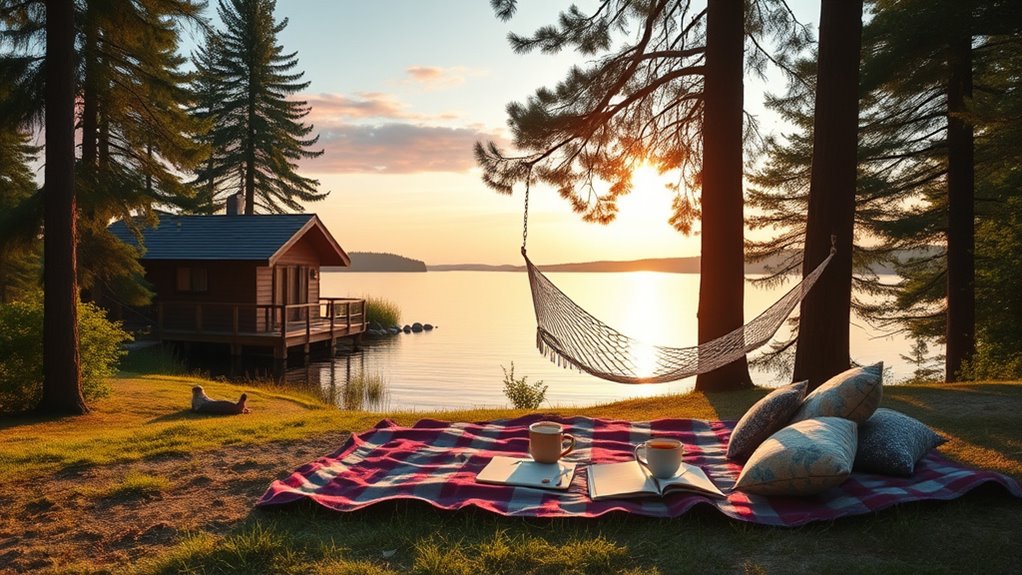

To plan a mental health-friendly vacation, choose calming environments like nature-filled or quiet destinations that promote relaxation. Incorporate mindfulness activities such as deep breathing, gentle yoga, or journaling to stay present and reduce stress. Plan downtime to avoid feeling overwhelmed and communicate your needs with travel companions. Prioritize experiences that nurture well-being and deepen connections. If you want practical tips to create a restorative trip, keep exploring for more helpful insights.
Key Takeaways
- Choose calming, nature-filled destinations that promote relaxation and mental rejuvenation.
- Incorporate mindfulness activities like deep breathing, gentle yoga, and journaling into daily routines.
- Include intentional downtime and quiet spaces to prevent overwhelm and foster emotional resilience.
- Communicate openly with travel companions to set boundaries and support mental well-being.
- Plan meaningful shared experiences that deepen connections while prioritizing individual mental health needs.

Taking a vacation is a valuable opportunity to recharge, but planning one that supports your mental health requires intentional steps. When you focus on creating a mindful experience, you can reduce stress and come back feeling more centered. Incorporating mindfulness activities into your trip helps you stay present and appreciate the moment, whether it’s practicing deep breathing at a scenic overlook or engaging in gentle yoga on the beach. These activities don’t have to be elaborate; even taking a few minutes each day to pause and breathe can notably improve your mental clarity and emotional resilience. By intentionally carving out time for mindfulness, you create space between you and the daily grind, allowing your mind to relax and reset. Understanding how diversification benefits your overall well-being can help you choose activities and environments that contribute to a more balanced mental health experience. Travel journaling is another powerful tool to support your mental well-being while on vacation. As you explore new places, jot down your thoughts, feelings, or even sketches to document your experiences. This practice encourages reflection, helping you process emotions and gain insights into what truly relaxes and rejuvenates you. Travel journaling doesn’t need to be perfect or structured; it’s about capturing your authentic reactions and observations. Writing about your day can serve as a mental release, reducing anxiety and fostering gratitude for the moments you’re experiencing. Plus, reviewing your journal later can remind you of the positive aspects of your trip, reinforcing feelings of accomplishment and joy. When planning your vacation, consider selecting destinations and activities that align with your mental health needs. Opt for quieter, nature-filled environments if you find peace in nature, or choose cultural experiences that inspire curiosity without overwhelming you. Make sure to include downtime in your itinerary, so you’re not rushing from one activity to another. Packing items like a journal or a small meditation cushion can also encourage mindfulness routines during your trip. Communication is essential, too. Let your travel companions know what you need to feel balanced and supported. Whether it’s taking breaks, finding quiet spots for reflection, or simply respecting your space, setting these boundaries ensures your mental health stays a priority. Remember, a well-planned trip isn’t just about seeing new sights; it’s about nurturing your well-being along the way. When you intentionally incorporate mindfulness activities and travel journaling into your plans, you create a more meaningful, restorative experience that strengthens your mental resilience and deepens your connections with those around you.
Frequently Asked Questions
How Can I Ensure My Travel Plans Accommodate Everyone’s Mental Health Needs?
You can guarantee your travel plans accommodate everyone’s mental health needs by researching and selecting inclusive travel accommodations that prioritize comfort and safety. Communicate openly with your group about any cultural sensitivities or specific needs, and plan activities accordingly. Be flexible with your itinerary, allowing time for rest and reflection. This approach helps reduce stress, respects individual boundaries, and creates a supportive environment for all travelers.
What Are Signs My Mental Health Is Affected During a Trip?
You might notice signs like emotional exhaustion, feeling overwhelmed, or losing interest in activities you usually enjoy. Social withdrawal is common, where you avoid talking to others or participating in group plans. You may also feel irritable, anxious, or fatigued more than usual. If these signs persist during your trip, it’s a good idea to take a break, practice self-care, and communicate your needs to your travel companions.
How Do I Handle Unexpected Stressors While on Vacation?
When unexpected stressors arise on vacation, take a deep breath and use your coping mechanisms, like mindfulness or journaling, to stay grounded. Incorporate relaxation techniques such as progressive muscle relaxation or visualization to calm your mind. Remember, it’s okay to step away for a moment, prioritize self-care, and communicate your needs with travel companions. These strategies help you handle stress more effectively, turning challenges into opportunities for relaxation and bonding.
Are There Specific Destinations Better Suited for Mental Health-Friendly Travel?
Imagine a sanctuary where your soul can breathe freely—certain destinations for relaxation like serene beaches, lush forest retreats, or tranquil mountain towns are ideal for mental health-friendly travel. Look for places hosting mental health retreats, yoga retreats, or wellness resorts that prioritize your well-being. These destinations offer calming environments, mindful activities, and supportive communities, helping you recharge and reconnect. Choose wisely, and your journey will nurture your mind and spirit alike.
How Can I Maintain Mental Health Routines While Traveling?
You can maintain mental health routines while traveling by incorporating mindfulness practices like deep breathing or meditation during your trip. Keep journaling techniques handy to reflect on your feelings and stay grounded. Set aside a few quiet moments each day for these activities, even in busy environments. Staying consistent helps reduce stress and keeps your mental health on track, making your vacation more enjoyable and rejuvenating.
Conclusion
Think of your vacation as tending a delicate garden—you must nurture it with care, pruning away stress and planting seeds of connection. When you plan mindfully, you’re crafting a sanctuary where your mental health can flourish, and bonds grow stronger like intertwined vines. By prioritizing your well-being, you create a landscape of peace and joy, turning every trip into a flourishing oasis that refreshes both your mind and your relationships.