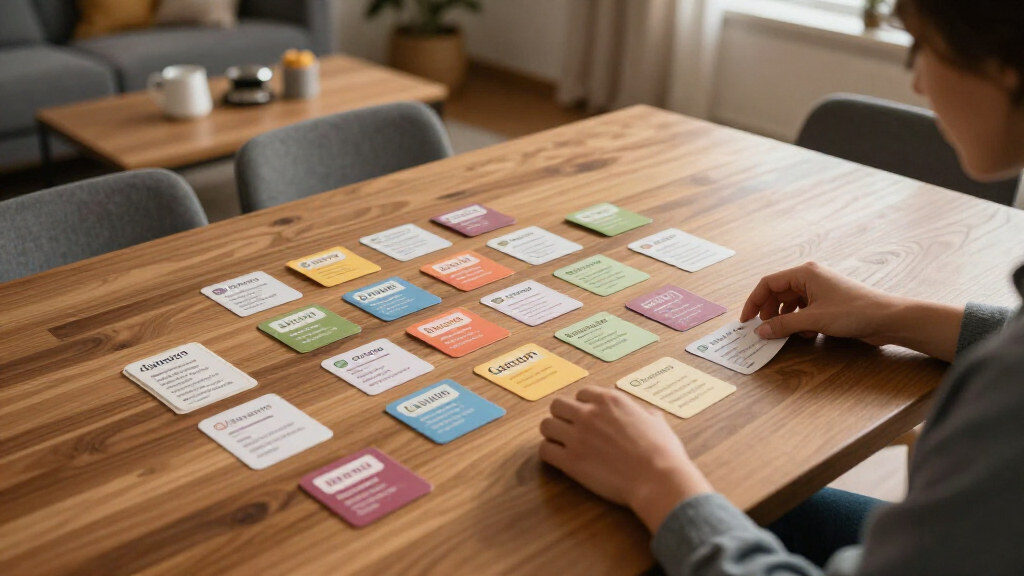

I rank FLUYTCO Love Lingual as the best overall relationship communication game because its couples-focused prompts balance playful conversation with meaningful disclosure. WE’RE NOT REALLY STRANGERS Couples Edition is the stronger choice for emotional vulnerability, while The Skin Deep Healing Edition is designed for partners working through distance or strain. The main choice is between approachable prompts that create an easy date night and more intense questions that require patience, trust, and emotional readiness. Deck size matters less than prompt quality, progression, and how closely the tone matches the relationship. Continue reading for my full breakdown of all 15 options and the buyer types each one serves best.
Get ready for Prime Big Deal Days — try Prime free
Exclusive member deals on October 6–7, plus fast free delivery. Cancel anytime.
Start your free trialAs an affiliate, we earn on qualifying purchases.
Key Takeaways
- FLUYTCO Love Lingual earns the top position because it offers the most balanced path from light conversation to greater intimacy without feeling narrowly tied to one relationship stage.
- Couples-specific design beats broad branding: WE’RE NOT REALLY STRANGERS Couples Edition is a better fit for romantic communication than the original adult game, which has a wider social focus.
- More cards do not automatically produce better conversations. Life Sutra Couple Connect offers unmatched volume at 400 cards, but shorter decks can feel more focused and easier to revisit.
- Emotional intensity creates the clearest dividing line. Chatbox Couples Edition and TableTopics Couples suit low-pressure play, while The Skin Deep Healing Edition asks for far more vulnerability.
- Relationship stage changes the best choice. New couples benefit from accessible discovery prompts, whereas Long Term Couples Edition is shaped around familiarity, routines, and rediscovery.
| FLUYTCO Love Lingual: The Original Couples Card Game |  | Best Overall | Number of Cards: 150 | Format: Structured couples conversation game | Category Count: 5 | VIEW LATEST PRICE | See Our Full Breakdown |
| We’re Not Really Strangers Card Game for Adults |  | Best for Couples Who Also Host Friends | Number of Cards: 150 | Players: 2-6 | Recommended Age: 15+ | VIEW LATEST PRICE | See Our Full Breakdown |
| Couples Connection Cards – 50 Conversation Starters for Couples |  | Best Compact Travel Pick | Number of Cards: 50 | Format: Couples conversation starters | Suitable For: All relationship stages | VIEW LATEST PRICE | See Our Full Breakdown |
| The 5 Love Languages® Card Game for Couples |  | Best Structured Variety | Number of Prompt Cards: 300 | Recommended Age: 16+ | Players: 2 | VIEW LATEST PRICE | See Our Full Breakdown |
| Chatbox Couples Edition Conversation Card Game for Couples |  | Best for Low-Pressure Starts | Category Count: 5 | Categories: Personality, Love and Romance, Past and Present, Dreams and Desires, Fun Hypotheticals | Suitable For: Newly dating through long-term couples | VIEW LATEST PRICE | See Our Full Breakdown |
| TableTopics Couples Conversation Starter Card Game for Romantic Partners |  | Best for Casual Date Nights | Number of cards: 135 | Card format: Question cards | Intended players: 2 adults | VIEW LATEST PRICE | See Our Full Breakdown |
| Partners Are Human Conversation Cards for Couples, Bonding Game, 140 Cards |  | Best Mix of Talk and Activities | Total cards: 140 | Question cards: 100 | Activity cards: 40 | VIEW LATEST PRICE | See Our Full Breakdown |
| Let’s Get Deep by Relatable – Couples Question Card Game for Intimacy and Connection |  | Best for Intimate Date Nights | Number of cards: 200 | Minimum age: 17+ | Game type: Conversation and intimacy | VIEW LATEST PRICE | See Our Full Breakdown |
| WE’RE NOT REALLY STRANGERS Couples Edition – Conversation Card Game for Couples |  | Best Guided Progression | Number of cards: 150 | Players: 2 | Minimum age: 15+ | VIEW LATEST PRICE | See Our Full Breakdown |
| The Skin Deep Healing Edition – 199 Question Cards to Heal Strained Relationships |  | Best for Relationship Repair | Number of cards: 199 | Card format: Question cards | Primary purpose: Healing strained relationships | VIEW LATEST PRICE | See Our Full Breakdown |
| BestSelf Intimacy Deck |  | Best Structured Conversation Deck | Number of Prompts: 170 | Topic Count: 7 curated topics | Age Range: 204 months and up | VIEW LATEST PRICE | See Our Full Breakdown |
| Couples Edition – 199 Meaningful Conversation Cards for Couples |  | Best for Road Trips | Number of Cards: 199 | Product Type: Conversation card deck | Intended Audience: Couples | VIEW LATEST PRICE | See Our Full Breakdown |
| 200 Couples Conversation Cards & Date Night Question Game |  | Best Balance of Fun and Depth | Number of Cards: 200 | Brand: Talking Point Cards | Model Name: Couples | VIEW LATEST PRICE | See Our Full Breakdown |
| Long Term Couples Edition – 199 Meaningful Conversation Cards for Couples |  | Best for Established Partners | Number of Cards: 199 | Product Type: Meaningful conversation cards | Primary Audience: Long-term couples | VIEW LATEST PRICE | See Our Full Breakdown |
| Life Sutra Couple Connect Game |  | Best High-Capacity Deck | Number of Cards: 400 | Product Type: Couples conversation game | Primary Audience: Newlyweds | VIEW LATEST PRICE | See Our Full Breakdown |
More Details on Our Top Picks
FLUYTCO Love Lingual: The Original Couples Card Game
I rank Love Lingual as the best overall choice because its 150 prompts balance range, depth, and manageable 10-to-20-minute sessions. The five categories move beyond romance alone, giving couples room to discuss family, individual identity, intimacy, and shared plans. That breadth makes it more relationship-focused than We’re Not Really Strangers, which also serves friends and groups, while offering three times the prompts found in Couples Connection Cards. The tradeoff is a lack of quizzes, date ideas, or playful mechanics; The 5 Love Languages Card Game offers more activity variety. Some questions may also feel intrusive when trust is fragile. I see this as the strongest fit for couples who want repeatable, focused communication practice, rather than a competitive game-night experience.
Pros:- 150 prompts provide more lasting variety than smaller travel decks
- Five categories cover both couple dynamics and individual perspectives
- Short 10-to-20-minute sessions fit regular relationship check-ins
- Portable format works at home, while traveling, or on date nights
Cons:- No quizzes, challenges, scoring, or other game mechanics
- Intimate questions may feel too personal for partners with limited trust
- Conversation-only format can become familiar after repeated use
Best for: Couples at any relationship stage who want short, recurring conversations spanning intimacy, family, identity, and future plans
Not ideal for: Couples seeking scoring, competition, or mostly playful prompts, since the experience relies entirely on personal discussion
- Number of Cards:150
- Format:Structured couples conversation game
- Category Count:5
- Categories:Couple, Intimacy, Past & Future, Individual, Family
- Suitable For:Any relationship stage
- Usage Time:10-20 minutes
- Use Location:At home or on the go
- Communication Focus:Connection, trust, and mutual understanding
Our verdict“I recommend Love Lingual for couples who want the most balanced mix of depth, subject range, and session-friendly communication prompts.”
We’re Not Really Strangers Card Game for Adults
We’re Not Really Strangers earns its place through flexibility: two partners can use it for a date, yet the two-to-six-player range also suits gatherings with friends. Its three progressive question levels, wildcards, writing supplies, and Dig Deeper cards create more direction than Love Lingual’s straightforward prompt format. However, that broader social design makes it less specifically tuned to romantic communication than The 5 Love Languages Card Game. I would choose it when a couple wants one deck for dates and group conversations, not solely relationship work. Emotional intensity is the central compromise; prompts can bring up feelings that do not fit a casual game night, and the 15-plus age rating excludes younger family members. Compared with Chatbox Couples Edition, this is more structured but potentially more exposing.
Pros:- Supports two to six players across date nights and social gatherings
- Three levels create a clear path from initial impressions to deeper disclosure
- Wildcards and Dig Deeper cards add structure beyond basic question prompts
- Included notepad and pencils support written reflection
Cons:- Questions may trigger strong emotions in an otherwise casual setting
- Broader relationship focus is less couple-specific than dedicated romance decks
- Age rating of 15-plus limits family use with younger players
Best for: Couples who want one structured conversation deck for both private date nights and adult or teen group gatherings
Not ideal for: Couples wanting romance-specific guidance or low-stakes entertainment, since the prompts may become emotionally intense and are not exclusively relationship-centered
- Number of Cards:150
- Players:2-6
- Recommended Age:15+
- Question Levels:3
- Wildcards:Included
- Writing Materials:1 notepad and 2 pencils
- Dig Deeper Cards:2 transparent cards
- Suggested Settings:Game nights and date nights
Our verdict“I would pick this deck for couples who value emotional depth but also want a game they can bring to gatherings with friends.”
Couples Connection Cards – 50 Conversation Starters for Couples
I place Couples Connection Cards in the travel slot because its concise 50-card format is easier to pack and finish than Love Lingual’s 150-card deck or The 5 Love Languages Card Game’s 300 prompts. It makes particular sense for long-distance visits, weekend trips, and occasional date nights, where immediate conversation matters more than a large content library. The questions mix meaningful and fun discussion, so the tone is less intimidating than the progressive emotional structure of We’re Not Really Strangers. That smaller scale is also its main weakness: couples who use prompts weekly may exhaust the deck quickly, and there are no added quizzes or activity formats to extend replay value. I see it as a portable conversation aid rather than a full relationship program.
Pros:- Compact 50-card format is easy to pack for visits and trips
- Supports both meaningful and fun couple conversations
- Works across newly formed and established relationships
- Gift-ready positioning suits weddings, anniversaries, and Valentine’s Day
Cons:- Fifty prompts offer much less variety than the larger decks in the lineup
- No structured progression, quizzes, or date activities
- Frequent users may encounter repeated questions fairly quickly
Best for: Traveling or long-distance couples who want a small deck for occasional dates, reunions, and short shared trips
Not ideal for: Couples planning weekly communication sessions, because 50 prompts and no additional activities limit long-term variety
- Number of Cards:50
- Format:Couples conversation starters
- Suitable For:All relationship stages
- Discussion Style:Deep, meaningful, and fun
- Relationship Use:In-person and long-distance couples
- Suggested Settings:Date nights, travel, and long-distance visits
- Gift Occasions:Anniversaries, weddings, and Valentine’s Day
Our verdict“I recommend this compact deck for couples who prioritize portability and occasional connection over a large, highly structured prompt library.”
The 5 Love Languages® Card Game for Couples
The 5 Love Languages Card Game offers the broadest activity mix in this group, pairing 300 prompts with questions, quizzes, and date ideas. Those formats turn discussion into action, making it better suited to couples who lose interest in question-only decks such as Love Lingual or Couples Connection Cards. I rank it below the overall pick because its named relationship framework may feel prescriptive to partners who prefer open-ended exploration. It is also strictly designed for two players, unlike We’re Not Really Strangers, which can include up to six. Still, the large prompt count gives couples more long-term variety, while the date suggestions can help translate expressed needs into shared plans. My reservation is that both partners must actively engage; quizzes and guided exercises can feel forced when one person is reluctant.
Pros:- Three hundred prompts provide the largest library among these five picks
- Questions, quizzes, and date ideas create varied ways to communicate
- Date suggestions help couples turn discussion into shared activities
- Two-player focus keeps every prompt centered on the relationship
Cons:- The love-languages framework may feel restrictive or overly prescriptive
- Limited to two players with no group-play option
- Guided exercises depend heavily on willing participation from both partners
Best for: Committed couples who want guided questions, quizzes, and date ideas built around an established relationship framework
Not ideal for: Partners who dislike prescribed communication models or want a game that can include friends, since play is limited to two people
- Number of Prompt Cards:300
- Recommended Age:16+
- Players:2
- Format:Couples card game
- Prompt Types:Questions, date ideas, and quizzes
- Relationship Focus:Communication, romance, and expressions of needs
Our verdict“I would choose this game for couples who want the largest and most varied guided program, provided both partners appreciate its specific framework.”
Chatbox Couples Edition Conversation Card Game for Couples
I see Chatbox Couples Edition as the easiest entry point for partners who want to begin talking without learning rules or following a staged program. Its five themes range from personality and romance to dreams and fun hypotheticals, giving a couple more tonal flexibility than Love Lingual’s deeper emphasis. It also feels less formal than The 5 Love Languages Card Game because there are no quizzes or prescribed activities. That simplicity helps on spontaneous dates and trips, but it leaves couples to set their own pace and boundaries. The listed product data does not state a card count, making long-term variety harder to judge against the clearly defined 50-, 150-, and 300-card alternatives. I would choose it for casual connection with room to deepen, while couples seeking measurable progression should look elsewhere.
Pros:- No setup or rules makes it easy to start a conversation anywhere
- Five themes balance romantic, reflective, and playful subjects
- Compact travel-friendly design suits dates, trips, and casual quality time
- Broad relationship-stage range works for new and long-term couples
Cons:- No structured gameplay or progression for couples wanting guided sessions
- Product data does not state the number of cards, obscuring expected variety
- Value depends heavily on both partners volunteering thoughtful answers
Best for: Newly dating or conversation-shy couples who want spontaneous prompts mixing romance, personality, dreams, and playful hypotheticals
Not ideal for: Couples seeking a defined communication program, since there are no rules, progression system, or stated card count
- Category Count:5
- Categories:Personality, Love and Romance, Past and Present, Dreams and Desires, Fun Hypotheticals
- Suitable For:Newly dating through long-term couples
- Setup:None required
- Rules:No rules required
- Travel Friendly:Yes
- Suggested Settings:Date nights, travel, and quality time
- Gift Occasions:Anniversaries, weddings, and engagements
Our verdict“I recommend Chatbox Couples Edition for partners who want an approachable, portable prompt deck without formal exercises or emotionally intense staging.”
TableTopics Couples Conversation Starter Card Game for Romantic Partners
I rank TableTopics Couples as the best choice for relaxed date nights because its 135 straightforward questions invite conversation without imposing levels, activities, or a therapeutic goal. That makes it easier to pick up during dinner than The Skin Deep Healing Edition, which asks partners to engage with emotionally strained areas. The clear cube also looks polished enough to leave on a coffee table, so spontaneous use is more likely. Compared with Let’s Get Deep, however, this set offers fewer cards and less emphasis on escalating intimacy. I see it working best for partners who want low-pressure reconnection rather than a highly structured game. Its narrow couples-only focus also limits its usefulness for gatherings, and some prompts may feel too broad or mismatched for partners with specific communication challenges.
Pros:- 135 prompts provide enough variety for many date nights
- Simple question format requires little setup or rule learning
- Works across new and established romantic relationships
- Clear cube offers sturdy, display-friendly storage
Cons:- No progressive levels for couples who want a guided path toward deeper topics
- Restricted to romantic-partner conversations rather than group use
- Broad prompts may not address specific relationship concerns
Best for: Romantic partners who want an approachable, low-pressure conversation prompt set for dinners and recurring date nights
Not ideal for: Couples seeking structured relationship repair or mixed-group play, since the questions are broad and intended for two romantic partners
- Number of cards:135
- Card format:Question cards
- Intended players:2 adults
- Audience:Romantic partners
- Relationship stages:Suitable for couples at any stage
- Storage:Clear cube container
Our verdict“I recommend this set for couples who want easy conversation over dinner without committing to an intense intimacy exercise.”
Partners Are Human Conversation Cards for Couples, Bonding Game, 140 Cards
Partners Are Human earns its place by combining 100 questions with 40 activities, giving couples something to do when continuous discussion starts to feel like an interview. That playful split distinguishes it from TableTopics Couples, which stays focused on prompts, and from The Skin Deep Healing Edition, which has a more serious repair-oriented purpose. I would choose this for partners who value emotional closeness but need variety to remain engaged. Progressive discussion levels can help conversations build naturally, while the keepsake-friendly format adds a personal dimension beyond a single date. The tradeoff is effort: activities and more provocative prompts demand greater participation than a casual card draw. Its 18+ positioning also narrows the audience, and couples who dislike guided vulnerability may find the deeper material too forceful.
Pros:- Mixes 100 conversation prompts with 40 interactive activities
- Progressive structure supports movement from playful to more personal discussion
- Varied format can keep recurring date nights from feeling repetitive
- Supports personalized keepsakes as well as live conversation
Cons:- Activities require more time and participation than question-only decks
- Some prompts may feel overly provocative for reserved partners
- Designed for adult couples rather than families or social groups
Best for: Adult couples who get bored with question-only decks and want a blend of conversation, playful activities, and keepsake opportunities
Not ideal for: Time-pressed or reserved couples who want quick, light prompts without activities or provocative discussion
- Total cards:140
- Question cards:100
- Activity cards:40
- Minimum age:18+
- Material:Cardstock
- Brand:Parents Are Human
- Model name:116partnersarehuman
- Set name:Partners Are Human
- UPC:197644906529
Our verdict“I would pick this for adult couples who want conversation balanced by playful interaction and are comfortable investing real time in the experience.”
Let’s Get Deep by Relatable – Couples Question Card Game for Intimacy and Connection
I place Let’s Get Deep highest for couples who want a date-night game aimed directly at intimacy and personal disclosure. Its 200-card count exceeds WE’RE NOT REALLY STRANGERS Couples Edition and TableTopics Couples, giving frequent players more material before repetition sets in. The varied card types also create more momentum than a stack of unrelated questions, making it useful for anniversaries and long-distance video dates as well as evenings at home. That focus comes with a firm boundary: the mature content and 17+ rating make it unsuitable for younger players or couples wanting consistently light conversation. It also depends heavily on mutual enthusiasm; a reluctant partner can make probing prompts feel pressured. Compared with The Skin Deep Healing Edition, I see this as better for building intimacy than addressing active conflict or repairing emotional harm.
Pros:- Large 200-card deck supports repeated use
- Mature prompts are geared toward emotional and romantic intimacy
- Varied card types provide more structure than a basic prompt deck
- Adaptable to in-person and long-distance dates
Cons:- Mature content is inappropriate for some ages and comfort levels
- Probing questions can feel pressured when one partner is less willing to participate
- Not specifically designed for conflict repair
Best for: Couples aged 17 or older who actively want deeper, mature conversation during date nights, anniversaries, or long-distance calls
Not ideal for: Younger players or partners who prefer playful, surface-level prompts and do not want mature personal topics
- Number of cards:200
- Minimum age:17+
- Game type:Conversation and intimacy
- Primary audience:Couples
- Content level:Mature
- Suggested occasions:Date nights, anniversaries, and long-distance conversations
Our verdict“I recommend this deck for willing couples who want a substantial, mature intimacy game rather than casual small talk or relationship therapy.”
WE’RE NOT REALLY STRANGERS Couples Edition – Conversation Card Game for Couples
WE’RE NOT REALLY STRANGERS Couples Edition is my pick for partners who want conversations to deepen in deliberate stages. Its three-level structure and wildcards provide a clearer emotional arc than TableTopics Couples, whose standalone prompts suit more casual use. With 150 cards, it offers less volume than Let’s Get Deep but stronger guidance for moving from perception to honesty and reflection. That organization can help couples who freeze when asked to start a meaningful discussion, and the 15+ age rating is more inclusive than adult-only alternatives. Still, staged vulnerability is not automatically comfortable: sensitive questions may expose disagreement or hurt, and the game works poorly if either person feels pushed to disclose. It is also built strictly for two, so I would not choose it for group connection or family conversation.
Pros:- Three levels create a clear progression toward deeper conversation
- Wildcards break up the question sequence and add variety
- 150 cards provide substantial replay value
- 15+ rating accommodates some younger couples
Cons:- Sensitive prompts can surface conflict without providing professional support
- The format depends on both partners being ready for candid disclosure
- Two-player design prevents group or family use
Best for: Couples who want a structured path from approachable observations to honest reflection and are both ready to share openly
Not ideal for: Conflict-avoidant partners or social groups, because sensitive staged questions require mutual openness and the game supports only two players
- Number of cards:150
- Players:2
- Minimum age:15+
- Conversation levels:3
- Card types:Conversation cards and wildcards
- Primary audience:Couples
- Relationship stages:Couples at any stage
Our verdict“I favor this deck for couples who want structured emotional progression and accept that honest answers may create uncomfortable moments.”
The Skin Deep Healing Edition – 199 Question Cards to Heal Strained Relationships
I reserve The Skin Deep Healing Edition for relationships that need more than date-night entertainment. Its 199 repair-focused questions are designed to reopen communication across couples, friends, and family, giving it a broader audience than every couples-only deck in this batch. Compared with Let’s Get Deep, the goal is healing strained bonds rather than creating romantic intimacy; compared with WE’RE NOT REALLY STRANGERS Couples Edition, it offers more cards but no stated three-level path. This makes it a strong fit when both participants want to understand emotional barriers and can allow enough time for thoughtful answers. It is not a conventional game, though, and buyers seeking laughter, competition, or activities may find the format heavy. Personal questions can also reopen painful issues, so I would not treat it as a replacement for professional support in high-conflict situations.
Pros:- Repair-centered prompts directly address strained communication
- 199 cards cover a broad range of discussion topics
- Works for couples, friends, and family members
- Supports deliberate reflection and mutual understanding
Cons:- Personal prompts may reopen painful issues without offering professional mediation
- Question-only format lacks playful activities or conventional game mechanics
- Meaningful participation requires willingness and emotional readiness from everyone involved
Best for: Couples, relatives, or friends who mutually want a focused conversation tool for reconnecting after distance, tension, or unresolved hurt
Not ideal for: People in high-conflict or unsafe relationships who need professional guidance, or players seeking a light and competitive party game
- Number of cards:199
- Card format:Question cards
- Primary purpose:Healing strained relationships
- Communication goal:Reconnection and deeper understanding
- Suitable relationships:Couples, friends, and family
- Game style:Conversation-focused
Our verdict“I recommend this edition for willing participants seeking serious reconnection, provided they do not mistake a card deck for professional relationship care.”
BestSelf Intimacy Deck
I rank the BestSelf Intimacy Deck highly for couples who want guided conversations with more structure than a stack of random questions. Its 170 psychology-backed prompts across seven topics can move a date from playful discussion toward emotional growth without requiring couples to invent a starting point. Compared with the 200 Couples Conversation Cards, this deck has fewer prompts but a clearer thematic framework, which makes choosing a subject easier. It is also more broadly relevant across relationship stages than Life Sutra Couple Connect, which leans toward newlyweds. The tradeoff is intensity: this is connection work rather than a casual party game, and partners who are tired, guarded, or reluctant to share may find sessions demanding. Repeated use can also make familiar cards lose their impact.
Pros:- Seven curated topics give conversations a useful structure
- Psychology-backed prompts support emotional openness
- 170 prompts provide enough variety for recurring date nights
- Works for both focused discussions and relaxed pillow talk
Cons:- The serious emotional focus may feel heavy for casual evenings
- Both partners must be willing to answer openly
- Frequent users may encounter diminishing novelty
Best for: I recommend it for adult couples who want organized, psychologically informed prompts for regular date-night or pillow-talk rituals.
Not ideal for: I would skip it for couples seeking competitive play, comedy-led entertainment, or questions suitable for children.
- Number of Prompts:170
- Topic Count:7 curated topics
- Age Range:204 months and up
- Brand:BestSelf Co.
- Model Name:BestSelf Card Deck for Couples
- Material:Cardstock
- Included Components:Prompts for meaningful conversations
- UPC:851042008611
Our verdict“I would choose this deck for structured relationship growth, provided both partners want conversation rather than conventional gameplay.”
Couples Edition – 199 Meaningful Conversation Cards for Couples
The Couples Edition earns my road-trip role because its 199 standalone questions suit long car rides, weekends away, and dates where elaborate rules would get in the way. It offers more prompts than the BestSelf Intimacy Deck, giving partners plenty of material without committing to a seven-topic structure. That flexibility makes it easy to draw a card whenever conversation slows, while the gift-friendly format also works for anniversaries or bridal events. Against the 200 Couples Conversation Cards, however, it provides nearly the same quantity with less detail about question range or progression. I see this as a simple conversation aid, not a game with scores, challenges, or a defined finish. Question fit may vary by relationship stage, and the deck will stall if one partner supplies brief or guarded answers.
Pros:- 199 cards support many sessions before repeats become common
- Standalone format is convenient during travel
- Meaningful questions can open discussions beyond daily logistics
- Simple presentation makes it an accessible couples gift
Cons:- No described progression or topic system for guiding sensitive conversations
- Questions may not match every stage of a relationship
- Offers conversation prompts rather than varied game mechanics
Best for: I recommend it for couples who want a large, rule-free question deck for road trips, weekends away, and low-preparation date nights.
Not ideal for: I would skip it for groups, reluctant conversationalists, or couples who want questions arranged by relationship stage.
- Number of Cards:199
- Product Type:Conversation card deck
- Intended Audience:Couples
- Primary Use:Date nights
- Travel Use:Long car rides and trips
- Gift Use:Special occasions
Our verdict“I would pick this deck for portable, open-ended couple talk when convenience matters more than structured progression.”
200 Couples Conversation Cards & Date Night Question Game
I place the Talking Point Cards Couples set in the middle ground between breezy icebreakers and emotionally demanding intimacy decks. Its mix of lighthearted and deeper questions lets partners adjust the mood during a date, making it less narrowly serious than the Long Term Couples Edition. It also carries one more card than the 199-card Couples Edition, though that tiny numerical advantage matters less than the broader tonal range. The adult age guidance and all-stage positioning make this a practical choice for newer partners as well as established couples. Still, buyers get prompts without added game mechanics, so variety depends entirely on the questions and the partners’ answers. Card material is unspecified, and repeat sessions may expose overlapping themes. The lifetime defect warranty adds reassurance, but it does not address ordinary wear.
Pros:- Light and deep prompts let couples control the emotional intensity
- 200 cards provide substantial session variety
- Suitable across newer and established relationship stages
- Lifetime warranty covers manufacturer defects
Cons:- No activities, scoring, or mechanics beyond answering questions
- Card material and construction quality are not specified
- Themes may begin to feel repetitive after extensive use
Best for: I recommend it for couples at any relationship stage who want to alternate between playful questions and more revealing discussions.
Not ideal for: I would skip it for buyers who want challenges, scoring, premium material details, or a tightly sequenced intimacy program.
- Number of Cards:200
- Brand:Talking Point Cards
- Model Name:Couples
- Set Name:Couples Connection Cards
- Minimum Age:216 months
- Maximum Age:1200 months
- Model Year:2023
- Warranty:Lifetime warranty against manufacturer defects
- UPC:719281744038
Our verdict“I would choose this set when both playful banter and deeper communication belong in the same date-night deck.”
Long Term Couples Edition – 199 Meaningful Conversation Cards for Couples
The Long Term Couples Edition has the most clearly defined audience in this batch: partners who already share years of history but want to move beyond routine conversation. Its 199 questions focus on reconnection, reflection, and renewed intimacy, giving married or established couples a better fit than the general Couples Edition. Compared with Life Sutra Couple Connect, which is tailored toward newlyweds and supplies 400 cards, this deck sacrifices quantity for questions aimed at relationships with accumulated memories and established patterns. That focus is also its limitation. New couples may lack the shared context behind some discussions, while partners seeking jokes or fast entertainment may find the tone too earnest. I would treat it as a guided relationship-building tool for vacations and intentional dates, not a low-effort diversion when either person is unwilling to explore sensitive subjects.
Pros:- Questions are directed at the realities of established relationships
- Reflection-led format can move conversation beyond daily routines
- 199 cards support repeated date-night or vacation sessions
- Works as a focused gift for married and long-term couples
Cons:- Narrow audience makes it less adaptable than an all-stage deck
- Serious prompts may feel emotionally taxing
- Repeated use can reduce the novelty of familiar themes
Best for: I recommend it for married or long-term partners who want to revisit shared history, examine routines, and renew emotional closeness.
Not ideal for: I would skip it for new couples, conflict-avoidant partners, or anyone seeking a light party-style date activity.
- Number of Cards:199
- Product Type:Meaningful conversation cards
- Primary Audience:Long-term couples
- Additional Audiences:Married couples and partners
- Primary Use:Date nights
- Travel Use:Vacations
- Purpose:Relationship building and reconnection
Our verdict“I would select this deck for established couples ready to examine their shared history and reconnect through deliberate discussion.”
Life Sutra Couple Connect Game
With 400 thought-provoking cards, the Life Sutra Couple Connect Game offers twice the prompt count of the 200-card Talking Point Cards set and more than double that of the BestSelf Intimacy Deck. I give it the high-capacity role because that volume supports frequent date nights with less risk of quickly exhausting the deck. Its psychology-influenced approach targets trust, communication, and emotional understanding, while the newlywed emphasis can help couples build habits before routines harden. More cards do create a less selective experience, though: partners may prefer the BestSelf deck’s seven-topic organization when they want a clearer path through a session. Life Sutra also depends on mutual openness and sustained participation; quantity cannot compensate for reluctant answers. Long-term couples wanting questions about years of shared history may find the Long Term Couples Edition more precisely matched to them.
Pros:- 400 cards provide the largest prompt library in this batch
- Psychology-influenced questions target trust and communication
- Newlywed focus supports early relationship habit building
- A portion of the product mission supports Feeding America
Cons:- Newlywed positioning may feel less relevant to long-term couples
- Large card count can feel less curated than smaller themed decks
- Meaningful results require active and candid participation from both partners
Best for: I recommend it for newlyweds and highly engaged couples who plan to make communication cards a frequent part of date nights.
Not ideal for: I would skip it for long-term partners seeking questions tailored to shared history or couples who prefer short, tightly curated decks.
- Number of Cards:400
- Product Type:Couples conversation game
- Primary Audience:Newlyweds
- Additional Audience:Couples
- Communication Goal:Strengthen communication
- Trust Goal:Build trust
- Connection Goal:Enhance emotional connection
- Community Support:Donations support Feeding America
Our verdict“I would buy this for an open, newly married couple that values prompt quantity and expects to return to the deck often.”
How We Picked
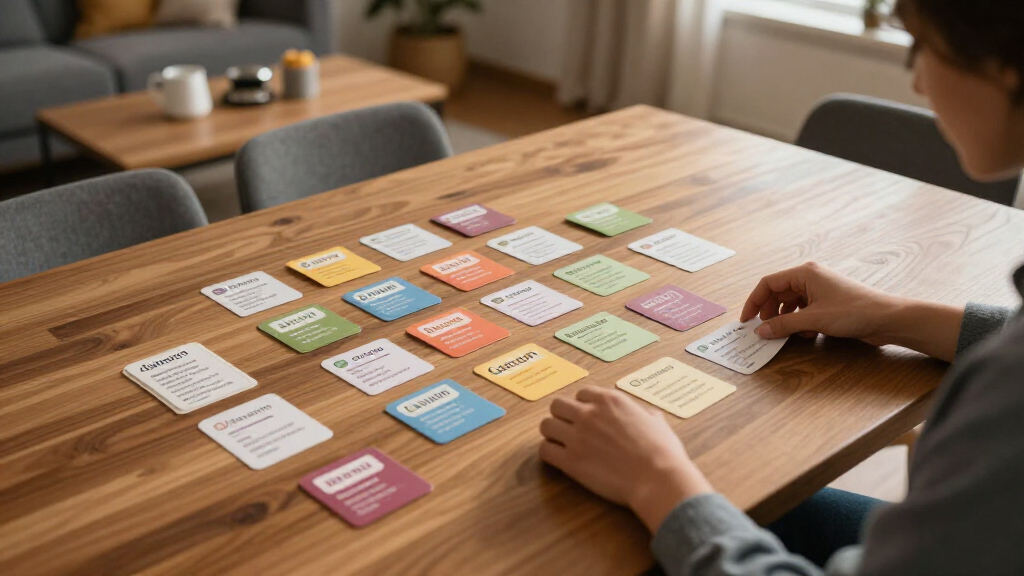
I evaluated these games through the lens of conversation quality, not raw card count or brand recognition. My main criteria were the relevance of the prompts to romantic partners, the balance between playful and serious questions, emotional pacing, clarity of instructions, replay potential, and the likelihood that both people would feel able to participate. I also weighed audience fit, including whether a deck serves new couples, established partners, strained relationships, or players who simply want a relaxed date-night activity. Physical quantity influenced value, but I treated usable prompt quality as more meaningful than volume alone.
I placed decks higher when they offered clear progression, broad appeal, and enough variety to support repeat conversations. More specialized products ranked according to how well they served their stated purpose, which is why The Skin Deep Healing Edition remains a strong recommendation even though its heavier tone limits general use. Couples-focused versions also received preference over broad adult conversation games when their prompts better matched the roundup’s relationship communication focus. My final ordering reflects versatility first, followed by depth, ease of use, specialization, and value.
Factors to Consider When Choosing Relationship Communication Games
I would choose a relationship communication game by matching its emotional demands to the couple, the setting, and the desired outcome. The right deck should make honest conversation easier without pushing either partner into disclosure they did not agree to share.
Match the Emotional Depth to Both Partners
I start with emotional readiness because a deck only works when both partners accept its level of vulnerability. Light prompts are better for early dates, hesitant players, and evenings when conversation should feel recreational. Questions about conflict, regret, trust, or unmet needs can be productive, but they may also create pressure if they appear without warning. I would ask each partner to rate the desired depth before opening the box and follow the lower rating. A deck with multiple intensity levels gives couples more control than one built entirely around serious disclosure. The deepest option is not the automatic winner; the best match is the one both people will willingly use.
Look for a Useful Prompt Progression
I favor games that provide a gradual conversational arc rather than mixing casual questions with emotionally loaded ones at random. A sensible sequence helps partners settle into the activity before discussing vulnerable subjects. This matters when one person opens up quickly and the other needs more time. Category labels, levels, or separate prompt groups also make it easier to adapt a session to a short dinner or a longer evening. Without that structure, players may spend time sorting cards or skipping questions, which weakens momentum. I would choose controlled progression over a larger but poorly organized deck.
Choose for the Relationship Stage
A new couple and a decade-long partnership rarely need the same questions. Early relationships benefit from discovery prompts about values, preferences, memories, and future hopes because the answers are still largely unknown. Established couples may get more from questions about changing identities, routines, appreciation, and assumptions that have gone unspoken. A generic deck can serve several stages, yet broad prompts may produce answers long-term partners have already heard. Specialized long-term editions trade some versatility for greater relevance to familiar partners. I would buy for the relationship as it exists now rather than for the widest advertised audience.
Judge Value by Usable Sessions, Not Card Count
A 400-card box can offer excellent longevity, but card count alone says little about repetition, specificity, or writing quality. I estimate value by how many prompts both partners would genuinely answer and how easily the deck can support different moods. A smaller, tightly edited set may provide more rewarding sessions than a large deck padded with similar questions. Larger collections make sense for frequent use, group settings, or couples who enjoy drawing only a few cards each week. Compact decks are easier to carry and less intimidating for occasional date nights. I would pay more for variety and replayability, not merely a heavier box.
Set Rules Before Sensitive Questions
Relationship games work better when couples agree that skipping is allowed and that an answer will not become ammunition in a later disagreement. I recommend setting a time limit, deciding whether follow-up questions are welcome, and creating a pause signal before play begins. These boundaries can prevent a recreational activity from turning into an unplanned confrontation. Alcohol may lower inhibition, but it can also reduce patience and make sensitive responses harder to interpret. For heavier decks, a calm private setting is a better fit than a party or crowded restaurant. A simple consent-based format often matters more than the printed game rules.
Know When a Game Is the Wrong Tool
I would not treat a card deck as a substitute for professional support when a relationship involves abuse, fear, active betrayal, or repeated high-conflict exchanges. Healing-oriented questions can reveal difficult feelings without supplying the skills needed to manage the response. In those circumstances, emotional safety matters more than completing the game. Even in healthy relationships, either partner should be able to stop without being accused of avoiding the conversation. A deck is most useful as a conversation aid, not an authority that decides what must be discussed. If the questions repeatedly lead to escalation, I would set the cards aside and choose a more supported setting.
Frequently Asked Questions
Should I Buy a Couples-Specific Game or a General Adult Conversation Game?
I would choose a couples-specific deck when the main goal is discussing attraction, affection, shared plans, conflict styles, or emotional needs. General adult games often include strong conversation prompts, but some cards may focus on friendship, identity, or social perception rather than the relationship itself. That difference explains why WE’RE NOT REALLY STRANGERS Couples Edition fits this roundup better than the original adult version. A general deck still makes sense if it will also be used with friends or family. For dedicated date nights, relationship relevance usually outweighs wider usability.
How Deep Should a First Relationship Communication Game Be?
For a first purchase, I recommend a deck with mixed intensity or clearly separated levels. That format lets couples begin with easy questions and stop before the conversation feels forced. A highly vulnerable deck can work for emotionally open partners, but it may discourage repeat play if the first session feels exhausting. Beginners are better served by Chatbox Couples Edition or TableTopics Couples than by a healing-focused set. The best starting point creates curiosity without pressure.
Can These Games Help Repair a Strained Relationship?
A communication game can create an opening for structured honesty, particularly when both partners want to listen and reconnect. The Skin Deep Healing Edition is the most purpose-built option here because its questions focus on strained relationships rather than casual entertainment. Even so, cards cannot mediate an escalating argument or address unsafe behavior. I would use a healing deck in short sessions, allow unlimited passes, and stop when either person becomes overwhelmed. For persistent conflict, the game can supplement professional relationship support but should not replace it.
Will a Larger Deck Stay Interesting Longer?
A larger collection usually reduces repeat draws, which gives products such as Life Sutra Couple Connect an advantage for frequent play. Yet longevity also depends on whether the questions produce different answers as the relationship changes. Reflection prompts may remain useful for years, while fact-based questions can lose their novelty after one response. I would also check whether a large deck divides its content into themes, since organization makes hundreds of cards easier to use. Prompt variety is a better predictor of lasting value than the number printed on the box.
Can Relationship Communication Games Work for Long-Distance Couples?
Most card-based games can work over video or phone if one partner reads the prompts aloud. I would favor a deck with standalone questions rather than rules that depend on simultaneous card handling, scoring, or physical challenges. Partners can alternate who draws, send a photo of the chosen card, or schedule a fixed number of questions each week. Long-distance play often benefits from deeper follow-ups because visual cues and shared daily experiences are limited. A game becomes more sustainable when it supports a short recurring ritual instead of demanding a full game night.
Conclusion
For most couples, I recommend FLUYTCO Love Lingual as the best overall choice because it balances accessibility, romantic focus, and meaningful depth. The 200 Couples Conversation Cards & Date Night Question Game is my best-value pick for buyers who want a generous prompt supply, while Life Sutra Couple Connect is the premium choice for maximum variety across 400 cards. Beginners should start with Chatbox Couples Edition, whose approachable format asks less emotional preparation than the heavier decks. WE’RE NOT REALLY STRANGERS Couples Edition is the better match for vulnerability, Long Term Couples Edition serves established partners, and The Skin Deep Healing Edition is my specialist recommendation for couples trying to reconnect after strain. Buyers who prefer a familiar relationship framework should choose The 5 Love Languages® Card Game, while Let’s Get Deep suits a more playful date-night mood. I would make the final choice based on shared emotional readiness, since a modest deck both partners enjoy will produce better conversations than an ambitious one left unopened.
Fall Picks
fall essentials
As an affiliate, we earn on qualifying purchases.