

The best relationship book for most couples is The Seven Principles for Making Marriage Work, because it pairs decades of research with exercises you can actually start tonight. Close behind are The 5 Love Languages for couples who want a fast, low-effort entry point, and Fight Right for pairs whose real problem is how they argue, not whether they love each other. The main tradeoff in this category is depth versus accessibility: research-heavy guides like Getting the Love You Want demand more emotional labor but often deliver deeper change, while workbooks with structured programs get used more consistently. Price differences are small here, so the real question is which format matches how you and your partner actually like to work together. Read on for the full breakdown, including which books solve specific problems like rebuilding trust or breaking communication deadlocks.

Get gifts for the two of you delivered free with Prime
- Fast, free delivery on millions of items
- Prime Video, Amazon Music and more included
- Member-only deals all year
Key Takeaways
- Research-backed books (Seven Principles, Fight Right, Getting the Love You Want) ranked highest because their frameworks hold up over months of use, not just the first week of enthusiasm.
- Structured workbooks with week-by-week programs, like the Relationship Workbook for Couples and Hold Me Tight Workbook, consistently outperform plain-reading books for couples who struggle to turn reading into conversation.
- The 5 Love Languages remains the easiest on-ramp for reluctant partners, but its vocabulary alone won’t fix entrenched conflict, which is where Fight Right and The Next Conversation pull ahead.
- Trust-specific books such as Rebuilding Trust fill a gap the general guides leave open, but they demand both partners’ full commitment and can feel punishing for couples with milder issues.
- His Needs, Her Needs takes a heteronormative, gendered framework that some couples find clarifying and others find limiting, making it the most divisive pick on the list.
| The Inner Work of Relationships: An Invitation to Heal Your Inner Child and Create a Conscious Relationship Together |  | Best for Deep Emotional Healing | Format: Paperback / eBook | Primary Focus: Inner child healing and conscious partnership | Approach: Reflective and introspective | VIEW LATEST PRICE | See Our Full Breakdown |
| Relationship Workbook for Couples: 8-Week Program and Proven Strategies to Rebuild Trust, Resolve Conflict, Improve Communication, and Rekindle Intimacy |  | Best Structured Program | Format: Workbook | Program Length: 8 weeks | Primary Focus: Trust, conflict resolution, communication, intimacy | VIEW LATEST PRICE | See Our Full Breakdown |
| Getting the Love You Want: A Guide for Couples, Third Edition |  | Best Classic for Long-Term Change | Format: Paperback / Hardcover / eBook | Edition: Third Edition | Primary Focus: Imago therapy, unconscious partnership patterns | VIEW LATEST PRICE | See Our Full Breakdown |
| The 5 Love Languages: The Secret to Love That Lasts |  | Best for Beginners | Format: Paperback / Hardcover / eBook / Audiobook | Primary Focus: Five styles of expressing and receiving love | Approach: Concept-driven with practical examples | VIEW LATEST PRICE | See Our Full Breakdown |
| The Next Conversation: Argue Less, Talk More |  | Best for Communication Skills | Format: Hardcover / eBook / Audiobook | Primary Focus: Conflict de-escalation and conversation skills | Approach: Tactical and phrase-based | VIEW LATEST PRICE | See Our Full Breakdown |
| How We Love Workbook, Expanded Edition: Making Deeper Connections in Marriage | 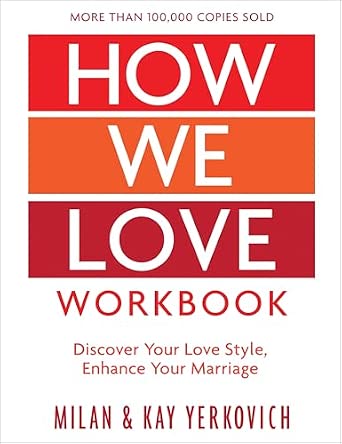 | Best for Attachment Style Work | Format: Workbook | Edition: Expanded Edition | Primary Focus: Attachment styles and deeper marital connection | VIEW LATEST PRICE | See Our Full Breakdown |
| Couple Skills: Making Your Relationship Work |  | Best Skills-Based Toolkit | Format: Trade paperback advice book | Primary Focus: Communication, trust, and general relationship skills | Content Type: Modular skills-based chapters | VIEW LATEST PRICE | See Our Full Breakdown |
| Fight Right: How Successful Couples Turn Conflict Into Connection |  | Best for Conflict-Heavy Couples | Format: Hardcover/paper trade book | Primary Focus: Conflict resolution and repair | Content Type: Narrative guidance with practical techniques | VIEW LATEST PRICE | See Our Full Breakdown |
| The Hold Me Tight Workbook: A Couple’s Guide for a Lifetime of Love |  | Best Therapy-Based Program | Format: Workbook | Primary Focus: Emotional connection and negative cycle repair | Therapeutic Basis: Emotionally Focused Therapy (EFT) | VIEW LATEST PRICE | See Our Full Breakdown |
| Love More, Fight Less: Communication Skills Every Couple Needs | 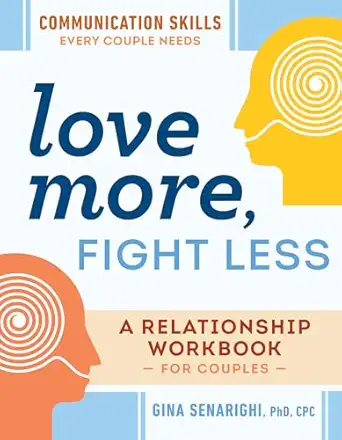 | Best Beginner Workbook | Format: Workbook | Primary Focus: Communication skills and conflict reduction | Content Type: Practical exercises | VIEW LATEST PRICE | See Our Full Breakdown |
| Rebuilding Trust: Guided Therapy Techniques and Activities to Restore Love, Trust, and Intimacy in Your Relationship |  | Best for Trust Recovery After a Breach | Primary Focus: Rebuilding trust, love, and intimacy | Format: Guided techniques and activities | Approach: Therapy-based exercises | VIEW LATEST PRICE | See Our Full Breakdown |
| His Needs, Her Needs: Making Romantic Love Last |  | Best Classic Framework for Long Marriages | Primary Focus: Identifying and meeting emotional needs in marriage | Framework: 10 vital emotional needs | Approach: Practical, action-oriented marriage guidance | VIEW LATEST PRICE | See Our Full Breakdown |
| The Seven Principles for Making Marriage Work: A Practical Guide from the Country’s Foremost Relationship Expert |  | Best Research-Backed Overall Guide | Primary Focus: Seven research-based principles for marital success | Approach: Evidence-based, expert-guided advice | Author Background: Leading relationship researcher | VIEW LATEST PRICE | See Our Full Breakdown |
| Communication Skills for Couples: Guide to Improve Communications, Resolve Conflict, Deepen Intimacy, Strengthen Marriage and Create a Healthy Relationship |  | Best Beginner-Friendly Communication Primer | Primary Focus: Communication skills and conflict resolution | Approach: Practical strategies and techniques | Scope: Communication, conflict, intimacy, marriage health | VIEW LATEST PRICE | See Our Full Breakdown |
| relationship books for couple | Primary Focus | Format | Approach |
|---|---|---|---|
| The Inner Work of Relationship | Inner child healing and conscious partnership | Paperback / eBook | Reflective and introspective |
| Relationship Workbook for Coup | Trust, conflict resolution, communication, intimacy | Workbook | — |
| Getting the Love You Want: A G | Imago therapy, unconscious partnership patterns | Paperback / Hardcover / eBook | Theory plus couples exercises |
| The 5 Love Languages: The Secr | Five styles of expressing and receiving love | Paperback / Hardcover / eBook / Audiobook | Concept-driven with practical examples |
| The Next Conversation: Argue L | Conflict de-escalation and conversation skills | Hardcover / eBook / Audiobook | Tactical and phrase-based |
| How We Love Workbook | Attachment styles and deeper marital connection | Workbook | Attachment-based self-examination |
| Couple Skills: Making Your Rel | Communication, trust, and general relationship skills | Trade paperback advice book | — |
| Fight Right: How Successful Co | Conflict resolution and repair | Hardcover/paper trade book | — |
| The Hold Me Tight Workbook: A | Emotional connection and negative cycle repair | Workbook | — |
| Love More | Communication skills and conflict reduction | Workbook | — |
| Rebuilding Trust: Guided Thera | Rebuilding trust, love, and intimacy | Guided techniques and activities | Therapy-based exercises |
| His Needs | Identifying and meeting emotional needs in marriage | — | Practical, action-oriented marriage guidance |
| The Seven Principles for Makin | Seven research-based principles for marital success | — | Evidence-based, expert-guided advice |
| Communication Skills for Coupl | Communication skills and conflict resolution | — | Practical strategies and techniques |
More Details on Our Top Picks
The Inner Work of Relationships: An Invitation to Heal Your Inner Child and Create a Conscious Relationship Together
Most relationship books teach you how to interact with your partner; this one asks you to look inward first. The Inner Work of Relationships centers on healing the inner child — the unresolved emotional patterns each partner brings into the relationship — making it a fundamentally different read than skill-based options like The 5 Love Languages, which stays at the level of behavior and expression.
This pick makes the most sense for couples who keep hitting the same painful cycles despite knowing all the communication “rules.” The tradeoff is real, though: this is emotionally demanding work. Compared with the Relationship Workbook for Couples, which offers a tidy 8-week structure, this book demands more self-reflection and offers less hand-holding, so casual readers may stall out.
Pros:- Addresses root emotional patterns rather than surface-level symptoms
- Designed to be worked through together as a couple
- Strong fit for readers already interested in personal development
- Complements skill-based books by adding a healing dimension
Cons:- Requires significant emotional investment and willingness to revisit past wounds
- Lacks a clear structured timeline or program compared to workbook-style alternatives
Best for: Couples stuck in repeating conflict patterns who are ready for introspective, therapy-adjacent work rather than quick communication tips
Not ideal for: Couples wanting a structured, week-by-week program with clear exercises — this book is reflective rather than prescriptive
- Format:Paperback / eBook
- Primary Focus:Inner child healing and conscious partnership
- Approach:Reflective and introspective
- Audience:Couples interested in emotional healing
- Structure:Concept-driven chapters, not a fixed program
- Reading Level:Accessible self-help
Our verdict“Choose this if you and your partner want to heal the underlying emotional patterns driving your conflicts, not just manage them.”
Relationship Workbook for Couples: 8-Week Program and Proven Strategies to Rebuild Trust, Resolve Conflict, Improve Communication, and Rekindle Intimacy
If you and your partner do better with deadlines than open-ended reading, this is the pick that respects that. The 8-week program gives couples a defined start and finish — something none of the narrative-style books like Getting the Love You Want provide — with weekly exercises targeting trust, conflict, communication, and intimacy in sequence.
Compared with The Hold Me Tight Workbook, which is deeper but more theory-heavy, this option trades depth for momentum: it is easier to actually finish. That accessibility comes with drawbacks. The strategies are broadly applicable rather than tailored, so couples with serious trust breaches may find the exercises feel thin, and the two-month commitment means both partners need to genuinely buy in.
Pros:- Defined 8-week structure creates accountability and momentum
- Covers multiple problem areas: trust, conflict, communication, intimacy
- Exercise-based format turns reading into actual practice
- More approachable than dense theory-driven classics
Cons:- Requires an 8-week commitment from both partners
- Strategies may feel generic for couples dealing with deep betrayal or trauma
Best for: Couples who want a clear, time-boxed plan they can work through together week by week
Not ideal for: Couples where one partner is unwilling to commit to regular exercises — the program collapses without participation from both sides
- Format:Workbook
- Program Length:8 weeks
- Primary Focus:Trust, conflict resolution, communication, intimacy
- Structure:Weekly exercises and strategies
- Audience:Couples rebuilding after conflict or drift
- Time Commitment:Moderate weekly effort over two months
Our verdict“Best for couples who will actually do the homework — the structure is the value here, but only if you both show up for it.”
Getting the Love You Want: A Guide for Couples, Third Edition
Now in its third edition, Getting the Love You Want has earned its status as a fixture on couples’ bookshelves. Built on Imago Relationship Therapy, it argues that we unconsciously choose partners who mirror our unresolved childhood wounds — a framework that goes considerably deeper than the appreciation-style advice in The 5 Love Languages.
The payoff is durable insight: couples who grasp the underlying dynamic stop treating every argument as a fresh emergency. The tradeoff is density. Where The Next Conversation gets straight to tactical phrases for defusing arguments, Hendrix spends chapters building theory before offering exercises, and his heteronormative framing and spiritual undertones will not land for every reader.
Pros:- Decades of refinement across three editions
- Explains root causes of recurring relationship conflict
- Includes partner exercises, not just concepts
- Deeper framework than pop-psychology alternatives
Cons:- Theory-heavy early chapters slow the pace
- Heteronormative assumptions and spiritual framing may not resonate with all couples
Best for: Couples in committed, long-term relationships who want to understand why they fight, not just how to stop
Not ideal for: Readers wanting quick, tactical communication fixes — the theory-first structure demands patience before the practical payoff
- Format:Paperback / Hardcover / eBook
- Edition:Third Edition
- Primary Focus:Imago therapy, unconscious partnership patterns
- Approach:Theory plus couples exercises
- Audience:Committed couples seeking deep change
- Author Background:Harville Hendrix, Imago Relationship Therapy co-founder
Our verdict“A worthwhile investment for serious couples who want lasting insight into their dynamic, provided they can push through the theory.”
The 5 Love Languages: The Secret to Love That Lasts
This is the gateway book of the genre, and its bestselling status is earned through simplicity: identify your partner’s love language — words of affirmation, quality time, gifts, acts of service, or physical touch — and adjust accordingly. No other book on this list converts to everyday action faster, which is exactly why it works as a first relationship book.
But simplicity cuts both ways. Where The Inner Work of Relationships digs into why you feel unloved in the first place, Chapman stays at the level of expression and misses deeper dynamics entirely. Longtime readers of relationship literature will find the single concept stretched across an entire book, and the traditional framing around gender roles feels dated to some modern couples.
Pros:- Single memorable concept couples can apply the same day
- Extremely accessible writing with broad appeal
- Sparks productive conversations about emotional needs
- Widely gifted and easy to recommend to reluctant partners
Cons:- Concept can feel repetitive across a full book
- Too shallow for couples dealing with serious underlying conflict
Best for: Couples new to relationship books who want one simple, immediately applicable framework
Not ideal for: Experienced self-help readers or couples with entrenched conflict — one framework won’t touch deeper issues
- Format:Paperback / Hardcover / eBook / Audiobook
- Primary Focus:Five styles of expressing and receiving love
- Approach:Concept-driven with practical examples
- Audience:Couples at any stage, especially beginners
- Reading Difficulty:Very accessible
- Author:Gary Chapman
Our verdict“The right first step for couples who have never read a relationship book together — just know when to graduate to something deeper.”
The Next Conversation: Argue Less, Talk More
Where most entries in this roundup address the whole relationship, The Next Conversation narrows to one high-stakes moment: the argument itself. Its techniques for defusing conflict in real time — what to say, what to withhold, how to de-escalate — are more tactical than the reflective frameworks in Getting the Love You Want and more focused than the broad curriculum of the Relationship Workbook for Couples.
That narrowness is both the strength and the limit. Compared with Fight Right, which explores the meaning behind conflict, this book is about managing the mechanics of difficult conversations, applicable at work and home alike. Couples whose problems run deeper than communication style — trust breaches, resentment, emotional distance — will need a follow-up read, because this one deliberately stays in its lane.
Pros:- Highly tactical advice usable mid-argument
- Strategies transfer to professional and family conversations
- Focused scope means quick, practical reading
- Modern, direct voice without dense psychology jargon
Cons:- Narrow focus on communication leaves trust and intimacy untouched
- Less suited as a standalone fix for struggling relationships
Best for: Couples who fight well-meaning but escalate fast and want concrete phrases and tactics for cooling arguments down
Not ideal for: Couples whose core issues are trust or intimacy — communication tactics alone won’t resolve deeper fractures
- Format:Hardcover / eBook / Audiobook
- Primary Focus:Conflict de-escalation and conversation skills
- Approach:Tactical and phrase-based
- Audience:Couples and individuals prone to escalating arguments
- Scope:Communication-focused, applies beyond romance
- Reading Difficulty:Accessible, direct style
Our verdict“The best pick if arguments are your relationship’s weak point — buy it for the tactics, and pair it with a deeper book if problems run beyond communication.”
How We Love Workbook, Expanded Edition: Making Deeper Connections in Marriage
Couples who suspect their attachment patterns are driving repeated arguments will get more out of this workbook than from a general communication guide like Love More, Fight Less. The expanded edition leans on the Milan and Kay Yerkovich attachment framework, which means the exercises push partners to trace conflicts back to childhood wiring rather than just patching the surface argument. That depth is exactly why it earns its spot: it explains why you fight, not only how to stop. The tradeoff is real commitment — this is homework, not a casual read, and a partner who shows up half-heartedly will stall the whole process. Compared with The Hold Me Tight Workbook, the tone is more workbook-driven and less narrative, so readers wanting story-based therapy material may find it dry.
Pros:- Grounded in a specific attachment-style framework, giving couples a diagnostic lens most workbooks lack
- Expanded edition adds deeper material than the original for long-term growth
- Practical exercises convert insight into behavioral change between sessions
- Well suited to marriage-focused couples rather than casual dating
Cons:- Demands sustained, active participation from both partners to work at all
- The attachment material can feel clinical for couples wanting a lighter touch
Best for: Married couples who keep repeating the same fights and want to understand the attachment roots behind them
Not ideal for: Couples where one partner refuses to do written exercises — the format collapses without full participation
- Format:Workbook
- Edition:Expanded Edition
- Primary Focus:Attachment styles and deeper marital connection
- Content Type:Practical couples exercises
- Relationship Stage:Married or long-term committed couples
- Approach:Attachment-based self-examination
- Participation Required:Both partners
Our verdict“A strong pick for married couples ready to do real homework on the attachment patterns fueling their conflicts.”
Couple Skills: Making Your Relationship Work
Where How We Love digs into emotional history, this title takes the opposite approach: a modular skills toolkit couples can dip into chapter by chapter. That structure makes it a better fit for partners who want targeted help with one issue — say, rebuilding trust after a breach — without committing to a full program like the Relationship Workbook for Couples 8-week plan. Each section functions almost as a standalone mini-guide, which is genuinely useful when time is short. The downside is breadth over depth: because it covers communication, trust, and conflict in one volume, no single topic gets the layered treatment you’d find in a dedicated book like Fight Right. Sparse detail about the edition and thin review coverage also mean buyers are taking it on reputation of the New Harbinger self-help lineage rather than social proof.
Pros:- Modular structure lets couples target specific skills without a full program
- Covers communication, trust, and conflict in a single reference
- Practical, technique-driven approach rather than abstract theory
- Lower commitment than structured multi-week workbooks
Cons:- Breadth comes at the cost of depth on any single topic
- Limited review presence and edition details make it harder to vet before buying
Best for: Busy couples who want a dip-in, dip-out reference they can consult issue by issue rather than work through cover to cover
Not ideal for: Couples facing one deep, specific problem — a specialized single-topic book will serve them better
- Format:Trade paperback advice book
- Primary Focus:Communication, trust, and general relationship skills
- Content Type:Modular skills-based chapters
- Structure:Standalone topic sections
- Relationship Stage:Any stage
- Participation Required:Individual or joint reading
- Publisher Lineage:New Harbinger self-help imprint
Our verdict“A flexible reference for couples who want practical techniques on demand instead of a structured curriculum.”
Fight Right: How Successful Couples Turn Conflict Into Connection
This is the pick for couples whose real problem isn’t intimacy or communication in general — it’s that every disagreement escalates. Fight Right reframes conflict as the raw material for connection, which positions it a notch deeper than Love More, Fight Less, a workbook that teaches communication exercises but spends less time on the psychology of escalation itself. Compared with The Next Conversation, which leans toward everyday conversational habits, this book targets the couples who already talk plenty — they just do it at volume. The techniques are concrete enough to apply mid-argument, which is where most conflict books fail. The tradeoff: it presumes a fundamentally functional relationship underneath the fighting. Couples dealing with betrayal or contempt as the core issue will get more from a trust-focused title like Rebuilding Trust.
Pros:- Directly addresses escalation patterns rather than general communication hygiene
- Techniques are usable in the heat of an actual argument
- Reframes conflict as a path to connection rather than a threat
- Strong fit for verbally expressive couples who fight often
Cons:- Assumes a basically sound relationship beneath the conflict
- Less exercise-driven than workbook buyers may expect
Best for: Couples who love each other but escalate every disagreement and need tools to argue constructively
Not ideal for: Couples in crisis over betrayal or deep resentment — conflict tactics won’t address the underlying breach
- Format:Hardcover/paper trade book
- Primary Focus:Conflict resolution and repair
- Content Type:Narrative guidance with practical techniques
- Core Premise:Conflict as a gateway to connection
- Relationship Stage:Committed couples in recurring conflict
- Participation Required:Reading plus in-the-moment practice
- Depth:Psychology of escalation covered in depth
Our verdict“The right choice for couples who fight hot and need a playbook for turning arguments into closeness instead of distance.”
The Hold Me Tight Workbook: A Couple’s Guide for a Lifetime of Love
If any book on this list functions as quasi-couples-therapy, it’s this one. Built on Sue Johnson’s emotionally focused therapy — the same evidence-backed model behind the original Hold Me Tight — the workbook edition adds structured conversations that guide partners through the negative cycles they’re trapped in. Compared with How We Love, which also uses attachment theory, this version is more conversational and emotionally intimate in tone, making the work feel less clinical. It’s the strongest option for couples who want guided dialogue rather than fill-in-the-blank worksheets. Two honest caveats: both partners need to genuinely engage, and it isn’t a substitute for professional help where serious issues like addiction or affairs are in play. For couples wanting a structured program without the Relationship Workbook for Couples eight-week time commitment, the flexible pacing here is a real advantage.
Pros:- Based on emotionally focused therapy, one of the most researched couples interventions
- Guided conversations create emotional breakthroughs worksheets often miss
- Flexible pacing suits couples who can’t commit to a rigid multi-week program
- More intimate, narrative tone than comparable attachment workbooks
Cons:- Both partners must actively participate or the exercises stall
- Not equipped to address serious clinical-level relationship damage alone
Best for: Couples who want a guided, therapy-grade conversation program rooted in emotionally focused therapy
Not ideal for: Couples with severe issues such as affairs or addiction — this needs a real therapist alongside it
- Format:Workbook
- Primary Focus:Emotional connection and negative cycle repair
- Therapeutic Basis:Emotionally Focused Therapy (EFT)
- Content Type:Guided couple conversations
- Relationship Stage:Long-term committed couples
- Participation Required:Both partners, in depth
- Pacing:Flexible, self-directed
Our verdict“The closest thing to doing couples therapy at home, ideal for partners ready for emotionally deep guided conversations.”
Love More, Fight Less: Communication Skills Every Couple Needs
For couples new to relationship self-help, this is the gentlest on-ramp in the lineup. The subtitle promises exactly what’s inside: core communication skills delivered through accessible exercises, without the therapeutic depth that makes The Hold Me Tight Workbook demanding or the attachment groundwork How We Love requires. That simplicity is the point. Partners who feel intimidated by therapy-adjacent language will actually finish this one, and finishing matters more than depth for couples just starting out. The tradeoff is ceiling: experienced self-helpers who’ve already read The 5 Love Languages or worked through a communication guide will find the exercises familiar and the supporting material thin. It’s exercise-forward with limited supplementary reading, so anyone wanting theory alongside practice should step up to a fuller title.
Pros:- Approachable entry point for first-time relationship workbook users
- Exercises are quick and low-friction, raising the odds both partners finish
- Balances communication skills with basic conflict resolution
- Affordable and widely available
Cons:- Shallow supporting content — mostly exercises with little theory
- Experienced couples will find the material overlaps other popular titles
Best for: Couples new to relationship books who want simple, low-pressure communication exercises they’ll actually complete
Not ideal for: Couples who’ve already worked through other communication guides — the material will feel repetitive
- Format:Workbook
- Primary Focus:Communication skills and conflict reduction
- Content Type:Practical exercises
- Difficulty Level:Beginner-friendly
- Relationship Stage:Any stage, especially early efforts
- Participation Required:Both partners, light commitment
- Pacing:Flexible, exercise-driven
Our verdict“A smart first workbook for couples testing the waters of relationship self-help without a heavy therapeutic commitment.”
Rebuilding Trust: Guided Therapy Techniques and Activities to Restore Love, Trust, and Intimacy in Your Relationship
Most general relationship books touch on trust in a chapter or two, but this option makes healing after betrayal its entire focus. Where The Relationship Workbook for Couples spreads its eight-week program across communication, conflict, and intimacy, this book concentrates its guided activities on a single wound, which is exactly what couples recovering from infidelity or broken promises need. The therapy-derived techniques give partners structured exercises rather than vague reassurance, and that structure matters when emotions are raw and conversations keep circling. The tradeoff is narrowness: if your relationship is generally solid and you want broad enrichment, this depth becomes redundancy. The absence of a long track record and reader reviews also makes it harder to gauge compared with established titles.
Pros:- Single-issue focus means deeper treatment of trust repair than broad relationship guides
- Therapy-derived techniques provide concrete activities instead of abstract advice
- Guided structure helps couples who don’t know where to start difficult conversations
- Addresses intimacy restoration alongside trust, not just damage control
Cons:- Too narrow for couples without a specific trust breach to repair
- Little reader feedback or established reputation to gauge effectiveness against
Best for: Couples working to repair a specific breach of trust, such as infidelity or repeated broken promises, who want structured therapeutic exercises
Not ideal for: Couples seeking general relationship enrichment — the narrow focus on trust repair goes beyond what a healthy partnership needs
- Primary Focus:Rebuilding trust, love, and intimacy
- Format:Guided techniques and activities
- Approach:Therapy-based exercises
- Best Use Case:Healing relationship wounds
- Audience:Couples in recovery or crisis
Our verdict“If trust is the specific wound your relationship is nursing, this focused guide does more targeted work than any broad couples book in this lineup.”
His Needs, Her Needs: Making Romantic Love Last
This is one of the most enduring frameworks in marriage literature, built around ten emotional needs partners can learn to identify and meet for each other. Compared with The 5 Love Languages, which condenses similar thinking into five categories, this book offers more granularity — couples who found the love-languages model too simple will appreciate the added specificity. The framework shines for long-term marriages drifting into roommate territory, because it reframes affection as a deliberate practice of need-meeting rather than spontaneous feeling. The tradeoffs are real: the heteronormative framing ages the book for some readers, and the advice only works if both partners actually do the work. It also assumes a fundamentally intact relationship, so couples in crisis should look to Rebuilding Trust instead.
Pros:- Ten-need framework is more granular than simpler models like The 5 Love Languages
- Decades of readership and refinement give it a proven track record
- Directly targets the slow fade of romantic love in long marriages
- Practical rather than theoretical — built for action, not reflection alone
Cons:- Heteronormative framing feels dated for contemporary couples
- Requires genuine commitment from both partners to see results
Best for: Long-married heterosexual couples in a stable but passionless season who want a structured needs-based framework to rekindle romantic love
Not ideal for: Same-sex couples and readers who want modern, inclusive framing — the title and premise assume a traditional husband-wife dynamic
- Primary Focus:Identifying and meeting emotional needs in marriage
- Framework:10 vital emotional needs
- Approach:Practical, action-oriented marriage guidance
- Target Audience:Married couples, long-term relationships
- Best Use Case:Sustaining and reviving romantic love
Our verdict“A battle-tested pick for established marriages that want a detailed framework rather than a quick modern primer.”
The Seven Principles for Making Marriage Work: A Practical Guide from the Country’s Foremost Relationship Expert
Few relationship books can claim the research pedigree of this one — it distills decades of observational studies of real couples into seven actionable principles, which immediately separates it from advice books built mainly on clinical anecdotes. Compared with His Needs, Her Needs, the guidance here is more empirical and less prescriptive about gender roles, making it the safer choice for couples who want evidence over ideology. The principles-oriented structure suits partners who like understanding why a marriage succeeds or fails before applying fixes. That said, this is not a quick-fix book — readers wanting worksheets and drills will get more mileage from The Hold Me Tight Workbook, and the dense research context can feel slow for couples in acute distress.
Pros:- Grounded in decades of observational couples research, not just clinical opinion
- Principles-based structure explains why marriages fail, not just how to patch them
- Written by a widely recognized authority in relationship science
- More inclusive and less prescriptive than older framework-driven classics
Cons:- Heavier and slower-paced than workbook-style alternatives
- Offers understanding more than step-by-step drills for acute problems
Best for: Analytically minded couples who want marriage advice grounded in longitudinal research rather than opinion or anecdote
Not ideal for: Couples in urgent crisis who need immediate, exercise-driven intervention — the pacing is educational, not emergency-response
- Primary Focus:Seven research-based principles for marital success
- Approach:Evidence-based, expert-guided advice
- Author Background:Leading relationship researcher
- Best Use Case:Strengthening communication, trust, and intimacy
- Target Audience:Married and committed couples
Our verdict“The most credible foundation a couple can build on — pick this if you want to understand your marriage scientifically before fixing it.”
Communication Skills for Couples: Guide to Improve Communications, Resolve Conflict, Deepen Intimacy, Strengthen Marriage and Create a Healthy Relationship
As an entry point, this guide covers the full communication basics — conflict resolution, listening habits, and intimacy talk — without assuming prior reading. Compared with Love More, Fight Less, which targets similar ground, this book leans broader, folding marriage-strengthening and general relationship health into one accessible package, which suits couples starting from scratch rather than those hunting for one specific technique. The plain-language strategies make it a low-commitment first read for partners who feel awkward with denser titles like The Seven Principles for Making Marriage Work. The tradeoff is depth: it skims surfaces that specialized books explore fully, and with no visible author credentials or reader reviews, couples with serious conflict patterns will outgrow it quickly and need a stronger follow-up.
Pros:- Covers communication, conflict, and intimacy in one accessible package
- Beginner-friendly language with no assumed prior knowledge
- Broad scope gives first-time readers a map of the whole territory
- Low-commitment format suits reluctant partners hesitant about ‘relationship books’
Cons:- Introductory depth — couples will outgrow it and need a specialized follow-up
- Unclear author credentials and minimal reader feedback make quality harder to verify
Best for: Newer couples or partners new to relationship books who want an affordable, low-pressure starting point covering communication fundamentals
Not ideal for: Couples with entrenched conflict patterns — the introductory treatment lacks the depth and credibility for serious repair work
- Primary Focus:Communication skills and conflict resolution
- Approach:Practical strategies and techniques
- Scope:Communication, conflict, intimacy, marriage health
- Best Use Case:Building foundational relationship communication
- Difficulty Level:Beginner-friendly
Our verdict“A sensible first rung on the ladder for couples new to relationship reading — just plan to graduate to something deeper.”

How We Picked
My ranking starts with one question: will a real couple actually finish this book and change because of it? That meant judging evidence of effectiveness first, so books grounded in clinical research (the Gottman Institute, attachment theory, imago therapy) earned higher baseline scores than advice built on anecdote alone. The second filter was usability as a couple: books with dialogue prompts, exercises, and clear weekly structure scored better than dense theory, because a book only one partner reads tends to change nothing. I also weighed problem specificity, since a couple rebuilding after an affair needs very different material than one tuning up decent communication.
From there, I compared accessibility and tone. Books that avoid jargon, welcome skeptical or reluctant partners, and work across relationship structures ranked above ones requiring prior therapy knowledge. Finally, I considered durability of insight: whether the framework still applies a year later, or whether it’s a one-time diagnostic you outgrow. Position reflects the balance of all five factors, which is why a simpler book like The 5 Love Languages still places well on ease-of-entry while deeper clinical guides dominate the top tier.
Factors to Consider When Choosing Relationship Books For Couples
Before picking from the list above, it helps to understand what actually separates a book that transforms a relationship from one that sits half-finished on a nightstand. These are the factors that shaped my ranking and should shape your choice.Match the Book to Your Actual Problem
The most common mistake couples make is buying a general relationship book when they have a specific wound. If trust has been broken, a communication guide will feel like rearranging furniture in a burning house, which is why dedicated trust-repair books exist. Conversely, couples with basically sound relationships who just bicker too much will find affair-recovery material overwhelming and shame-inducing. Before buying, name your problem in one sentence: we fight badly, we’ve drifted apart, trust is broken, or we want to grow. Each of those sentences points to a different subset of this list. Couples who skip this step often abandon perfectly good books because the material wasn’t wrong, it was aimed at the wrong target.
Workbook Format vs. Narrative Reading
Decide honestly whether you and your partner will do homework together, because that answer changes everything. Workbooks with fill-in prompts and weekly programs create accountability and force conversations you’d otherwise avoid, but they collapse if one partner treats them like a chore. Narrative books are easier to read independently and discuss casually, making them better for a partner who resists anything that feels like therapy homework. A useful middle path many couples miss: buy the narrative book for the reluctant reader and the workbook for the motivated one, then trade takeaways. The wrong format, not the wrong advice, is probably the single biggest reason relationship books fail to change anything.
Research Basis and Author Credentials
In this category, provenance matters more than in almost any other type of self-help, because the advice shapes how you treat someone you love. Books from clinical researchers with decades of observed couples data tend to offer frameworks you can revisit at different relationship stages, while books from popular communicators often deliver one memorable idea and little else. That doesn’t mean non-clinical books are worthless, as The 5 Love Languages proves, but you should know which type you’re buying. A quick credibility check: look for whether the author’s claims come from studies, therapy practice, or personal experience, in descending order of reliability. Also check the publication history, since books that get revised and expanded across decades, like Getting the Love You Want, have usually survived contact with real readers.
Accessibility for the Reluctant Partner
A relationship book only works if both people engage, and most couples have one partner who is more skeptical than the other. Highly clinical language, long theoretical chapters, or heavy emotional excavation early on will lose that person fast, which is why short-chapter, low-commitment formats rank so well for beginners. If your partner bristles at anything that feels like being analyzed, start with a lighter conversational book and graduate to deeper material only after it lands. Tone matters too: books that assume the reader is failing tend to trigger defensiveness, while books that assume the reader is capable but stuck tend to invite cooperation. Reading the first chapter before committing is the cheapest compatibility test available.
Framework Fit: Gendered, Attachment, or Skills-Based
Most relationship books fall into one of three camps, and mixing them up causes confusion. Gendered-roles frameworks, like His Needs, Her Needs, organize advice around stereotypical male and female needs, which resonates strongly with some couples and alienates others, especially same-sex pairs. Attachment-based books trace adult conflict back to childhood patterns and offer depth but require emotional stamina. Skills-based books skip the why and teach repeatable behaviors for arguing, listening, and negotiating. None of these is objectively best; the question is which explanation of your conflict feels true to both of you. If a framework doesn’t match how you understand yourselves, you’ll reject its advice no matter how sound the research behind it is.
Cost, Editions, and Long-Term Value
Relationship books are inexpensive relative to counseling, so price should rarely be the deciding factor, but editions matter. Expanded or third editions often include updated exercises and contemporary examples that make older classics easier to apply, so paying the extra dollar or two for the latest edition is almost always worth it. Where cost logic does apply is in buying multiple books: rather than one expensive gamble, two complementary picks at different depths often outperform a single choice. Also consider re-readability, since the best books in this category function as reference manuals during rough patches years later. A cheap book you finish beats an acclaimed one you don’t, so weight the probability of completion over cover price every time.
Frequently Asked Questions
Can a relationship book actually help, or do we need a therapist?
For couples whose problems are patterns rather than crises, a well-matched book produces measurable change, because most conflict stems from skills nobody ever taught you, and skills can be learned from a page. Books grounded in clinical research, like Seven Principles or Fight Right, essentially package the psychoeducation portion of couples therapy. A therapist becomes the better choice when there’s an untreated affair, addiction, abuse, or when one partner has already mentally left the relationship, since no workbook can mediate that level of rupture. A practical middle path many couples use: work through a book first, and if you find yourselves having the same fight about the book’s exercises, that’s your signal to bring in a professional. The book then makes therapy faster because you arrive with shared vocabulary.
What if my partner won’t read the book with me?
This is the most common failure mode, and the right response depends on why they’re resistant. If they reject anything that feels like homework, choose a short, conversational book like The 5 Love Languages or The Next Conversation, read it yourself, and apply its ideas without announcing it, since changed behavior from one partner often shifts the system. If they’re skeptical of self-help generally, pick something with hard research behind it and share a single striking statistic rather than the whole book. What doesn’t work is assigning reading like a teacher or framing it as evidence they’re the problem. Many books on this list, especially the skills-based ones, can meaningfully improve a relationship when only one person implements them, because you can only ever control your half of the interaction.
Should we start with a classic like The 5 Love Languages or a newer research-based book?
It depends on your starting point rather than publication date. The classics earn their reputation as on-ramps: they’re short, warm, and give couples a shared vocabulary within a few hours, which builds momentum. Their weakness is that vocabulary alone rarely resolves entrenched conflict, so couples with serious recurring fights often finish them feeling understood but unchanged. Newer research-driven books like Fight Right skip some of that warmth and go straight to the mechanics of specific problems, which works better if you already know your issue and want tools rather than insight. An effective sequence many couples follow: start with the classic to get aligned, then move to the targeted book for the actual repair work.
Are the gendered frameworks in books like His Needs, Her Needs a problem for modern couples?
They can be, and it’s worth deciding before buying rather than mid-chapter. His Needs, Her Needs organizes its core advice around the premise that men and women predictably want different things, and some couples find that framing validates their lived experience and makes problems feel normal instead of personal. Others, particularly same-sex couples and pairs whose dynamic doesn’t split along gender lines, find the framework actively unhelpful and sometimes alienating. The underlying exercises, identifying and ranking your top relational needs, are genuinely useful regardless of gender. If you want that exercise without the framing, Couple Skills or Love More, Fight Less cover similar ground in a neutral voice, so there’s a strong alternative if the lens doesn’t fit your relationship.
How long should a couple spend on one book before deciding it isn’t working?
For structured workbooks with week-by-week programs, the built-in timeline is your answer: complete one full cycle, usually six to eight weeks, before judging, because early exercises often feel awkward or revealing before they feel useful. For narrative books, a reasonable test is whether either of you has referenced an idea from it in a real disagreement within a month of finishing; if not, the concepts didn’t take root. What signals a bad match isn’t difficulty but dread, since feeling challenged is productive while feeling shamed or lectured is not. If a book consistently triggers defensiveness in one partner by chapter three, switch rather than push through, because you’re not behind, you’re just reading the wrong book. Most couples cycle through two or three picks before finding the one that sticks, so treat early attempts as calibration rather than failure.
Conclusion
For most couples, The Seven Principles for Making Marriage Work is the best overall choice: it’s research-backed, practical, and useful whether your relationship is struggling or solid. The best value pick is The 5 Love Languages, which costs less than a coffee date and delivers a shared vocabulary you’ll use for years, while the best premium investment is The Hold Me Tight Workbook for couples ready to do genuine emotional work together. Beginners and reluctant partners should start with The Next Conversation or Love More, Fight Less, both of which teach concrete skills without demanding emotional excavation. For specific needs: choose Rebuilding Trust after betrayal, Fight Right if conflict is your core loop, and Getting the Love You Want or The Inner Work of Relationships if you suspect old wounds are driving present fights. Whatever you pick, the deciding factor isn’t the book, it’s whether both of you open it together.
Fall Picks
fall essentials
As an affiliate, we earn on qualifying purchases.