
Finding effective relationship communication tools can be challenging, as options range from practical workbooks to interactive cards and therapy aids. The best overall pick, HOW TO SAY IT® Rewarding Relationships by Gorick Ng, excels in combining clarity with practical exercises. For those seeking emotional healing, The Skin Deep Healing Edition offers thoughtful questions to rebuild trust. Meanwhile, couples with unique needs might prefer You, Me & AuDHD for ADHD and autism-friendly strategies. The main tradeoffs involve balancing depth with accessibility, and cost with comprehensiveness. Keep reading for a detailed breakdown of these tools to find the one that fits your relationship goals.

Get gifts for the two of you delivered free with Prime
- Fast, free delivery on millions of items
- Prime Video, Amazon Music and more included
- Member-only deals all year
Key Takeaways
- The most effective tools blend educational content with practical exercises, fostering real change.
- Pricing varies widely, with some premium options offering personalized coaching or extensive workbooks.
- Tools tailored to specific needs, like autism or ADHD, tend to be more effective for those populations but may be less versatile.
- Interactive formats such as cards and flip charts often encourage more active participation than traditional books.
- The best tools balance ease of use with depth, avoiding overwhelming users while still providing meaningful insights.




More Details on Our Top Picks
HOW TO SAY IT® Rewarding Relationships by Gorick Ng – Networking & Business Communication Flashcards with Video Tutorials
This tool stands out for its structured approach to professional interaction, making it ideal for those seeking to refine their networking and social skills in work-related settings. Compared with the more emotionally focused Skin Deep Healing Edition, this set emphasizes scenario-based practice and scripting, which can be particularly effective for users aiming to build confidence in high-stakes situations. Its comprehensive collection of 54 flashcards, paired with over 100 scripts and 50+ tutorials, offers a layered learning experience, although access to video content requires account setup, which could be a barrier for some. This makes it less suited for casual or purely personal communication improvement but valuable for career-oriented growth.
Pros:- Structured scenario-based learning enhances practical skills
- Includes access to expert-led video tutorials for deeper understanding
- Focuses on high-stakes interactions, building confidence in professional settings
Cons:- Requires account creation for video access, adding a step before use
- More suitable for users with some prior communication experience, not absolute beginners
Best for: Professionals or job seekers who want to improve their ability to communicate effectively in networking, mentorship, or interview scenarios
Not ideal for: Individuals primarily seeking to repair or deepen personal relationships without a focus on career or social networking
- Number of Flashcards:54
- Additional Scripts:100+
- Video Tutorials:50+
- Author:Gorick Ng
- Developed by:Harvard career advisor
Our verdict“This pick is best for professionals and advanced users targeting career-related communication skills.”
The Skin Deep Healing Edition – 199 Question Cards to Heal Strained Relationships
This set excels at fostering honest conversations, making it a strong choice for couples or friends looking to rebuild emotional ties. Compared to the more structured The Couples Therapy Flip Chart, these 199 question cards lean toward open-ended dialogue, encouraging vulnerability that can lead to genuine understanding. While it’s excellent for sparking meaningful discussions, it presumes a willingness to be emotionally open, which might be challenging for some. Since it focuses solely on verbal inquiry without physical interaction or guided exercises, it’s less suitable for those seeking formal therapy frameworks.
Pros:- Facilitates open, honest communication on a wide range of topics
- Promotes emotional vulnerability and understanding
- Versatile for different relationship types (romantic, familial, friendship)
Cons:- Requires willingness to be emotionally vulnerable, which may be difficult for some
- Limited to verbal questions; no physical or interactive components
- Not a structured therapy program, so results depend on user engagement
Best for: Couples or close friends willing to engage in deep, honest dialogue to repair or strengthen bonds
Not ideal for: Individuals uncomfortable with vulnerability or seeking a structured therapy approach with professional guidance
- Number of Cards:199
- Purpose:Healing strained relationships
- Suitable For:Couples, friends, family
Our verdict“This card set is ideal for those ready to explore emotional depth and rebuild trust through honest conversations.”
You, Me & AuDHD: Relationship Tools for Adults with Autism & ADHD
This resource offers specialized tools designed specifically for adults managing Autism or ADHD, filling a gap not covered by more general relationship guides like Love More, Fight Less. While it lacks detailed features or user ratings, its practical focus on communication adjustments and understanding makes it valuable for those with AuDHD or partners who have it. However, the absence of explicit product specifications or peer reviews means potential buyers should consider it more as a personalized toolkit than a comprehensive program. Compared to broader relationship books, this resource’s niche focus makes it less versatile but highly relevant for its target audience.
Pros:- Provides customized strategies addressing AuDHD challenges
- Practical tools to improve communication and empathy
- Supports relationship growth within neurodiverse contexts
Cons:- Lacks detailed product features or user reviews, limiting assessment
- May require additional resources for comprehensive support
- Niche focus might not appeal to those without AuDHD
Best for: Adults with Autism or ADHD, or their partners, looking for practical, tailored relationship advice
Not ideal for: Individuals seeking general relationship improvement without specific neurodiversity considerations
Our verdict“This guide is best suited for adults with AuDHD or their partners seeking specialized communication tools.”
The Couples Therapy Flip Chart: A Psychoeducational Tool to Help Couples Identify Patterns of Disconnection, Manage Relationship Conflict, and Create a Thriving Partnership
This flip chart offers a visual, interactive approach to understanding and improving relationship dynamics, making it a good fit for couples willing to explore their disconnection patterns with some guidance. Unlike the more conversation-focused Love More, Fight Less, this tool emphasizes psychoeducational exercises to identify and manage conflicts, which can be especially helpful for couples wanting a structured, visual aid. Its lack of detailed user reviews or explicit instructions might require couples to seek external guidance for optimal use. It’s best suited for those comfortable with self-guided learning rather than couples seeking immediate therapy or deep emotional work without prior preparation.
Pros:- Helps identify disconnection patterns visually
- Supports conflict management through practical exercises
- Encourages self-awareness and relationship insight
Cons:- No detailed description or user reviews, which may limit guidance
- Requires some level of self-motivation and understanding to use effectively
- May need external support or coaching for best results
Best for: Couples interested in visual, psychoeducational tools to identify patterns and manage conflicts
Not ideal for: Couples seeking quick fixes or those uncomfortable with self-directed exercises without professional support
Our verdict“This flip chart is ideal for couples interested in visual, psychoeducational methods to improve their relationship awareness.”
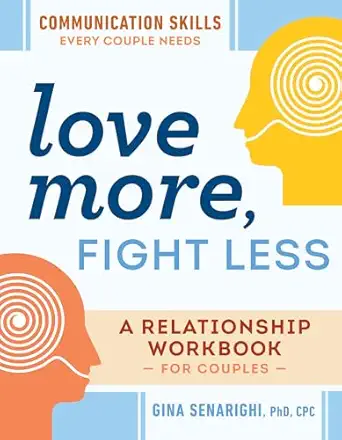
Love More, Fight Less: Communication Skills Every Couple Needs
This workbook makes the case for straightforward, actionable techniques to improve communication and reduce conflicts, similar to the more structured The CBT Couples Toolbox. Its focus on exercises aimed at fostering understanding and intimacy makes it a practical choice for couples committed to active participation. However, the lack of detailed features or specific program outlines means it’s less suited for those who prefer a guided therapy format or detailed step-by-step plans. Its success depends heavily on the couple’s willingness to dedicate time and effort to the exercises, which might be a barrier for busy partners.
Pros:- Provides clear, practical techniques for improving dialogue
- Includes exercises to foster understanding and intimacy
- Focuses on strengthening emotional bonds
Cons:- Lacks detailed specifications or structured program components
- Requires active effort and time commitment from both partners
- Potentially less effective if couples are not motivated to practice regularly
Best for: Couples willing to engage actively in exercises to strengthen communication and emotional connection
Not ideal for: Individuals looking for quick fixes or those not prepared to commit time to structured activities
Our verdict“This workbook suits couples ready to work actively on their communication skills and deepen their emotional connection.”
Communication Cards for Couples – Relationship Rebuilding and Conflict Resolution
This set of communication cards stands out for its simplicity and portability, making it a practical tool for couples looking to spark honest dialogue after disagreements. Unlike the more structured approach of Closer Than Ever, which offers exercises, these cards focus on quick, meaningful messages that can be used anywhere, anytime. However, their lack of detailed material or size specifications may limit their durability or comfort. They are ideal for couples who want an easy, low-pressure way to reconnect but shouldn’t replace ongoing therapy or deep work. The messages foster vulnerability, helping partners express feelings and rebuild intimacy in real time.
Pros:- Facilitates honest expression and emotional vulnerability
- Portable and easy to use anywhere, anytime
- Suitable for various relationship stages and situations
Cons:- Lacks detailed material or size specifications, which could affect longevity
- Messages may not resonate with all couples or address deeper issues
Best for: Couples seeking a quick, tangible way to improve communication after conflicts or during busy moments
Not ideal for: Couples needing comprehensive skill-building or long-term relationship strategies
- Number of Cards:54
- Material:Not specified
- Dimensions:Not specified
- Package Includes:Communication cards
Our verdict“This product is best for couples who want a simple, accessible way to initiate honest conversations and rebuild trust quickly.”
Closer Than Ever: A Relationship Communication Skills Workbook for Couples
This workbook makes the list for its focused approach to improving communication through practical exercises that deepen understanding. Compared with The Seven Principles for Making Marriage Work, which offers broader relationship advice, Closer Than Ever emphasizes active skill-building and reflection. Its lack of detailed content description or reviews could be a downside for those wanting to preview its methods. It’s well-suited for couples committed to working on communication systematically, especially those who prefer guided exercises over passive reading. The workbook helps couples identify patterns, practice new skills, and foster genuine connection over time.
Pros:- Offers practical, actionable communication exercises
- Helps deepen understanding and connection through reflection
- Suitable for couples willing to dedicate time to skill-building
Cons:- Lacks detailed content overview or sample exercises online
- No customer reviews or ratings available to gauge effectiveness
Best for: Couples who want a hands-on, exercise-based approach to strengthening communication skills
Not ideal for: Couples seeking quick fixes or who prefer reading without structured activities
Our verdict“Ideal for couples ready to commit to structured exercises that improve their communication over time.”
The Seven Principles for Making Marriage Work: A Practical Guide from the Country’s Foremost Relationship Expert
This book provides foundational principles based on proven relationship strategies, making it a standout for couples wanting a comprehensive guide. When compared to The Talk Book, which offers specific communication tools, this guide emphasizes overall relationship health, including communication, intimacy, and conflict resolution. Its lack of specific editions or reviews may limit insight into the latest updates. It’s especially helpful for couples seeking a holistic approach rather than just communication techniques, though some may find its general advice less actionable without supplementary resources. It offers lasting insights that can serve as a relationship blueprint for many years.
Pros:- Provides practical, research-backed relationship advice
- Backed by expert insights and extensive experience
- Helpful for building a strong, resilient marriage
Cons:- No specific edition or recent reviews to assess current relevance
- Lacks detailed, tangible exercises for immediate application
Best for: Long-term couples interested in strengthening their marriage with proven principles and strategies
Not ideal for: Couples looking for quick, actionable communication tools or exercises
Our verdict“Best suited for couples seeking a comprehensive, principle-based approach to strengthening their marriage over time.”
The Talk Book: With Six Prize-Winning Talk Tools That Strengthen Relationships and Repair Communication Breakdowns
This book offers six award-winning tools designed specifically to repair communication failures and foster understanding. Compared with Nonviolent Communication, which emphasizes compassionate language, The Talk Book concentrates on practical, structured strategies to quickly resolve conflicts and improve dialogue. Its lack of detailed content descriptions or reviews might make it harder to assess its fit beforehand. It’s ideal for couples who face recurrent communication breakdowns and need effective, straightforward tools to get back on track. While powerful, its focus on specific tools may not suffice for those seeking a broader relationship framework.
Pros:- Provides practical, focused communication strategies
- Includes award-winning tools validated for effectiveness
- Effective for repairing and strengthening communication
Cons:- Limited content overview and no detailed description of tools
- May require additional resources for broader relationship development
Best for: Couples experiencing frequent communication breakdowns needing targeted tools for repair
Not ideal for: Couples looking for a comprehensive guide to overall relationship growth beyond communication fixes
Our verdict“This book is best for couples who need specific, proven tools to mend communication issues quickly and effectively.”
Nonviolent Communication: A Language of Life
This book introduces compassionate communication techniques that foster understanding, making it well-suited for those committed to developing empathy in their relationships. When compared to Communication Cards for Couples, which offers immediate, tangible prompts, Nonviolent Communication emphasizes emotional awareness and mindful dialogue. Its lack of detailed content or reviews can be a barrier for readers wanting immediate, actionable steps. Ideal for individuals or couples willing to invest time in practicing new communication styles, it promotes long-term empathy and connection. However, mastering its techniques requires patience and consistent effort.
Pros:- Provides practical tools for fostering empathy and understanding
- Enhances both personal and professional relationship skills
- Supports long-term growth through compassionate dialogue
Cons:- Requires practice and patience to master techniques
- Lacks detailed content or direct exercises for quick application
Best for: Individuals or couples dedicated to cultivating empathy and compassion over the long term
Not ideal for: Those seeking quick fixes or immediate, tangible communication prompts
Our verdict“Best suited for those committed to developing compassionate, empathetic communication for sustained relationship health.”
Couples Communication Workbook: 20 Minutes a Day for 12 Days to Improve Listening, Resolve Conflicts, and Strengthen Your Relationship
This workbook stands out for its clear, step-by-step 12-day program, making it ideal for couples who prefer a guided, manageable approach to enhancing communication. Compared with The CBT Couples Toolbox, which offers a broader range of exercises, this workbook focuses on quick, daily activities that fit into busy schedules. While it’s excellent for establishing foundational skills, it might feel limited for couples seeking long-term or in-depth therapy tools. Its practical activities foster understanding and connection, but its simplicity means it may not address complex issues without supplementary help.
Pros:- Clear, step-by-step 12-day program for easy follow-through
- Focuses on improving listening skills and conflict resolution
- Practical activities foster understanding and connection
Cons:- No detailed content descriptions or reviews available
- Limited scope—may not address complex relationship problems
Best for: Couples new to structured communication exercises or those seeking quick daily routines to boost connection
Not ideal for: Couples looking for extensive, in-depth therapy tools or addressing deep-seated issues without external support
- Duration:12 days
- Daily commitment:20 minutes
- Focus areas:Listening, conflict resolution, understanding
Our verdict“This workbook suits couples wanting a straightforward, time-efficient way to improve communication fundamentals without overwhelming complexity.”
The CBT Couples Toolbox: Over 45 Exercises to Improve Communication, Navigate Problems and Build Strong Relationships
This book makes the most sense for couples willing to engage actively with a variety of exercises, especially those interested in cognitive-behavioral techniques. Compared to the Couples Therapy Toolbox, which offers over 75 exercises, this collection emphasizes practical tools for problem-solving and communication, but requires ongoing commitment and may benefit from guidance if couples are new to CBT concepts. Its strength lies in offering targeted activities to address specific issues, yet some couples might find the number of exercises overwhelming or require external support for best results.
Pros:- Over 45 practical exercises rooted in CBT for communication and problem-solving
- Focuses on navigating challenges with actionable tools
- Helps build stronger, more resilient relationships
Cons:- Requires consistent effort and commitment from both partners
- Some exercises may need guidance to maximize effectiveness
- Does not address all types of relationship issues
Best for: Couples committed to active participation and interested in applying CBT techniques to solve relationship problems
Not ideal for: Couples seeking quick fixes or those hesitant to engage in consistent, effortful exercises without guidance
- Number of exercises:Over 45
- Focus:Communication, conflict navigation, problem-solving
- Approach:Cognitive-behavioral techniques
Our verdict“This toolbox is best for couples ready to actively work through challenges using structured, CBT-based techniques that promote growth.”
The Couples Therapy Toolbox: 75+ Exercises to Improve and Strengthen Your Relationship
This collection offers a wide array of over 75 exercises, making it ideal for couples who want a versatile resource to target multiple aspects of their relationship. Unlike the more focused Couples Communication Workbook, which centers on a short-term plan, this toolbox provides a broad toolkit for ongoing use, especially in strengthening trust and emotional connection. However, the lack of detailed reviews and descriptions means couples might need to invest time in selecting the right activities, and it requires consistent effort from both partners to see results.
Pros:- Extensive collection of over 75 exercises for diverse needs
- Practical, easy-to-follow activities suitable for ongoing use
- Focuses on improving communication, trust, and emotional bonds
Cons:- Limited detailed descriptions or reviews available
- May require significant commitment and effort to implement
- Could feel overwhelming for couples new to structured exercises
Best for: Couples seeking a comprehensive, flexible set of exercises to address various relationship issues over time
Not ideal for: Couples looking for a quick, structured program or those hesitant to commit to a wide range of activities
- Number of exercises:75+
- Focus areas:Communication, trust, emotional connection
- Format:Practical, easy-to-follow activities
Our verdict“This resource is best for couples who want a broad, adaptable toolkit to enhance various facets of their relationship over time.”

How We Picked
These relationship communication tools were chosen based on their ability to facilitate meaningful conversations, ease of use, and versatility for different relationship types. We evaluated each product’s clarity, practical application, and user engagement potential. Cost was considered, but priority was given to tools that provide lasting value and actionable insights. Our rankings reflect a balance between accessibility for beginners and depth for more experienced couples or individuals. By focusing on tools that promote genuine communication improvement, we aimed to highlight options that truly support relational growth, not just those with flashy features.Factors to Consider When Choosing Relationship Communication Tools
When selecting a relationship communication tool, it’s important to consider your specific needs, relationship dynamics, and comfort level with different formats. A good tool should align with your communication style and help you overcome common challenges like conflict avoidance or emotional disconnect. Beyond features, think about how easy the tool is to integrate into your daily routine, and whether it offers guidance that matches your relationship stage. Being aware of common pitfalls, such as choosing an overly complex product or one that doesn’t suit your specific issues, can save you time and frustration. Your goal should be to find a resource that encourages honest dialogue and mutual understanding without feeling intimidating or overwhelming.Ease of Use and Accessibility
Choose tools that match your comfort level with communication exercises. Some prefer straightforward workbooks or cards, while others might benefit from guided videos or interactive apps. If a tool feels too complicated or time-consuming, it’s less likely to be used consistently, which diminishes its value. For beginners, simple formats that require minimal setup tend to work better, whereas more experienced couples might seek comprehensive programs that challenge them further. Balancing usability with depth is key to sustained engagement and success.
Customization and Specific Needs
Look for tools that address your particular relationship challenges or circumstances. For example, if one partner has autism or ADHD, a tailored resource like You, Me & AuDHD will likely be more effective than generic options. Similarly, couples dealing with frequent conflicts might prioritize tools that include conflict resolution exercises. Customization ensures the tool resonates with your situation, increasing the likelihood of meaningful improvement. Avoid one-size-fits-all options that don’t acknowledge your unique relationship context.
Depth vs. Simplicity
Some tools offer deep, research-backed frameworks suitable for couples ready to explore complex issues, while others focus on quick wins or lighthearted conversations. It’s important to match the tool’s complexity with your current relationship stage. Overly simplistic tools may feel patronizing to some, while overly complex ones can be overwhelming or discouraging. Aim for a balance that fosters growth without causing frustration, especially if you’re new to structured communication exercises.
Cost and Long-Term Value
Pricing varies from free printable cards to premium programs with coaching. Consider whether the investment aligns with your budget and if the tool offers ongoing benefits rather than one-off solutions. Sometimes, paying more upfront for a comprehensive program results in better long-term outcomes, but affordable options can provide excellent value if they suit your needs. Beware of low-cost tools that lack depth or engagement potential, as they might not deliver lasting improvements.
Format and Engagement Style
Decide whether you prefer reading, interactive exercises, or visual tools. Cards and flip charts encourage active participation and can be more engaging, especially for visual learners. Books and workbooks are ideal for self-paced learning but may require more discipline. Digital apps or video-based tools add convenience but depend on consistent usage. The best choice aligns with your preferred engagement style, making it easier to incorporate into regular relationship routines.
Frequently Asked Questions
Can relationship communication tools really improve my connection?
Yes, when used consistently and correctly, these tools can significantly enhance your understanding and empathy, leading to stronger connections. They often facilitate honest conversations that might be difficult to initiate otherwise. The key is to approach them with openness and patience, allowing both partners to feel heard and valued. Over time, regular use of such tools can break down barriers and foster a more supportive, communicative relationship.
Should I choose a workbook, cards, or a therapy-based tool?
The best format depends on your learning style and relationship needs. Workbooks offer comprehensive guidance and can be revisited over time, ideal for structured growth. Cards and flip charts promote quick, spontaneous conversations and may suit those who prefer visual or tactile methods. Therapy-based tools often provide more tailored advice, but they might require additional facilitation or professional support. Consider your comfort zone and the level of depth you desire when selecting among these formats.
Are these tools suitable for long-distance relationships?
Many relationship communication tools are adaptable for long-distance contexts, especially digital or printable options like cards or workbooks. These tools can help bridge physical gaps by fostering meaningful dialogue and emotional sharing. However, tools that rely heavily on face-to-face interaction or require in-person exercises may be less effective remotely. Look for digital or printable formats to maximize flexibility and ongoing engagement across distances.
How often should we use these communication tools?
Frequency depends on your relationship dynamics and goals. Regular check-ins, such as weekly or biweekly, can build consistency and trust. Short daily exercises or prompts may also be beneficial for maintaining ongoing dialogue. The key is to find a routine that feels natural and sustainable, avoiding burnout or feeling like a chore. Consistency over time is more impactful than sporadic use, so choose a tool and schedule that fits your lifestyle.
What if my partner isn’t interested in using these tools?
It’s common for one partner to hesitate initially. Approaching the idea with empathy and emphasizing the potential benefits for your relationship can help. Start with low-pressure options, like short daily prompts or lighthearted cards, to gauge interest. Respect your partner’s comfort level and be patient; sometimes, demonstrating a genuine desire to improve communication encourages participation. Remember, the goal is shared growth, and patience often leads to greater engagement over time.