

Relationship communication tools span two very different formats: books you read and absorb, and workbooks you actively work through as a couple, and the right choice depends on how much effort you and your partner are willing to invest. Nonviolent Communication: A Language of Life earns my best overall pick because its framework for expressing needs without blame has shaped nearly every communication method since it was published. For couples who want structure over theory, the 8-Week Couples Therapy Workbook delivers a guided week-by-week program, while Communication Miracles for Couples wins on value with short, immediately usable exercises. The main tradeoff in this category is depth versus convenience — the most transformative books demand real reading time, while the quicker options tend to produce smaller, shorter-lasting gains. Keep reading for the full breakdown of all twelve.
Key Takeaways
- Workbooks with a fixed timeline (the 8-Week Couples Therapy Workbook and Reconnect) consistently outperformed open-ended books for couples in active conflict, because deadlines force both partners to participate.
- Nonviolent Communication remains the most cited framework across this entire category — at least five of the other eleven books borrow its needs-based vocabulary, which is why it ranks best overall despite being the least couples-specific title.
- The shortest books (Communication Miracles for Couples and The 15 Minute Couples Communication Handbook) were the only titles realistic for partners who resist ‘relationship work,’ making them the best entry points despite shallower coverage.
- Books promising broad social skills alongside romance (Effective Communication and Empathy) ranked lowest for couples because diluted focus meant fewer concrete scripts for actual partner conflicts.
- Price correlated poorly with quality here: several sub-$15 titles offered more actionable exercises than longer, more expensive guides built around padded chapters.
| Nonviolent Communication: A Language of Life |  | Best Overall | Format: Paperback | Author: Marshall B. Rosenberg, PhD | Category: Communication skills / self-help | VIEW LATEST PRICE | See Our Full Breakdown |
| Reconnect: A Marriage Counseling Workbook |  | Best Workbook Format | Format: Paperback workbook | Category: Marriage counseling workbook | Structure: Guided conversations and couple exercises | VIEW LATEST PRICE | See Our Full Breakdown |
| Communicate Your Feelings (Without Starting a Fight): What to Say and What Not to Say to Your Partner |  | Best Quick-Fix Scripts | Format: Kindle / paperback | Category: Relationship communication self-help | Structure: Say-this, not-that phrasing guidance | VIEW LATEST PRICE | See Our Full Breakdown |
| Relationship Communication Skills: Talk Without Fighting, Rebuild Trust, and Deepen Intimacy with Solutions to Reconnect |  | Best for Repair After Conflict | Format: Kindle / paperback | Category: Relationship self-help | Coverage areas: Conflict, trust rebuilding, intimacy | VIEW LATEST PRICE | See Our Full Breakdown |
| Healthy Communication With Your Partner: Discover the Benefits of Communicating with Emotional Intelligence, Empathy & Effective Listening Skills to Turn Conflict into Connection |  | Best for Emotional Intelligence Focus | Format: Kindle / paperback | Category: Relationship communication self-help | Core focus: Emotional intelligence, empathy, active listening | VIEW LATEST PRICE | See Our Full Breakdown |
| Communication Miracles for Couples: Easy and Effective Tools to Create More Love and Less Conflict |  | Best Classic Pick | Format: Paperback book | Primary Focus: Conflict reduction and daily communication tools | Structure: Short standalone tools and strategies | VIEW LATEST PRICE | See Our Full Breakdown |
| Love More, Fight Less: Communication Skills Every Couple Needs | 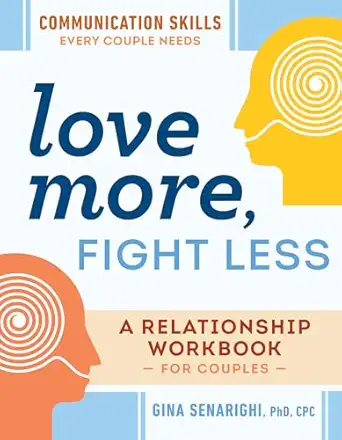 | Best Workbook for Reconnecting | Format: Relationship workbook | Primary Focus: Communication skills, conflict resolution, and intimacy | Structure: Guided exercises and prompts for couples | VIEW LATEST PRICE | See Our Full Breakdown |
| Effective Communication and Empathy: How to Communicate Better With Social Skills and Confidence to Create Lasting Relationships and Connect … and Witty Banter |  | Best for Broader Social Confidence | Format: Book (digital and print editions) | Primary Focus: Communication, empathy, and social confidence | Unique Element: Witty banter and conversational skills | VIEW LATEST PRICE | See Our Full Breakdown |
| Effective Communication for a Healthy Relationship |  | Best Science-Backed Approach | Format: Book | Primary Focus: Conflict resolution and misunderstanding prevention | Approach: Research-backed strategies | VIEW LATEST PRICE | See Our Full Breakdown |
| 8-Week Couples Therapy Workbook: Essential Strategies to Connect, Improve Communication, and Strengthen Your Relationship |  | Best Structured Program | Format: Spiral-bound workbook | Primary Focus: Connection, communication, and relationship strengthening | Program Length: 8 weeks, structured | VIEW LATEST PRICE | See Our Full Breakdown |
| The 15 Minute Couples Communication Handbook |  | Best for Busy Couples | Format: Paperback handbook | Primary Focus: Daily couples communication exercises | Time Commitment: 15 minutes per day | VIEW LATEST PRICE | See Our Full Breakdown |
| Communication Skills for Couples: Guide to Improve Communication, Resolve Conflict, Deepen Intimacy, Strengthen Marriage, and Create a Healthy Relationship |  | Best Budget Starting Point | Format: Paperback guide | Primary Focus: Couple communication strategies | Scope: Communication, conflict, intimacy, marriage health | VIEW LATEST PRICE | See Our Full Breakdown |
| relationship communication tool | Format | Structure | Primary Focus |
|---|---|---|---|
| Nonviolent Communication: A La | Paperback | — | — |
| Reconnect: A Marriage Counseli | Paperback workbook | Guided conversations and couple exercises | — |
| Communicate Your Feelings | Kindle / paperback | Say-this, not-that phrasing guidance | — |
| Relationship Communication Ski | Kindle / paperback | — | — |
| Healthy Communication With You | Kindle / paperback | — | — |
| Communication Miracles for Cou | Paperback book | Short standalone tools and strategies | Conflict reduction and daily communication tools |
| Love More | Relationship workbook | Guided exercises and prompts for couples | Communication skills, conflict resolution, and intimacy |
| Effective Communication and Em | Book (digital and print editions) | Strategy-based chapters | Communication, empathy, and social confidence |
| Effective Communication for a | Book | Advice and explanation driven | Conflict resolution and misunderstanding prevention |
| 8-Week Couples Therapy Workboo | Spiral-bound workbook | Weekly exercises and progressive strategies | Connection, communication, and relationship strengthening |
| The 15 Minute Couples Communic | Paperback handbook | Daily exercise-based routines | Daily couples communication exercises |
| Communication Skills for Coupl | Paperback guide | Topic-by-topic guide, not exercise-driven | Couple communication strategies |
More Details on Our Top Picks
Nonviolent Communication: A Language of Life
This is the foundational text of compassionate communication, and it earns the top spot because its framework — observations, feelings, needs, requests — has been adapted by therapists, mediators, and educators for decades. Where Communicate Your Feelings (Without Starting a Fight) stays tightly focused on romantic partners, this book teaches a transferable method that works at work, with family, and in parenting, which is why it outranks narrower titles here. The tradeoff is real, though: Rosenberg’s approach asks for genuine behavior change and practice, so couples expecting a quick-fix script may find the philosophy slower to pay off than a workbook like Reconnect. Compared with the newer self-published entries in this roundup, it offers more depth but less couple-specific hand-holding. This pick makes the most sense for readers who want a durable communication system, not just phrases to memorize.
Pros:- Decades-validated framework used by therapists and mediators worldwide
- Applies beyond romantic relationships to work, family, and parenting
- Teaches a repeatable four-step method rather than one-off phrases
- Builds empathy skills that improve both listening and self-expression
Cons:- Requires sustained practice; results come slower than workbook-style exercises
- Some readers find the language examples formulaic or unnatural at first
Best for: Readers who want a proven, universal communication framework they can apply to their marriage, friendships, and workplace alike
Not ideal for: Couples in active crisis who need immediate, scripted de-escalation tactics — the philosophical pacing may frustrate them
- Format:Paperback
- Author:Marshall B. Rosenberg, PhD
- Category:Communication skills / self-help
- Core method:Four-part NVC process (observation, feeling, need, request)
- Scope:Personal and professional relationships
- Best reading style:Study and practice over multiple weeks
- Editions:Multiple editions with updated exercises
Our verdict“Buy this if you want the deepest, most durable communication framework in the category; skip it if you need quick conflict scripts tonight.”
Reconnect: A Marriage Counseling Workbook
Most books in this roundup tell you what better communication looks like; this one makes you practice it together. The guided conversations and structured exercises give couples a shared activity between chapters, which is a different mechanism entirely than reading Nonviolent Communication alone and trying to explain it to your partner later. That built-in accountability is why it ranks so highly for couples whose problem isn’t knowledge but follow-through. Compared with Communicate Your Feelings (Without Starting a Fight), it demands more from both partners — one reluctant spouse can stall the whole process. The therapy-adjacent structure is a genuine strength, but it also means less flexibility for readers who prefer absorbing ideas at their own pace. This option stands out for couples who want homework, prompts, and a format closer to counseling than to casual reading.
Pros:- Guided conversation prompts create real dialogue, not just solo reading
- Exercises translate communication concepts into immediate practice
- Therapy-inspired structure suits couples waiting for or supplementing counseling
- Designed specifically for long-term, married partnerships
Cons:- Requires both partners to actively participate to deliver value
- Less useful for individuals working on communication skills alone
Best for: Committed couples who both want structured exercises and guided conversations rather than passive reading
Not ideal for: Couples where one partner is disengaged or resistant — the workbook format collapses without mutual participation
- Format:Paperback workbook
- Category:Marriage counseling workbook
- Structure:Guided conversations and couple exercises
- Target audience:Married or long-term couples
- Use style:Interactive, complete together as a couple
- Publisher:Trade publisher (Penguin/Random House imprint)
- Best pairing:Supplement to or bridge before couples counseling
Our verdict“The right choice for two motivated partners who want exercises over theory; a poor fit for a solo reader or a reluctant spouse.”
Communicate Your Feelings (Without Starting a Fight): What to Say and What Not to Say to Your Partner
Of all the titles here, this one delivers the most immediately usable phrases — literally framing advice as what to say and what not to say. That scripting approach is its defining advantage: a reader mid-conflict can open it, find language, and use it the same evening, something neither Reconnect nor Nonviolent Communication is built for. The tradeoff is depth. Where Rosenberg’s book builds an underlying framework for empathy, this is closer to a phrasebook for hard moments, and couples with deeper trust ruptures may outgrow it quickly. Compared with Relationship Communication Skills, it’s narrower in ambition — conflict avoidance rather than full relationship repair — but that focus is also why it works as a low-commitment entry point. This model is better suited to couples who fight about wording, not worldview.
Pros:- Concrete say-this-not-that format is instantly applicable
- Focused specifically on de-escalating partner conflicts
- Short and accessible for readers who avoid long self-help books
- Low-commitment way to test whether communication guidance helps
Cons:- Script-based advice addresses symptoms more than root causes
- No structured exercises to reinforce new habits over time
Best for: Couples whose arguments escalate from poor phrasing and who want ready-to-use language fast
Not ideal for: Couples dealing with broken trust or deep-rooted patterns — the script-level advice won’t reach that far
- Format:Kindle / paperback
- Category:Relationship communication self-help
- Structure:Say-this, not-that phrasing guidance
- Target audience:Romantic partners in recurring verbal conflict
- Reading commitment:Low — short, skimmable chapters
- Focus area:Conflict de-escalation and feeling expression
Our verdict“A fast, practical phrasebook for couples who fight over words; look elsewhere for rebuilding trust or deep repair work.”
Relationship Communication Skills: Talk Without Fighting, Rebuild Trust, and Deepen Intimacy with Solutions to Reconnect
This title’s differentiator is its explicit three-part agenda: conflict prevention, trust repair, and intimacy rebuilding. Most entries in this roundup pick one lane — Communicate Your Feelings handles conflict phrasing, Reconnect handles guided practice — while this book attempts the full arc from damaged connection back to closeness. That breadth makes it a sensible middle pick for couples whose communication problems sit on top of eroded trust. The tradeoff is predictable: covering three goals in one book means none gets the depth of a specialist title, and unlike Rosenberg’s Nonviolent Communication, it lacks a decades-long track record or professional adoption to back its claims. As a newer release, it also has fewer reader reviews to validate the approach. Still, for couples who need a single roadmap rather than a bookshelf, this covers the most ground per page.
Pros:- Covers the full arc from conflict to trust repair to intimacy
- Frames communication as part of broader relationship recovery
- Solution-oriented structure suits couples wanting a clear roadmap
- Consolidates multiple goals so couples don’t need three separate books
Cons:- Breadth comes at the cost of depth on any single topic
- Limited reader feedback and no established professional adoption yet
Best for: Couples recovering from repeated fights who want one book covering conflict, trust, and intimacy together
Not ideal for: Readers who prefer well-established, widely reviewed methods — the track record here is still thin
- Format:Kindle / paperback
- Category:Relationship self-help
- Coverage areas:Conflict, trust rebuilding, intimacy
- Approach:Practical solutions and reconnection strategies
- Target audience:Couples in strained relationships
- Publication status:Recent release with limited review history
Our verdict“Pick this if trust and intimacy are the real issues behind your arguments; skip it if you want a battle-tested single-focus method.”
Healthy Communication With Your Partner: Discover the Benefits of Communicating with Emotional Intelligence, Empathy & Effective Listening Skills to Turn Conflict into Connection
The distinctive angle here is listening and emotional intelligence rather than speaking skills. Nearly every other book in this roundup — including Communicate Your Feelings (Without Starting a Fight) — centers on what you say; this one argues that how you hear your partner determines whether conversations connect or collapse. For the partner who dominates discussions without realizing it, or the one who shuts down because they feel unheard, that inversion is genuinely useful. Compared with Rosenberg’s Nonviolent Communication, it’s lighter on framework and heavier on empathy as a felt skill, making it a gentler on-ramp for readers intimidated by formal methods. The drawback is specificity: without a workbook structure like Reconnect, the empathy principles can stay abstract unless readers self-discipline. This pick makes the most sense for listeners-in-training.
Pros:- Rare focus on listening skills rather than just expression
- Emotional intelligence framing helps readers understand their own reactions
- Turns conflict episodes into structured opportunities for connection
- Gentle, accessible tone for readers new to communication work
Cons:- Concepts can feel abstract without exercises to anchor them
- Overlaps with broader emotional intelligence books without adding much structure
Best for: Partners who struggle to listen empathetically or who feel unheard and want that side of communication addressed directly
Not ideal for: Readers who want structured exercises and concrete scripts — the principles here need self-directed practice
- Format:Kindle / paperback
- Category:Relationship communication self-help
- Core focus:Emotional intelligence, empathy, active listening
- Approach:Reframing conflict into connection opportunities
- Target audience:Partners working on listening and empathy
- Reading commitment:Light to moderate, principles-based
Our verdict“Choose this if poor listening — not poor phrasing — is what derails your conversations; a workbook will suit hands-on couples better.”
Communication Miracles for Couples: Easy and Effective Tools to Create More Love and Less Conflict
Communication Miracles for Couples earns its place as the classic standby of this lineup. Its promise is refreshingly narrow: short, easy-to-apply tools that reduce day-to-day friction rather than overhaul your entire relationship philosophy. Compared with the 8-Week Couples Therapy Workbook, which demands a two-month commitment with structured exercises, this option is built for couples who want quick, grab-and-go techniques they can try tonight. The tradeoff is depth — readers dealing with deeper trust breaches or repeated conflict cycles will likely outgrow it and may prefer Nonviolent Communication: A Language of Life for a fuller framework. This pick makes the most sense for couples who are fundamentally happy but keep tripping over the same small arguments and want a low-effort fix rather than a couples-therapy substitute.
Pros:- Quick, easy-to-implement techniques that fit into daily life
- Focused specifically on reducing conflict and building warmth between partners
- Low commitment compared to multi-week workbook programs
- Accessible language that doesn’t require therapy background
Cons:- Shallow depth for couples with entrenched or recurring conflict patterns
- Less structure and accountability than guided workbooks in this roundup
Best for: Busy couples in stable relationships who want quick, low-commitment tools to defuse everyday arguments
Not ideal for: Couples facing serious or chronic conflict — the light-touch approach lacks the structured depth of a workbook like Reconnect
- Format:Paperback book
- Primary Focus:Conflict reduction and daily communication tools
- Structure:Short standalone tools and strategies
- Time Commitment:Low — read and apply at your own pace
- Intended Audience:Couples in generally healthy relationships
- Approach:Practical, easy-to-apply exercises
- Depth Level:Light to moderate
Our verdict“Choose this if you want small, immediate communication fixes rather than a structured relationship overhaul.”
Love More, Fight Less: Communication Skills Every Couple Needs
Love More, Fight Less positions itself as the hands-on workbook for couples whose arguments have started to erode their bond. Where Communication Miracles for Couples offers quick tools, this option asks both partners to work through exercises together, which is what makes behavior actually change — you practice the skill, not just read about it. The dual emphasis on conflict resolution and rebuilding intimacy sets it apart from more skills-only titles like Communication Skills for Couples, because it treats fighting less and loving more as two sides of the same process. The tradeoff: workbooks only work when both partners participate, so a reluctant partner turns this into an expensive paperweight. Compared with the 8-Week Couples Therapy Workbook, it’s less rigidly scheduled, which suits couples who want flexibility over a fixed program.
Pros:- Interactive exercises that turn concepts into practiced skills
- Addresses both conflict resolution and emotional intimacy together
- Flexible structure that adapts to a couple’s own pace
- Written for couples, not for therapists or academics
Cons:- Requires buy-in and effort from both partners to deliver results
- Lighter on theory than framework-driven books like Nonviolent Communication
Best for: Committed couples where both partners are willing to do exercises together and want to rebuild both trust and intimacy
Not ideal for: Couples where one partner won’t engage — paired exercises lose their value if only one person does the work
- Format:Relationship workbook
- Primary Focus:Communication skills, conflict resolution, and intimacy
- Structure:Guided exercises and prompts for couples
- Participation:Designed for both partners
- Time Commitment:Moderate — self-paced exercises
- Intended Audience:Couples wanting to strengthen their bond actively
- Depth Level:Moderate, exercise-driven
Our verdict“Pick this if you and your partner are both willing to put in the work and want exercises, not just advice.”
Effective Communication and Empathy: How to Communicate Better With Social Skills and Confidence to Create Lasting Relationships and Connect … and Witty Banter
This title is the odd one out in this roundup — and that’s exactly its value. While every other pick here is built for romantic partners, Effective Communication and Empathy targets the individual, covering empathy, social confidence, and even witty banter across all your relationships. That makes it the right choice for someone whose communication struggles aren’t limited to a partner: if you freeze up in conversations generally, a couples-specific book like Effective Communication for a Healthy Relationship won’t address the root issue. The banter angle is genuinely differentiating — no other product here tries to make communication fun rather than just functional. The tradeoff is obvious: it’s not couple-specific, so partners in acute conflict will find little direct help, and the broad scope means romantic-relationship chapters get less depth than dedicated titles.
Pros:- Builds general social confidence, not just partner communication
- Empathy training applies across all relationship types
- Unique banter and humor angle makes practice enjoyable
- Works for solo readers without requiring a partner’s participation
Cons:- Broad scope dilutes its romantic-relationship depth compared to couples-focused titles
- Not a conflict-resolution tool for couples in distress
Best for: Individuals who struggle with social confidence generally and want communication skills that apply to dating, friendship, and romance alike
Not ideal for: Couples in active conflict — it lacks the partner-focused exercises and conflict frameworks of Love More, Fight Less
- Format:Book (digital and print editions)
- Primary Focus:Communication, empathy, and social confidence
- Unique Element:Witty banter and conversational skills
- Structure:Strategy-based chapters
- Participation:Solo — no partner required
- Intended Audience:Individuals seeking broader social skills
- Scope:All relationships, romantic and social
Our verdict“Choose this if your communication challenges extend beyond your relationship and you want confidence everywhere, not just at home.”
Effective Communication for a Healthy Relationship
Effective Communication for a Healthy Relationship stakes its claim on evidence: scientifically proven strategies for resolving conflict and preventing misunderstandings. For analytical readers, that framing matters — it’s the difference between trying a technique because it sounds nice and trying it because research supports it. Compared with Communication Miracles for Couples, which leans on quick practical tips, this option is better suited to partners who want to understand why misunderstandings happen before fixing them, with an emphasis on strengthening the emotional connection underneath the communication. The drawback is asymmetry: it’s advice-heavy rather than exercise-driven, so unlike Love More, Fight Less, there’s no built-in practice structure to hold couples accountable. Readers who want a middle ground between Nonviolent Communication‘s dense framework and lightweight tip books will find this a reasonable landing spot.
Pros:- Strategies framed around research rather than opinion
- Strong focus on preventing misunderstandings before they escalate
- Balances conflict tactics with emotional-connection building
- Reasonable depth without being an academic text
Cons:- Minimal interactive elements compared to workbook options
- Thin on guidance for severe or long-standing relationship issues
Best for: Analytical couples who want research-supported methods and want to understand the causes of their misunderstandings
Not ideal for: Couples who learn by doing — without exercises or prompts, the advice stays theoretical without a workbook companion
- Format:Book
- Primary Focus:Conflict resolution and misunderstanding prevention
- Approach:Research-backed strategies
- Structure:Advice and explanation driven
- Participation:Readable solo or as a couple
- Intended Audience:Couples seeking evidence-based methods
- Depth Level:Moderate with explanatory context
Our verdict“This is the pick for evidence-minded couples who want to understand the mechanics of their miscommunication, not just patch it.”
8-Week Couples Therapy Workbook: Essential Strategies to Connect, Improve Communication, and Strengthen Your Relationship
The 8-Week Couples Therapy Workbook is the most commitment-heavy option in this batch, and that’s its entire selling point. Eight scheduled weeks of exercises create the accountability that self-paced books simply can’t — compared with Love More, Fight Less, which lets couples drift, this one imposes a clear timeline and progression, much like working through a therapy curriculum at home. The spiral-bound format is a small but real advantage: it lies flat, so couples can actually write in it during exercises rather than fighting a paperback’s spine. The tradeoff is demand — eight weeks of dual participation is a real ask, and couples in crisis may find a weekly program too slow when they need immediate de-escalation tools from something like Communication Miracles for Couples. Think of it as the serious training plan of this lineup.
Pros:- Week-by-week structure builds skills progressively instead of all at once
- Spirar-bound design lies flat for easy writing during exercises
- Mimics a therapy curriculum at a fraction of counseling’s cost
- Covers both communication mechanics and emotional intimacy
Cons:- Demands sustained commitment from both partners over two months
- Too slow-paced for couples needing immediate conflict de-escalation
Best for: Motivated couples who want a therapy-style, week-by-week program and can commit to eight weeks of joint work
Not ideal for: Couples seeking quick fixes or those with unpredictable schedules — the rigid structure becomes a burden without consistent participation
- Format:Spiral-bound workbook
- Primary Focus:Connection, communication, and relationship strengthening
- Program Length:8 weeks, structured
- Structure:Weekly exercises and progressive strategies
- Participation:Designed for both partners
- Binding:Spiral-bound for lie-flat use
- Depth Level:Deep, curriculum-style
- Time Commitment:High — eight consecutive weeks
Our verdict“If you and your partner will genuinely commit eight weeks, this is the closest thing to a home counseling program in the batch.”
The 15 Minute Couples Communication Handbook
Most communication books ask couples to absorb theory first and practice later. This handbook flips that approach, delivering short daily exercises that fit into a coffee break. For partners whose calendars are already full, that structure removes the most common excuse for abandoning relationship work. Compared with the 8-Week Couples Therapy Workbook, which demands a longer structured commitment, this option trades depth for consistency and low friction. The tradeoff is real, though: some exercises feel under-explained, and couples facing deeper conflict will likely need something more substantial, like Reconnect: A Marriage Counseling Workbook. There are no supplementary worksheets or online tools, so buyers get exactly the exercises and nothing more. Still, as a daily habit-builder rather than a therapeutic deep-treatment, it earns its place for couples who want small, repeatable actions over long reading sessions.
Pros:- Genuinely time-efficient 15-minute daily format that is easy to sustain
- Exercise-first approach builds habits faster than theory-heavy books
- Covers both conflict resolution and emotional intimacy
- Low barrier to entry for couples new to relationship work
Cons:- Some exercises lack detailed instructions, leaving couples to interpret intent on their own
- Requires consistent daily commitment or the benefit quickly fades
- No companion worksheets, online resources, or supporting tools included
Best for: Busy couples with limited time who want short, repeatable daily exercises rather than long workbook sessions
Not ideal for: Couples working through serious or long-standing conflict who need deeper therapeutic structure and detailed guidance
- Format:Paperback handbook
- Primary Focus:Daily couples communication exercises
- Time Commitment:15 minutes per day
- Structure:Daily exercise-based routines
- Covers:Communication, conflict resolution, emotional intimacy
- Supplementary Materials:None included
Our verdict“A smart pick for time-pressed couples who will actually do a 15-minute daily exercise but would never finish a full therapy workbook.”
Communication Skills for Couples: Guide to Improve Communication, Resolve Conflict, Deepen Intimacy, Strengthen Marriage, and Create a Healthy Relationship
Where the 15 Minute Couples Communication Handbook is built around action, this guide leans on broad, strategy-based advice spanning conflict resolution, intimacy, and general relationship health. That wide scope makes it a reasonable first purchase for couples who want a general overview before committing to a more specialized title like Nonviolent Communication or the 8-Week Couples Therapy Workbook. The honest weakness is transparency: with no customer reviews and unclear author credentials, buyers are taking a chance on content depth in a category crowded with established, well-reviewed alternatives. Compared with Communication Miracles for Couples, which has a long track record and named tools, this book feels more generic, and its strategies are presented without the step-by-step scaffolding some couples need. It works best as an affordable entry-level survey, not as a couple’s only resource.
Pros:- Wide topical coverage from conflict resolution to intimacy and marriage strengthening
- Accessible, jargon-free framing suited to first-time readers
- Inexpensive entry point into couples communication reading
- Practical strategies rather than purely abstract theory
Cons:- No customer reviews or ratings available to verify quality
- Author credentials and content depth are not documented
- Lacks the structured exercises and tools found in workbook-style competitors
Best for: Couples on a budget wanting an inexpensive, broad introduction to communication concepts before investing in a specialized workbook
Not ideal for: Buyers who rely on reviews and author credibility when choosing, or couples needing proven, structured exercises
- Format:Paperback guide
- Primary Focus:Couple communication strategies
- Scope:Communication, conflict, intimacy, marriage health
- Approach:Advice and strategy based
- Structure:Topic-by-topic guide, not exercise-driven
- Reviews:No customer ratings available
Our verdict“A cheap, low-risk first step for couples exploring communication books, but anyone wanting verified depth should choose a better-established title.”

How We Picked
I evaluated each of these twelve titles against four buyer-relevant criteria. Actionability carried the most weight: a communication tool only works if it gives you specific words, scripts, or exercises rather than vague encouragement to ‘listen better.’ Partner buy-in came next — some books are designed to be read and applied by one motivated partner, while others collapse without full participation, and I flagged which is which. I also weighed evidence and framework depth, favoring authors grounded in established methods like nonviolent communication, Gottman-style research, or licensed therapy practice over generic self-help writing. Finally, I considered time investment and format, since a 300-page theory book and a 15-minute daily exercise guide serve entirely different readers.
The ranking logic follows usefulness, not fame. Titles that combine a proven framework with concrete couple exercises placed highest. Books strong on theory but weak on application ranked mid-pack for motivated readers. And shorter, lighter titles earned their positions by being the realistic choice for resistant partners — a genuinely different role than the comprehensive picks. Every product below has real drawbacks noted, because no single book works for every relationship stage.
Factors to Consider When Choosing Relationship Communication Tools
Choosing among relationship communication tools comes down to matching the format to your relationship’s real constraints — not picking the most acclaimed title. These are the factors that actually change outcomes.Workbook or Book: Match the Format to Your Partner
The single biggest predictor of success with any communication tool is whether both partners actually engage, and format drives that more than content quality. A workbook with fill-in prompts creates shared accountability — skipping a session is noticeable — while a traditional book lets one partner read and quietly apply ideas alone. If your partner has ever rolled their eyes at the suggestion of couples work, a heavy workbook will sit untouched on a nightstand no matter how good it is. In that case, a short, low-pressure title with daily micro-exercises tends to get read. Couples in serious conflict usually need the workbook route; couples doing maintenance do fine with a book one person reads and discusses. Buying the wrong format is the most common and most expensive mistake in this category.
Crisis Mode vs. Maintenance Mode
Tools built for rebuilding trust after a rupture are structured very differently from tools that prevent everyday friction. Crisis-oriented workbooks move slowly through conflict-resolution modules and trust exercises, which can feel plodding to a stable couple just wanting better daily conversations. Conversely, giving a couple near-divorce a breezy book of quick tips can feel dismissive of real damage. Before buying, honestly categorize your situation: frequent fights, a specific breach of trust, or general drift. The wrong intensity level wastes weeks. Several titles in this roundup explicitly signal their lane — ‘rebuild trust’ or ‘couples therapy’ in the title almost always means crisis-grade content.
Framework Depth and Where It Comes From
Most communication books draw from a handful of proven frameworks — nonviolent communication, Gottman research, attachment theory, or emotionally focused therapy — and knowing the source tells you a lot about reliability. Books that openly build on an established framework tend to offer repeatable techniques you can return to for years. Books that invent their own terminology can be fresh, but the techniques are harder to reinforce with outside resources, podcasts, or a therapist later. Check the author’s credentials too: licensed therapists and counselors appear throughout this category, and their exercises usually survive contact with real arguments better than those from general self-help writers. Depth costs reading time, so budget for it.
Time Commitment You Can Actually Sustain
Be realistic about how much time you and your partner will give a book, because abandoned halfway through is the default outcome for ambitious picks. A 250-page guide read separately and discussed weekly is a multi-month project; a timed eight-week program demands scheduled sessions; a fifteen-minute-a-day handbook asks almost nothing. None of these is inherently better — the best tool is the one that fits your actual calendar and attention span. A useful rule: whatever you think you can commit, halve it, then pick the format that fits. You can always graduate to a deeper title after finishing a shorter one, but the reverse rarely happens.
Script-Based Tools vs. Concept-Based Tools
Some tools teach you what to say — literal scripts for apologies, complaint framing, and de-escalation — while others teach you why communication breaks down and trust you to improvise. Script-heavy books (typically the ‘what to say and what not to say’ variety) work fastest for couples who freeze up during arguments and need words in the moment. Concept-heavy books produce deeper long-term change but can leave people tongue-tied mid-conflict because recall fails under stress. The strongest couples’ libraries often include one of each. If you can only buy one, ask whether your arguments fail from lack of words or lack of understanding — that answer should drive the choice.
Price, Length, and the Padding Problem
Longer and pricier does not mean better in this category — page count is often padding, with the same three exercises stretched across repetitive chapters and anecdotes. Several of the shortest titles here contain more usable material per page than the longest ones. Before paying more for a thick volume, check whether the extra length adds new techniques or just more examples of the same technique. That said, very cheap, very thin guides sometimes skip the ‘why’ entirely, leaving couples unable to adapt exercises to their specific conflicts. The sweet spot for most buyers is a mid-length title from a credentialed author, supplemented later by a focused workbook if the first one lands.
Frequently Asked Questions
Can one partner use these tools alone, or do both need to participate?
Yes, several tools genuinely work for solo use, but not all of them. Books built around internal awareness — especially framework-heavy titles like Nonviolent Communication — can change how one person speaks and responds, which often shifts the dynamic on its own because arguments require two escalating participants. Workbooks with paired exercises, timed programs, and fill-in prompts, by contrast, stall completely without the second partner. If you’re buying alone and hoping to lead by example, choose a book over a workbook and expect slower, subtler results. A partner who notices real change in how you communicate is often more willing to join later than one who was pressured into a workbook from the start.
Is a book or workbook a substitute for actual couples therapy?
For everyday conflict patterns, poor listening habits, and communication drift, a well-matched workbook can produce changes comparable to early therapy sessions at a fraction of the cost — that’s exactly what structured programs like an eight-week workbook are modeled on. But books cannot diagnose, mediate, or notice the blind spots both partners share, and they are not equipped for situations involving abuse, ongoing affairs, addiction, or one partner refusing to engage. A reasonable approach is to treat a book as a first step with a built-in evaluation point: if you complete a full program and conflict hasn’t improved, that’s strong evidence the situation needs a professional. Some couples also use books as homework alongside therapy, which tends to accelerate progress.
Should I start with the shortest book or the most thorough one?
Start with whichever one your less-motivated partner will actually open — that constraint matters more than content quality. The short, daily-exercise titles exist precisely for couples where one person is skeptical of ‘relationship work,’ and a small win from a fifteen-minute-a-day habit builds credibility for deeper material. If both partners are already engaged and motivated, going straight to a thorough framework book is fine and saves you from outgrowing a shallow guide within a month. The mistake to avoid is buying the longest, most acclaimed title for a reluctant partner and letting it become a symbol of failed effort. You can always escalate to deeper tools; rebuilding enthusiasm after an abandoned book is much harder.
How long should we give one tool before switching to another?
A fair trial is finishing the program or at least six weeks of consistent use, whichever comes first — most communication techniques feel awkward and artificial for the first two to three weeks before they start to feel natural. Switching too early usually reflects discomfort with the exercises rather than a bad fit, and you risk collecting tools without ever internalizing any of them. That said, some signals justify an earlier switch: if a book’s tone alienates your partner, if the exercises consistently trigger worse fights, or if the advice contradicts your values, stop and choose differently. Keep notes on what specifically isn’t working, because that information makes your next pick far more accurate. One completed tool beats five sampled ones.
Do these communication tools actually help with a specific breach of trust, like infidelity?
Partially. Communication-focused tools excel at the conversational mechanics of repair — how to express hurt without attacking, how to listen without defending, how to have the hard conversations that rebuild connection — and titles built around marriage counseling or trust rebuilding address this directly. What they don’t provide is the accountability, pacing, and safety structure that a breach of trust typically requires, because trust repair is less about talking skills and more about sustained behavior over time. If you’re dealing with infidelity or a comparable rupture, look for the workbook-format, therapy-derived titles rather than general communication books, and treat them as a supplement to professional help rather than a replacement. The general-purpose titles in this roundup are better suited to preventing ruptures than repairing them.
Conclusion
For most couples, Nonviolent Communication: A Language of Life is the best overall choice — its framework underpins half the category and keeps paying off years after the first read. The best value pick is Communication Miracles for Couples, which packs genuinely usable exercises into a short, inexpensive package. Couples who want a premium, therapy-grade experience should choose the 8-Week Couples Therapy Workbook, the closest thing here to guided counseling. For beginners or skeptical partners, The 15 Minute Couples Communication Handbook asks so little that there’s no excuse not to start. For specific needs: Reconnect for marriages in serious trouble, Love More, Fight Less for couples who want scripted conflict tools, and Communicate Your Feelings (Without Starting a Fight) for partners who freeze up mid-argument and need exact words. Whatever you pick, finish it — the tool only works if both of you are still using it in week six.