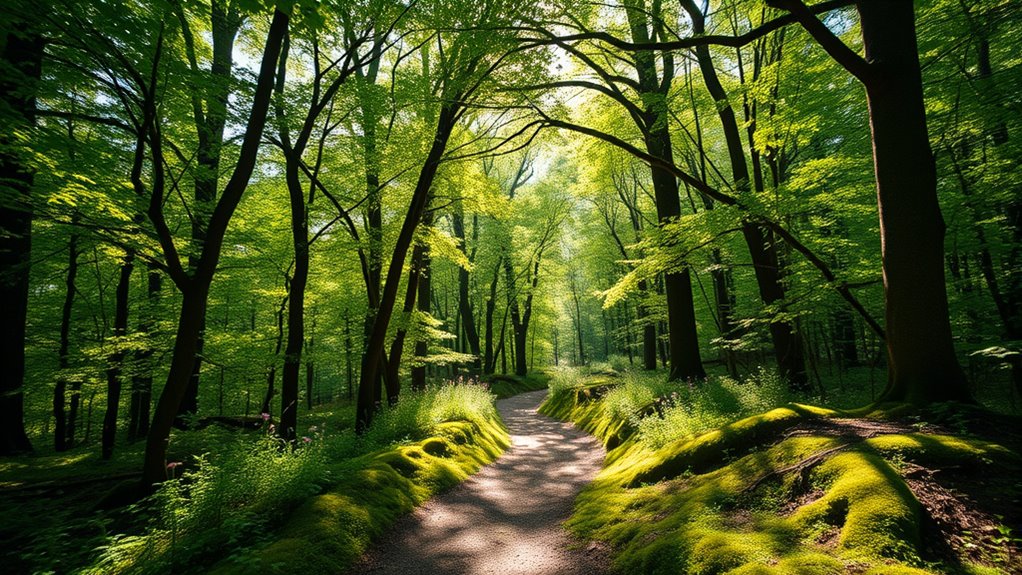

Spending time outdoors on nature walks can boost your mood by invigorating your mind and reducing stress through sensory engagement with wildlife, sounds, and sights. It helps you stay present, fostering mindfulness and a sense of wonder. Observing nature’s details deepens your connection to the environment, promoting emotional well-being. By making these walks a regular habit, you’ll experience ongoing mental and emotional benefits—discover more ways to enhance your outdoor experience just ahead.
Key Takeaways
- Nature walks boost mood and mental well-being by providing immersive outdoor experiences that reduce stress and promote relaxation.
- Observing wildlife during walks fosters a sense of wonder, curiosity, and stronger emotional connection to nature.
- Forest therapy techniques, like sensory immersion, can lower stress hormones and improve emotional health.
- Engaging all senses during walks enhances mindfulness, helping individuals stay present and reduce anxieties.
- Regular outdoor activity fosters resilience, mental clarity, and a deeper bond with the natural environment.

Have you ever wondered how a simple walk outdoors can refresh your mind and boost your mood? Stepping into nature isn’t just about getting some fresh air; it’s an immersive experience that can profoundly improve your mental well-being. When you take a leisurely stroll through a park, woodland, or trail, you open yourself up to the calming effects of nature. One of the most engaging ways to deepen this connection is through wildlife observation. Watching birds flit from branch to branch, spotting deer in the distance, or listening to the chorus of insects and birds can ground you in the present moment. These small encounters foster a sense of wonder and curiosity, helping you forget daily stresses and anxieties. Wildlife observation during your walks encourages mindfulness, allowing you to focus on the natural world rather than your worries, which can lead to a more relaxed and positive mood.
Besides the joy of observing animals, engaging in forest therapy can amplify the mental benefits of your outdoor walks. Forest therapy, also known as shinrin-yoku or “forest bathing,” involves immersing yourself fully in the sights, sounds, and smells of the woods. It’s a practice rooted in the idea that nature has healing properties, and research supports its ability to lower cortisol levels, reduce blood pressure, and improve overall emotional health. As you walk amidst towering trees and lush greenery, you naturally slow down, breathe more deeply, and allow the tranquility of your surroundings to wash over you. The sensory stimulation from the rustling leaves, the earthy scent of damp soil, and the dappled sunlight filtering through the canopy helps reset your nervous system, easing tension and fostering a sense of peace. Incorporating nature-based activities like wildlife observation and forest therapy into your walks isn’t complicated. You don’t need to be an expert or aim for a specific distance; simply be present and attentive. Find a quiet spot where nature feels accessible, and spend a few moments observing the environment around you. Notice the intricate details of the bark on a tree, listen to the sounds of the forest, or watch a squirrel dart across the path. As you do so, you’ll notice that your mood lifts naturally, and your connection to the natural world deepens. These experiences can become a treasured part of your routine, providing ongoing mental clarity, emotional resilience, and a renewed appreciation for the outdoors.

Occer 12×25 Compact Binoculars for Adults and Kids, Large Eyepiece Waterproof Binocular with Low Light Vision,High Powered Easy Focus Binoculars for Bird Watching,Outdoor Hunting,Travel,Sightseeing
【HIGH-POWERED LARGE EYEPIECE BINOCULARS】 This binoculars for adults has 12x magnification, 25mm objective lens and wide field of…
As an affiliate, we earn on qualifying purchases.
As an affiliate, we earn on qualifying purchases.
Frequently Asked Questions
How Does Exposure to Sunlight During Nature Walks Affect Mood?
When you get sunlight during nature walks, it boosts your mood by increasing Vitamin D production, which helps regulate your circadian rhythm. This balance improves sleep, reduces stress, and lifts your spirits. Sunlight exposure also triggers the release of endorphins, making you feel happier. So, stepping outside not only energizes you but also supports your overall mental health by syncing your body’s internal clock.
Can Nature Walks Help Reduce Symptoms of Anxiety and Depression?
Yes, nature walks can help reduce symptoms of anxiety and depression. When you engage in mindfulness practice during these walks, you focus on the present moment, calming your mind. Nature therapy enhances this effect by providing a peaceful environment that fosters relaxation and emotional well-being. Regularly spending time outdoors allows you to reconnect with nature, which can markedly improve your mood and lessen feelings of anxiety and depression.
What Are the Best Times of Day for a Nature Walk?
You should aim for morning energizers or evening relaxers when planning your nature walk. In the morning, the fresh air and sunlight boost your energy and mood, setting a positive tone for your day. In the evening, the calm surroundings help you unwind and de-stress, preparing you for restful sleep. Both times support your mental well-being, so choose what fits your schedule and mood best for a rewarding experience.
How Long Should a Typical Nature Walk Last for Mental Health Benefits?
Research shows even a 20-minute nature walk can substantially boost your mental health. For ideal timing, aim for at least 30 to 60 minutes, as this duration allows your brain to relax and reconnect with nature. Duration guidelines suggest longer walks deepen benefits, but consistency matters most. So, find a time that fits your schedule, whether morning or afternoon, to maximize mood improvement and strengthen your connection with the outdoors.
Are There Specific Types of Natural Environments More Beneficial Than Others?
You’ll find urban parks and forest trails both beneficial, but forest trails often offer deeper mental health benefits due to their tranquility, greenery, and natural sounds. Urban parks are convenient and still boost your mood, especially when they feature trees and water. Choosing a serene, green environment, whether city park or forest trail, helps reduce stress, improve focus, and foster a stronger connection with nature, enriching your overall well-being.

Barefoot Shoes for Women & Men, Grounded Walking Hiking Barefoot Shoes, Wide Toe Box Non-Slip Water Athletic Footwear, Comfortable Vitality Barefoot Footwear, Trail Running Sneakers Unisex.
【Wide toe box】This Hiking barefoot shoes womens footwear mens barefoot shoes for walking provides your toes the space…
As an affiliate, we earn on qualifying purchases.
As an affiliate, we earn on qualifying purchases.
Conclusion
So, lace up your shoes and step into the embrace of nature’s gentle arms. Each walk is a chance to breathe in serenity and exhale worries, turning your mind into a clear blue sky. As you wander through rustling leaves and sun-dappled paths, you’ll find your mood lifting like a butterfly taking flight. Let the outdoors be your sanctuary, where every step deepens your connection to the world—and to yourself.

Animal Tracks: A Folding Pocket Guide to the Tracks & Signs of Familiar North American Species (Nature Observation North America)
Pocket Naturalist Animal Tracks by James Kavanagh – 1583550720
As an affiliate, we earn on qualifying purchases.
As an affiliate, we earn on qualifying purchases.

Snugvia Zen Garden Kit for Desk 12x8in Premium Sand Tray Therapy Kit, Japanese Mini Zen Sand Garden Gift Set, 20 Accessories, Stress Relief Gifts, Meditation Home Office Desk Decor
The Art of Mindful Creation:Immerse yourself in the meditative art of Japanese Zen gardens with this exquisite desktop…
As an affiliate, we earn on qualifying purchases.
As an affiliate, we earn on qualifying purchases.