

To cultivate inner peace, start by practicing mindfulness exercises like focusing on your breathing during everyday moments. Incorporate short meditation routines into your day—morning or evening—to build resilience against stress. Make mindful activities, such as eating or walking, a regular habit to stay present and centered. Consistency is key, and over time, these tools can help you stay calm, grounded, and resilient. Keep going to discover more ways to deepen your inner calm.
Key Takeaways
- Practice mindfulness exercises like focused breathing to anchor awareness in the present moment and reduce stress.
- Establish a regular meditation routine, dedicating specific times daily to deepen self-awareness and inner calm.
- Use simple meditation techniques such as breathing focus or mantra repetition to train resilience against stress.
- Incorporate mindful activities like eating or walking to stay connected to the present throughout daily life.
- Maintain consistency and patience, understanding that regular practice fosters sustained inner peace and well-being.
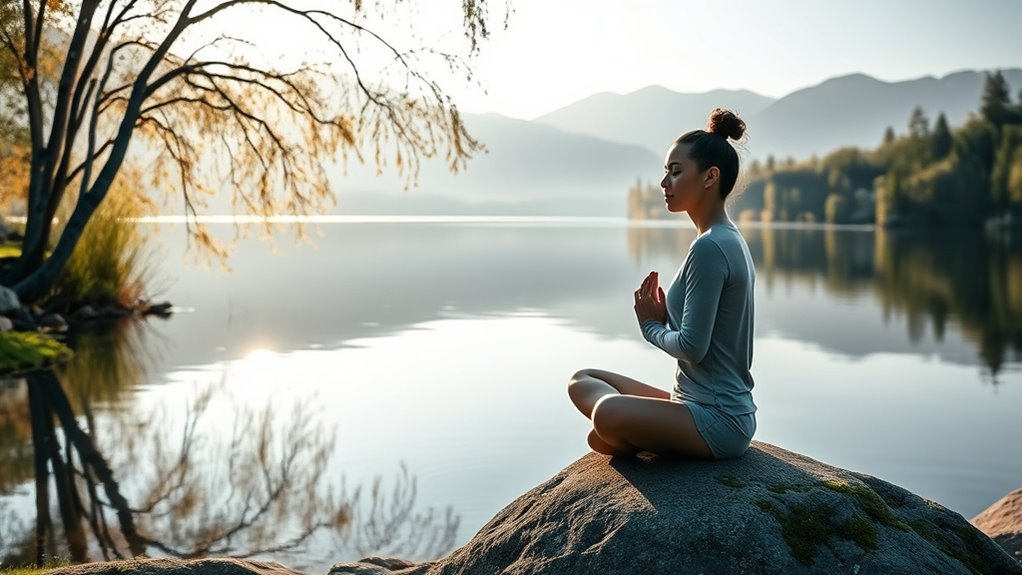
Have you ever wondered how some people seem calm and centered no matter what life throws their way? It’s not a coincidence; they’ve likely developed habits that foster inner peace through mindfulness and meditation practices. These techniques help you quiet your mind, reduce stress, and stay grounded even during chaos. To start, incorporating simple mindfulness exercises into your daily routine can make a significant difference. You might begin by paying close attention to your breath, noticing each inhale and exhale without trying to control it. This practice anchors you to the present moment, preventing your mind from wandering to worries or past regrets. As you become more aware of your thoughts and feelings, you’ll find it easier to accept them without judgment, cultivating a sense of calm that stays with you throughout the day.
Meditation techniques are another powerful tool to develop inner peace. You don’t need hours of free time to meditate; even a few minutes can create a noticeable shift. Find a quiet space where you won’t be disturbed, sit comfortably, and focus on your breathing or a specific mantra. When your mind drifts, gently bring your focus back to your breath or mantra without frustration. Over time, this practice trains your brain to remain more resilient to stress, allowing you to approach challenges with greater clarity and composure. Consistency is key—set aside a specific time each day to meditate, whether in the morning to start your day peacefully or at night to unwind.
In addition to formal meditation sessions, integrating mindfulness into everyday activities can amplify your inner peace. For example, when eating, pay attention to the textures, flavors, and smells of your food, fully immersing yourself in the experience. When walking, notice the sensation of your feet on the ground and the sights and sounds around you. These small moments of mindfulness help you stay connected to the present, reducing anxiety and increasing your overall sense of well-being. Remember, the goal isn’t to eliminate all stress but to learn how to respond to it more skillfully. By consistently practicing mindfulness exercises and meditation techniques, you develop a deeper awareness of your inner self, allowing peace to become your default state, regardless of external circumstances.

Retrospec Sedona Meditation Cushion, Buckwheat Pillow, Meditation Pillow
NATURAL COMFORT & SUPPORT: Filled with sustainable buckwheat hulls, this meditation cushion elevates your practice by aligning your…
As an affiliate, we earn on qualifying purchases.
As an affiliate, we earn on qualifying purchases.
Frequently Asked Questions
How Long Should I Meditate Daily for Optimal Peace?
You should aim for about 10 to 20 minutes of meditation daily for ideal practice time. Starting with this duration allows you to build a consistent routine without feeling overwhelmed. As you become more comfortable, you can gradually increase your meditation duration if desired. The key is regularity; even short, daily sessions can markedly enhance your inner peace and mindfulness over time.
Can Meditation Help With Chronic Anxiety or Depression?
Yes, meditation can help with chronic anxiety and depression by enhancing its effectiveness for your mental health. Regular practice reduces stress, calms your mind, and increases awareness of negative thoughts, making it easier to manage them. Though it’s not a cure, incorporating meditation into your routine offers significant mental health benefits, supporting your overall well-being and helping you develop resilience against long-term emotional challenges.
Are There Specific Times of Day Best for Mindfulness Practice?
You should practice mindfulness during your ideal morning or evening routines to maximize benefits. Morning sessions help set a calm tone for the day, while evening practices promote relaxation and better sleep. Find a quiet, comfortable time when you’re least likely to be interrupted. Consistency matters most, so choose a time that fits seamlessly into your daily schedule. This way, mindfulness becomes a natural part of your routine.
What Are Common Challenges Beginners Face With Meditation?
As a beginner, you might struggle with distraction management and maintaining good posture during meditation. Distractions can easily pull your focus away, but gentle acknowledgment helps you refocus. Remember, posture is important; keep your back straight and relaxed to promote alertness and comfort. These challenges are normal, so be patient with yourself. Consistent practice will improve your focus and help you develop a more peaceful meditation routine.
Can Mindfulness Improve Relationships and Social Interactions?
Yes, mindfulness can improve your relationships and social interactions by increasing your emotional awareness. When you’re mindful, you become more attuned to others’ feelings, which helps you respond calmly and empathetically. This heightened awareness also aids in conflict resolution, allowing you to address disagreements thoughtfully rather than react impulsively. Over time, practicing mindfulness strengthens your connections, fostering trust and understanding in your relationships.

YeeBeny Breathing lamp Guided 3 Color 478s Meditation for Stress Relief
Breathing Lamp Function: A mindful breathing lamp is a powerful and effective tool that can help you reduce…
As an affiliate, we earn on qualifying purchases.
As an affiliate, we earn on qualifying purchases.
Conclusion
By embracing mindfulness and meditation, you open a calm that’s as timeless as the sages of old. Remember, inner peace isn’t a destination but a journey—you’re the captain of your own ship, steering through life’s storms. So, stay committed, and don’t forget to enjoy the voyage. As the ancients once said, “Peace is the true treasure,” and with these practices, you’ll find yours, even in the midst of modern chaos.

Breathing Exercise Device for Lungs, Lung Exerciser Device – 5000ml Volumetric Deep Breathing Trainer with Flow Rate Indicator for Respiratory Health & Recovery
Large 5000ml Capacity for Gradual Breathing Training – This breathing exercise device for lungs offers a maximum volume…
As an affiliate, we earn on qualifying purchases.
As an affiliate, we earn on qualifying purchases.

Gratitude Puzzle Book and Journal: 365+ Puzzles and Activities for a Grateful Heart and Mind (Journaling & Reflection, Puzzles, Word Searches & More); Spiral Bound / Lay Flat Design (Part of the Brain Busters Puzzle Collection)
As an affiliate, we earn on qualifying purchases.
As an affiliate, we earn on qualifying purchases.