Choose a relationship book that matches a shared goal, agree on how you will read and discuss it, and try one idea in everyday life. This guide is for couples who want a practical starting point, whether they are building communication habits, addressing recurring conflict, or making time for connection. You do not need prior relationship-therapy experience. Allow 30–60 minutes to choose a book and set a plan, then 2–4 weeks for an initial reading and discussion cycle.

Get gifts for the two of you delivered free with Prime
- Fast, free delivery on millions of items
- Prime Video, Amazon Music and more included
- Member-only deals all year

The Seven Principles for Making Marriage Work: A Practical Guide from the Country’s Foremost Relationship Expert
- ✔ Format: Practical relationship guide
- ✔ Core framework: Seven principles
- ✔ Approach: Evidence-based guidance, according to the supplied description
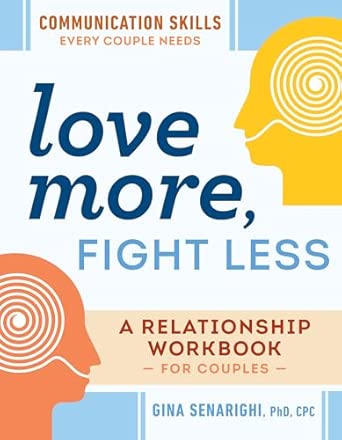
Love More, Fight Less: Communication Skills Every Couple Needs – A Relationship Workbook for Couples
- ✔ Format: Relationship workbook
- ✔ Primary focus: Communication skills
- ✔ Activities: Prompts and exercises

Fight Right: How Successful Couples Turn Conflict Into Connection
- ✔ Format: Not specified in the supplied information
- ✔ Stated focus: Conflict and connection
- ✔ Intended audience: Couples, as indicated by the title
Difficulty: Beginner | Time: 30–60 minutes to choose a book; 2–4 weeks to read and discuss it
What You’ll Need
Tools & Materials:
- A phone or computer for browsing, or access to a library or bookstore
- A shared note, notebook, or document for recording questions and ideas
- A way to get the book, such as a library copy, ebook, audiobook, or print edition
Knowledge:
- A willingness to name one relationship goal each
- Basic comfort with taking turns listening and speaking
Choose a calm time to talk, rather than raising the topic during an argument. If either partner feels pressured or unsafe, pause the joint reading plan and seek confidential support from a qualified professional or local service.
The Seven Principles for Making Marriage Work: A Practical Guide from the Country’s Foremost Relationship Expert
For couples who want one book to address the health of the marriage as a whole, The Seven Principles for Making Marriage Work has the broadest stated toolkit in this lineup. Its seven-part structure gives partners a route through the subject, while research, case studies, exercises, and communication tools connect the ideas to conversations they can have together. That breadth is why we rank it ahead of the more specialized alternatives: Love More, Fight Less concentrates on interactive communication practice, and Fight Right centers on conflict.The wide scope can also be a drawback. Readers who already know common relationship-book concepts may find parts repetitive, and the stated focus is primarily on heterosexual marriage dynamics. Couples outside that frame may want to assess whether the examples feel relevant before choosing it. This pick makes the most sense when we want a structured marriage guide and are willing to work through exercises, rather than a narrow manual for one recurring disagreement.
Pros:
- Organizes guidance into a clear seven-principle framework
- Combines research with real-life case studies
- Includes exercises and communication tools for shared practice
- Described as useful to newlyweds and long-term couples
Cons:
- Some material may feel repetitive to experienced readers
- Its stated focus is primarily heterosexual marriage dynamics
Best for: Married couples seeking a broad, step-by-step framework with research, examples, and exercises.
Not ideal for: Readers who want a narrowly focused conflict guide, already know similar relationship material, or may not relate to its primarily heterosexual marriage framing.
Bottom line: Choose this as our broadest starting point when we want a structured marriage guide rather than a book devoted to one communication issue.
“Choose this as our broadest starting point when we want a structured marriage guide rather than a book devoted to one communication issue.”
Love More, Fight Less: Communication Skills Every Couple Needs – A Relationship Workbook for Couples
When a couple would rather work through prompts together than read a general guide, Love More, Fight Less is the clearest workbook choice here. Its described activities and reflection pages are designed to help partners identify patterns, address conflict, and build intimacy through structured communication practice. Compared with The Seven Principles, it has a more explicit workbook format and a narrower emphasis on dialogue. That can make it easier to bring into a shared routine when the couple wants a concrete activity to do together.The same format asks for participation: this is less suited to partners who want to read independently or prefer advice without written reflection. Its description says the workbook can serve couples at different relationship stages, but readers familiar with basic communication ideas may encounter repetition. We rank it below the broader marriage guide because its stated focus is more specific; for a couple whose main goal is practicing communication, that focus is the advantage. Fight Right may be a better match when the priority is conflict as a topic in itself.
Pros:
- Provides structured exercises for real-world communication challenges
- Includes prompts, activities, and reflection pages
- Addresses patterns, conflict, and intimacy
- Described as suitable for new relationships and long-term marriages
Cons:
- The workbook format may not suit couples who prefer reading without written tasks
- Some concepts may feel repetitive to readers familiar with basic communication guidance
Best for: Partners who want guided prompts and reflection space to practice communication together.
Not ideal for: Couples who prefer a conventional reading experience, do not want to complete written activities, or already know basic communication concepts.
Bottom line: Pick this when shared exercises and reflection matter more to us than the broader marriage framework offered by The Seven Principles.
“Pick this when shared exercises and reflection matter more to us than the broader marriage framework offered by The Seven Principles.”
Fight Right: How Successful Couples Turn Conflict Into Connection
Fight Right is the most clearly targeted title in the lineup: it frames conflict as the route to connection and speaks to couples who want to examine how they handle disagreements. That focus distinguishes it from The Seven Principles, whose supplied description presents a wider marriage-strengthening framework, and from Love More, Fight Less, which specifically promises workbook exercises and reflection pages. If conflict is the issue that brings us to a relationship book, a focused title may feel more relevant than beginning with a broad survey.There is an important limit to this comparison: no product description, format details, or listed features were provided for this title. We can judge its stated subject from the title, but cannot responsibly claim that it includes exercises, research, or a particular method. That makes it harder to assess how much guided couple participation it offers. We place it third for this roundup because the other entries have more supplied information about their practical tools, not because a conflict-centered approach is inherently less useful. Choose it for its subject fit, while checking the book’s contents if format or specific techniques are deciding factors.
Pros:
- Has a clearly stated focus on conflict between couples
- Frames disagreements in relation to connection
- Offers a distinct subject compared with the broader marriage guide and communication workbook
Cons:
- The supplied product information does not describe its format or specific tools
- We cannot compare its exercises, evidence, or intended relationship stages from the details provided
Best for: Couples whose main reading goal is to explore how conflict can support connection.
Not ideal for: Readers who need a confirmed workbook format, detailed feature information, or a broad marriage guide based on the information available here.
Bottom line: Consider this focused option when conflict is the central concern, while verifying its contents if specific tools or format matter to us.
“Consider this focused option when conflict is the central concern, while verifying its contents if specific tools or format matter to us.”
As an Amazon Associate we earn from qualifying purchases.
Before You Start
Agree that the book is a tool for shared reflection, not a way to diagnose, blame, or win an argument. Each partner should be able to pass on a question or pause a discussion. If there is fear, coercion, or abuse in the relationship, a couples book may not be a safe first step; seek individual, confidential support instead.
Step-by-Step Instructions
Set aside 10 minutes and have each partner name one change they would like to make. Use specific situations: for example, “We want to handle disagreements about chores without interrupting,” or “We want a regular way to reconnect after work.” Then choose one goal you both agree is worth exploring. Keep the wording neutral and focused on a behavior, not a partner’s supposed flaw.
Tip:If your goals differ, list both and choose the one that affects daily life most or feels easiest to work on first. You can select another book later.
Check: You can state the shared goal in one sentence, and both partners say it reflects what they want to work on.
Step 2: Choose a book that fits the goal
Search library catalogs, reputable booksellers, or recommendations from a qualified counselor using your goal as the search phrase. Read the description, table of contents, and a sample chapter before deciding. Check that the book offers exercises or examples that fit the issue you named and that both partners are comfortable with its language and approach. If the book draws on research or clinical methods, look for a clear author biography and references, and avoid relying on sales claims alone.
Tip:Prefer a book that gives concrete activities you can try over one that promises a quick fix. A library copy or sample chapter lets you check the tone before buying.
Check: Each partner can explain why the book fits your goal and agrees to try it for an initial reading period.
Step 3: Agree on a reading plan
Choose a manageable pace, such as one chapter or 10–15 pages per week. Decide whether you will read separately, listen together, or alternate reading aloud. Schedule a 20–30 minute discussion after each section, and set a start date. Put the plan somewhere both partners can see it. If a chapter is long or emotionally difficult, split it into smaller parts rather than forcing a conversation when either of you is tired.
Tip:Audio editions can help when schedules or reading preferences differ. Check that the chosen edition includes any exercises or worksheets referenced in the text.
Check: You have a clear start date, a realistic amount to read, and a time set aside to talk.
Step 4: Read with your own reactions in mind
As you read or listen, note one idea that feels useful, one question, and one reaction you want to share. Use a shared note or write privately first. Focus on how an example relates to your experience rather than marking passages to prove that your partner is wrong. If a prompt feels too personal, write “pass” and continue to the next section.
Tip:Keep notes short. A few words such as “pause before replying” are easier to discuss than a page of highlighted passages.
Check: Each partner has at least one idea or question to bring to the next conversation, without needing to agree with every claim in the book.
Step 5: Discuss one section at a time
Meet at the planned time and discuss a single chapter or exercise. Give each partner a few minutes to share what stood out and why. The listener should summarize what they heard before responding; then switch roles. Ask questions such as, “What did you want me to understand?” or “Which part feels relevant to us?” Avoid interrupting, name-calling, and turning the discussion into a review of old grievances. Pause for a break if either partner becomes overwhelmed.
Tip:Do not treat the author’s example as a verdict on your relationship. The goal is to find a useful conversation starter or practice, not to decide who is the “problem.”
Check: Both partners have had time to speak, and each can describe one point they heard from the other.
Step 6: Select one small practice to try
Choose one activity or behavior from the section and make it concrete. For example, agree to take turns summarizing during a difficult conversation, schedule one phone-free check-in, or use a short pause when voices rise. Decide when you will try it, how often, and what each person will do. Keep the experiment small enough to complete during a normal week. Do not introduce several new rules at once.
Tip:Choose a practice that both partners consider acceptable. If an exercise feels forced, adapt it or choose another one from the book.
Check: You can describe the practice, when you will use it, and what each partner will do without guessing.
Step 7: Review the practice and adjust
After one week, set aside 10–15 minutes to review the experiment. Each partner should say what worked, what felt awkward, and whether they noticed any change. Keep what helps, adjust what is unclear, or stop an exercise that increases tension. Then decide whether to repeat it, try another practice, or move on to the next section. If the same conflict continues to feel unmanageable, consider asking a qualified couples therapist for help.
Tip:Look for small signs of progress, such as a calmer pause or a clearer request. A practice does not have to solve the whole issue to be useful.
Check: You have a shared decision about whether to keep, change, or stop the practice, and a next discussion date if you plan to continue.
Common Mistakes to Avoid
- Choosing a book because it is popular, even though it does not address your shared goal. — Compare its contents and sample chapter with the specific behavior or situation you want to work on.
- Using passages as evidence that one partner is at fault. — Share how an idea relates to your own experience, and ask how your partner sees it before drawing conclusions.
- Trying to read too much or change several habits at once. — Set a modest pace and test one practice at a time so you can tell what helps.
- Pressuring a partner to answer every prompt or finish the book. — Agree that either person can pass, pause, or stop; choose a different resource if the format does not work for both.
Troubleshooting
Problem: You cannot agree on which book to choose.
Solution: Each partner can suggest one title. Compare the sample chapters against your shared goal, then choose the option both are willing to try for two weeks. If no title fits, ask a librarian or qualified counselor for suggestions.
Problem: The discussion turns into an argument about past events.
Solution: Pause the book discussion. Take a break, then return to one question from the chapter using short turns and summaries. If the same pattern keeps recurring, consider professional support.
Problem: One partner is reading much faster than the other.
Solution: Set a shared stopping point, such as one section per week, and let the faster reader continue privately without expecting the other partner to catch up.
Problem: An exercise feels uncomfortable or makes tension worse.
Solution: Stop that exercise and say what felt difficult. Skip it, adapt it only if both partners agree, or ask a qualified professional for guidance if the topic feels hard to manage safely.
What Success Looks Like
You have selected a book that both partners connect to a shared goal, set a reading and discussion schedule, and completed at least one conversation with time for each person to speak. You have also chosen a specific practice to test and agreed how to review it. Success means completing this process and learning whether an idea helps; it does not require finishing the entire book or resolving every relationship concern.
Next Steps
Continue at the pace you agreed on. After each section, test one practical idea and review it before adding another. At the end of your initial reading period, decide together whether to finish the book, choose a resource for a different goal, or stop. Keep notes on practices that help so you can repeat them. Seek a qualified couples therapist or other appropriate professional if conflict remains difficult to manage, exercises bring up distress, or you want support tailored to your relationship.
Frequently Asked Questions
Should couples read the book together or separately?
Use the format both partners can keep up with. Reading separately gives each person time to reflect; listening together can simplify scheduling. Either way, set a shared section to discuss so you are responding to the same material.
What if my partner does not want to read a relationship book?
Ask what feels unappealing and offer a small, low-pressure alternative, such as discussing one short article or trying one conversation exercise. Do not force participation. If you need help with a shared concern, you can also seek individual guidance from a qualified professional.
How can we tell whether a relationship book is credible?
Check the author’s relevant training or experience, look for references or clear sources, and read a sample chapter to see whether claims are presented responsibly. Treat a book as a source of ideas rather than a substitute for care tailored to your circumstances.
How long should we try a book before switching?
Try a pace and period you both agree to, such as two or three sections over a few weeks. Switch if the book does not address your goal, its advice does not fit your situation, or the approach feels unhelpful. You do not need to finish a book that is not working for you.