
To develop a personalized exercise plan as a couple, start by setting shared and realistic goals that suit both your fitness levels. Regularly check in to review progress, celebrate milestones, and adjust routines as needed. Mix up your workouts with cardio, strength, yoga, or outdoor activities to keep things fun and engaging. Focus on teamwork, planning exercises together, and supporting each other’s progress. If you want to discover effective strategies, keep exploring how to make your fitness journey enjoyable and sustainable.
Key Takeaways
- Establish shared fitness goals that reflect both partners’ interests and current fitness levels to ensure motivation and relevance.
- Schedule regular check-ins to review progress, adjust routines, and celebrate milestones together.
- Incorporate diverse workouts like cardio, strength, yoga, and outdoor activities to prevent boredom and maintain engagement.
- Set small, achievable milestones to track progress and boost motivation through tangible successes.
- Collaboratively plan workouts, choosing enjoyable activities and adding challenges or rewards to foster teamwork and long-term commitment.
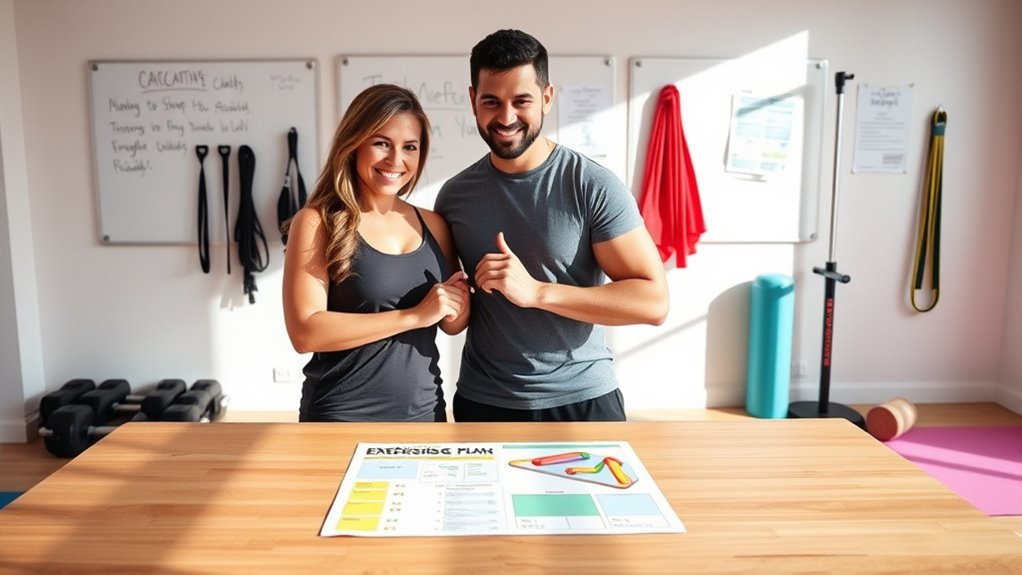
Starting a personalized exercise plan as a couple can boost your motivation and strengthen your bond. When you set out on this journey together, it’s vital to develop motivation strategies that keep both of you engaged and committed. One effective way is to openly discuss your shared fitness goals. Whether it’s losing weight, building strength, improving endurance, or simply staying active, having common objectives creates a sense of purpose. When your goals align, it’s easier to motivate each other, celebrate milestones, and stay accountable. Remember, these shared objectives should be realistic and tailored to both of your fitness levels and preferences. That way, neither of you feels overwhelmed or discouraged.
To keep your motivation high, incorporate regular check-ins into your routine. Schedule weekly or bi-weekly conversations to review your progress, tweak your workouts, and celebrate successes. These check-ins serve as motivation strategies because they reinforce your commitment and highlight how far you’ve come. You can use these moments to motivate each other with positive reinforcement, reminding yourselves why you started and how much you’ve achieved. This practice fosters a supportive environment where both of you feel valued and encouraged.
Another key motivation strategy is to diversify your workouts. Engaging in different activities prevents boredom and keeps your fitness journey exciting. Try mixing cardio, strength training, yoga, or outdoor activities like hiking to maintain enthusiasm. When you enjoy your workouts, motivation tends to stick around longer. Additionally, setting small, achievable milestones can give you both a sense of accomplishment along the way. Whether it’s completing a month of regular sessions or reaching a specific distance or weight goal, celebrating these wins fuels your desire to keep going.
Involving each other in planning your workouts also enhances motivation. When you collaborate on creating your routine, you’re more invested. Choose activities that you both find enjoyable and challenging. This collaborative approach ensures that your shared fitness goals remain central and that you’re both committed to sticking with the plan. It also fosters a sense of teamwork, which is vital for long-term success.
Furthermore, understanding the importance of high refresh rates and low input lag in projectors can be paralleled to maintaining a steady and responsive workout routine, where consistency and quick adjustments keep the progress smooth and effective.
Finally, don’t forget to keep the experience fun. Incorporate friendly challenges, reward yourselves for sticking to your plan, and occasionally switch up your exercises to stay motivated. When your exercise plan is rooted in shared goals and driven by effective motivation strategies, you’ll find it easier to stay consistent and enjoy the process together. The key is to support each other, celebrate progress, and remember that your journey is about improving both your health and your relationship.
Frequently Asked Questions
How Can Couples Stay Motivated During Slow Progress?
You can stay motivated during slow progress by celebrating small wins together, which keeps your spirits high. Establish accountability by checking in regularly and encouraging each other to stay committed. Remember, progress may be slow, but consistency is key. Focus on the positive changes, no matter how minor, and remind yourselves of your shared goals. This approach helps maintain motivation and strengthens your partnership along the way.
What if One Partner Has a Health Limitation?
Like Da Vinci adjusting his brushstrokes, you can adapt your routines with adaptive modifications and inclusive exercises. When one partner has a health limitation, prioritize safety and comfort, choosing activities that suit their abilities. Focus on gentle, joint-friendly movements, and incorporate variety to keep motivation high. Open communication helps guarantee both feel supported and included, turning your shared fitness journey into a collaborative masterpiece.
How Do We Balance Individual and Shared Fitness Goals?
To balance individual and shared fitness goals, you should openly discuss your personal preferences and listen to your partner’s. Use communication strategies like setting clear, flexible goals and checking in regularly. Find activities you both enjoy, but also respect each other’s needs. Compromise where needed, and celebrate your progress together, ensuring both your personal aspirations and shared objectives stay aligned for a supportive fitness journey.
What Are Fun Activities for Couples With Different Fitness Levels?
Did you know that couples who do partner workout routines report higher motivation and satisfaction? For fun activities with different fitness levels, try easy and challenging exercises side by side, like a gentle yoga flow paired with a more intense routine. Fitness challenge ideas, such as timed plank contests or step count competitions, keep it engaging. These activities boost teamwork and make exercising enjoyable for both of you, regardless of your starting point.
How Often Should Couples Reassess Their Exercise Plan?
You should reevaluate your exercise plan every 4 to 6 weeks through regular check-ins. During these sessions, evaluate your progress and discuss any needed goal adjustments to stay motivated and aligned. Life changes, fitness improvements, or new interests can impact your plan, so staying flexible ensures you both enjoy your workouts and keep progressing together. Consistent reassessment helps maintain a balanced, effective routine.
Conclusion
Remember, teamwork makes the dream work. By creating a personalized exercise plan together, you both stay motivated and accountable, making fitness a shared journey rather than a solo effort. Communicate openly, support each other’s goals, and celebrate small wins along the way. Just like a strong chain is only as good as its weakest link, your success depends on working together. Stay committed, and you’ll reap the benefits of a healthier, happier life side by side.