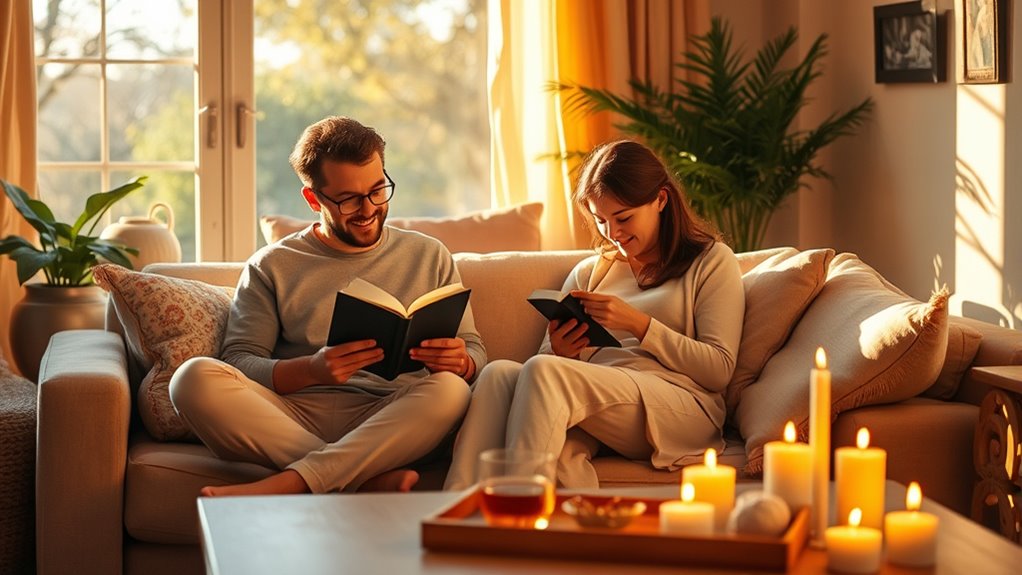

To create a balanced self-care routine, prioritize both your personal growth and shared time with your partner. Schedule regular solo activities like hobbies or relaxation to recharge, while setting aside meaningful moments together to strengthen your connection. Practice mindfulness, open communication, and emotional awareness to foster intimacy. Remember, balancing individual needs with shared experiences promotes health and happiness in your relationship. Keep exploring ways to nurture both sides for lasting harmony.

Get gifts for the two of you delivered free with Prime
- Fast, free delivery on millions of items
- Prime Video, Amazon Music and more included
- Member-only deals all year
Key Takeaways
- Allocate specific times for solo self-care activities to promote personal growth and recharge.
- Schedule regular shared experiences to strengthen emotional intimacy and connection.
- Communicate openly about individual needs and boundaries to ensure mutual understanding.
- Incorporate mindfulness and self-awareness practices to enhance emotional presence during both alone and shared moments.
- Maintain a balanced routine that prioritizes both personal well-being and quality time together.

Maintaining a self-care routine is vital for couples looking to strengthen their bond and promote individual well-being. When you prioritize self-care, you create space for personal growth and foster a healthier relationship. One of the key benefits of incorporating self-care into your routine is improving communication skills. When you take time to understand your own needs and emotions, you become better equipped to express yourself clearly and listen actively. This openness encourages honest conversations, reducing misunderstandings and building emotional intimacy. As you invest in yourself, you also become more receptive to your partner’s feelings, creating a cycle of mutual support and deeper connection.
Balancing individual and shared time is essential in cultivating emotional intimacy. It’s about finding the right mix where both partners feel valued and understood without neglecting their personal interests. You might dedicate specific times for solo activities, like pursuing hobbies or simply relaxing alone, which helps recharge your mental and emotional batteries. When you do so, you’re more present and engaged during shared moments. Conversely, setting aside quality couple time allows you to nurture your relationship through shared experiences, whether it’s cooking dinner together or taking a walk. This balance guarantees neither your personal growth nor your relationship takes a backseat.
Developing routines that promote self-awareness can markedly enhance your emotional intimacy with your partner. For example, practicing mindfulness or journaling can help you identify your feelings and triggers, making it easier to communicate your needs effectively. When you’re aware of your emotional landscape, you’re less likely to react impulsively or withdraw, which can strain your connection. Instead, you approach conflicts with more empathy and patience, strengthening your emotional bond. Incorporating self-care practices such as meditation or relaxation techniques can further support your mental health and overall well-being. Sharing these self-awareness practices with your partner can also foster a deeper understanding of each other’s inner worlds, reinforcing emotional intimacy.
couples mindfulness meditation kit
As an affiliate, we earn on qualifying purchases.
As an affiliate, we earn on qualifying purchases.
Frequently Asked Questions
How Can Couples Maintain Independence While Prioritizing Self-Care?
You can stay independent while prioritizing self-care by pursuing your independent hobbies and setting clear personal boundaries. Make time for activities that refresh you individually, ensuring you maintain your identity outside the relationship. Communicate openly with your partner about your needs and limits, fostering mutual respect. This balance helps you feel fulfilled and connected, strengthening your relationship while honoring your personal self-care routines.
What Are Some Signs of Burnout in a Relationship?
Your relationship might be heading for disaster if you ignore signs of burnout. When you feel emotionally exhausted or notice relationship fatigue, it’s a warning sign that emotional walls are rising. You may start to withdraw, argue more, or lose interest in shared activities. These signs indicate your emotional energy is drained, and ignoring them can turn your once-strong bond into a fragile thread ready to snap.
How Do I Introduce Self-Care Routines to My Partner?
You can introduce self-care routines to your partner by emphasizing the importance of personal boundaries and emotional support. Start a gentle conversation, sharing how self-care helps you recharge and stay connected. Suggest activities that respect both your needs, like solo hobbies or relaxing together. Encourage open communication, letting your partner express their preferences. By prioritizing mutual well-being, you create a supportive environment where self-care becomes a shared value.
What if Partners Have Conflicting Self-Care Needs?
Imagine your relationship as a dance, where conflicting self-care needs are different steps. You can find harmony through mutual understanding and respecting emotional boundaries. Talk openly about what each of you needs, like tuning a musical instrument, so both feel valued. Flexibility is key—be willing to adjust your routines, ensuring that both your individual well-being and your shared connection stay in sync.
How Often Should Couples Reassess Their Self-Care Routines?
You should reassess your self-care routines regularly, ideally every few months, to guarantee they still meet both your needs. During self-care check-ins, discuss how each of you feels about your routines and identify any necessary adjustments. Routine adjustments help maintain balance, prevent burnout, and support your well-being. Staying proactive with these check-ins ensures your self-care practices evolve with your relationship, keeping both partners feeling supported and fulfilled.
As an affiliate, we earn on qualifying purchases.
Conclusion
Remember, balancing your own needs with your partner’s isn’t selfish—it’s essential for a healthy relationship. Some might think carving out individual time could create distance, but it actually strengthens your bond by allowing both of you to recharge and bring more energy to shared moments. So, don’t hesitate to prioritize self-care; your well-being benefits both of you. Embrace this balance, and watch your connection grow stronger every day.
relationship communication card game
As an affiliate, we earn on qualifying purchases.
As an affiliate, we earn on qualifying purchases.
couples relaxation and stress relief set
As an affiliate, we earn on qualifying purchases.
As an affiliate, we earn on qualifying purchases.
Fall Picks
fall essentials
As an affiliate, we earn on qualifying purchases.