

Readers comparing relationship counseling books are often choosing between two different kinds of help: concrete practices they can try together now, or a deeper framework for understanding recurring emotional patterns. The Seven Principles for Making Marriage Work by John M. Gottman and Nan Silver leans toward the first; Getting the Love You Want by Harville Hendrix and Helen LaKelly Hunt leans toward the second.

Get gifts for the two of you delivered free with Prime
- Fast, free delivery on millions of items
- Prime Video, Amazon Music and more included
- Member-only deals all year

The Seven Principles for Making Marriage Work: A Practical Guide
- ✔ Format: Practical guide
- ✔ Primary focus: Building and maintaining a strong marriage
- ✔ Approach: Principles from relationship expert John Gottman

Reconnect: A Marriage Counseling Workbook
- ✔ Format: Workbook
- ✔ Primary focus: Marriage counseling and relationship exercises
- ✔ Stated activity: Guided conversations for couples
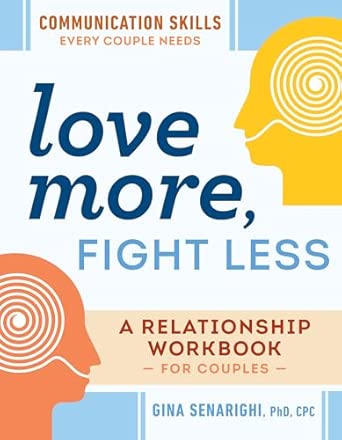
Love More, Fight Less: Communication Skills Every Couple Needs: A Relationship Workbook for Couples
- ✔ Format: Relationship workbook for couples
- ✔ Primary focus: Communication skills
- ✔ Intended audience: Couples
Both books are aimed at couples who want to improve their relationship, but they do not offer interchangeable routes. Gottman and Silver organize advice around observable relationship behaviors and exercises. Hendrix and Hunt focus on emotional needs, childhood experiences, and the dynamics partners may reenact with one another. Choose The Seven Principles if you want a clear, practical starting point. Choose Getting the Love You Want if reflection on long-standing patterns is central to what you hope to change. Neither book should be treated as a replacement for professional help when a relationship involves abuse, coercion, or serious safety concerns.
At a Glance
| Criteria | The Seven Principles for Making Marriage Work by John M. Gottman and Nan Silver | Getting the Love You Want by Harville Hendrix and Helen LaKelly Hunt | Winner |
|---|---|---|---|
| Core approach | Research-based framework built around friendship, conflict management, and shared meaning | Therapy-inspired framework centered on emotional needs and learned relationship patterns | Depends |
| Ease of putting ideas into practice | Clear concepts and actionable practices make it easier to begin | Reflective exercises can be meaningful but ask for more emotional exploration | A |
| Focus on relationship patterns | Emphasizes current interaction habits and relationship strengths | Makes earlier experiences and recurring couple dynamics a central focus | B |
| Best starting point | Strong first choice for couples seeking practical guidance | Better for couples ready to examine why the same conflicts keep returning | A |
| Emotional depth | Moderate; addresses conflict and connection without making personal history the main lens | High; asks readers to explore personal history and unmet needs | B |
| Couples exercises | Structured exercises and assessments support discussion and practice | Exercises encourage dialogue and deeper self-reflection | Tie |
| Value for self-guided use | Strong value for readers wanting tools they can use without a therapist | Good value for readers seeking insight, though some may benefit from guided support | A |
The Seven Principles for Making Marriage Work: A Practical Guide
For couples who want more than a narrow communication prompt, The Seven Principles for Making Marriage Work is the strongest all-around starting point in this group. Its description presents a practical guide to building and maintaining a strong marriage, organized around principles from relationship expert John Gottman. That broad framing gives it an edge over Love More, Fight Less, which is specifically about communication, and over Reconnect, whose description centers on workbook activities rather than a wider guide.The main advantage is scope: readers can approach it as a relationship-building resource rather than choosing a book for one named skill alone. That may suit couples who want a structured way to think about their marriage but are not yet sure which issue deserves attention first. At the same time, the available information does not specify the book’s precise exercises, reading level, or how it handles particular challenges. Couples who want prompts to complete together may prefer Reconnect, whose guided-conversation format is explicit. We rank this first for breadth and clarity of purpose, not because one book can fit every couple or replace tailored counseling.
Pros:
- Described as a practical guide to building and maintaining a strong marriage
- Presents principles attributed to relationship expert John Gottman
- Offers a broader marriage-building focus than the communication-specific option
- Can serve as a starting point when a couple has not chosen one narrow skill to work on
Cons:
- The supplied details do not specify its exercises or how interactive the format is
- Its broad marriage focus may be less direct than a workbook aimed at a particular communication need
Best for: Couples seeking a practical, broad guide to strengthening a marriage through relationship principles.
Not ideal for: Readers who specifically want a workbook with clearly stated guided conversations and exercises, or couples seeking individualized clinical support.
Bottom line: We rank it first for couples who want a practical, wide-angle marriage guide rather than a narrowly focused workbook.
“We rank it first for couples who want a practical, wide-angle marriage guide rather than a narrowly focused workbook.”
Reconnect: A Marriage Counseling Workbook
Reconnect makes the most sense when both partners are ready to participate, not simply read about relationships. It is explicitly described as a marriage counseling workbook, with guided conversations and relationship exercises intended to support a long-lasting relationship. That gives it the clearest hands-on role in the lineup. Compared with The Seven Principles for Making Marriage Work, which offers a wider principle-led guide, Reconnect signals a more active, sit-down-and-work-together format.This structure can help couples who find it difficult to start a constructive discussion without prompts. Its limitation is that the supplied description does not name the exercises, explain their sequence, or identify the specific relationship concerns they address. We therefore cannot say whether its activities suit a particular conflict pattern or level of difficulty. Love More, Fight Less also comes in workbook form, but its stated communication focus is narrower and its exercise details are likewise absent; Reconnect has the stronger case when the priority is a guided couples process rather than communication alone. It is a practical choice for willing partners, but readers wanting a clearly documented topic-by-topic approach should seek more detail before deciding.
Pros:
- Explicitly identified as a marriage counseling workbook
- Includes guided conversations for couples, according to the supplied description
- Provides relationship exercises rather than being described only as reading material
- Its stated aim is to support a long-lasting relationship
Cons:
- The supplied details do not describe the actual exercises or their order
- Specific topics, intended difficulty level, and suitability for particular concerns are not stated
Best for: Couples who want a workbook format with guided conversations and relationship exercises to complete together.
Not ideal for: Readers who prefer a broad explanatory guide, or buyers who need verified details about specific exercises and targeted topics before choosing.
Bottom line: We recommend Reconnect for partners who want a shared workbook process and are comfortable with limited detail about the exact activities.
“We recommend Reconnect for partners who want a shared workbook process and are comfortable with limited detail about the exact activities.”
Love More, Fight Less: Communication Skills Every Couple Needs: A Relationship Workbook for Couples
Where Reconnect is described as a broader marriage counseling workbook, Love More, Fight Less gives couples a more specific reason to choose it: communication skills. Its workbook framing suggests a structured alternative to reading a general marriage guide, and its title makes communication the central concern. That focus may appeal to partners who want to work on how they talk and respond rather than begin with a wide-ranging marriage framework like The Seven Principles for Making Marriage Work.Our confidence in this pick is more limited because the supplied information contains no further details about its contents or format beyond the workbook and communication focus. We cannot confirm which skills it covers, what exercises it includes, or whether its approach is suitable for a particular pattern of conflict. This matters in comparison with Reconnect: both are presented as workbooks, but Reconnect explicitly mentions guided conversations and relationship exercises, giving buyers a clearer picture of the activity they can expect. Choose this title when the communication emphasis itself is the deciding factor; skip it if you need a well-described set of exercises or a broader marriage-building guide.
Pros:
- Its stated focus is communication skills for couples
- Workbook positioning offers a structured alternative to general relationship reading
- A more targeted option than the broad marriage guidance in The Seven Principles
- May suit couples who already know communication is the area they want to address
Cons:
- The supplied product details do not identify specific exercises
- The description provides no further detail about topics or the workbook’s approach
Best for: Couples who want a workbook centered on communication skills and are comfortable with limited information about its specific activities.
Not ideal for: Readers who need to preview the workbook’s exercises or topics, or couples looking for broad marriage guidance rather than a communication-focused title.
Bottom line: We choose it for a communication-first shortlist, while Reconnect is the safer workbook pick when explicit guided activities matter most.
“We choose it for a communication-first shortlist, while Reconnect is the safer workbook pick when explicit guided activities matter most.”
As an Amazon Associate we earn from qualifying purchases.
Key Differences
The central difference is the level and direction of the work. The Seven Principles points couples toward recognizable behaviors: how they build friendship, handle disagreement, and create shared meaning. Its structure helps partners move from reading to trying something specific. That makes it a sensible first purchase for couples who are willing to practice but do not want a book that feels like an extended therapy process.
Getting the Love You Want directs more attention toward the emotional roots of recurring problems. It invites partners to consider how earlier experiences and unmet needs may shape what they expect from each other. That lens can be more revealing when arguments repeat despite attempts to change surface behavior. The tradeoff is that this kind of reflection can feel demanding or difficult to handle alone. For readers who want an accessible set of relationship practices, Gottman and Silver are the better fit; for couples ready to examine underlying patterns, Hendrix and Hunt may offer more depth.
Detailed Comparison
Core approach (major difference)
The Seven Principles frames relationship health through practices involving friendship, conflict, and shared purpose. Getting the Love You Want puts emotional needs and the influence of earlier experiences closer to the center. Neither lens is universally better: A is more behavior-focused, while B is more interpretive. The difference is major because it shapes what readers are asked to do with the book. Choose A to work on how you interact; choose B to investigate why certain dynamics keep appearing.
Ease of putting ideas into practice (The Seven Principles for Making Marriage Work by John M. Gottman and Nan Silver wins — moderate)
A has the advantage for couples who want clear, manageable steps. Its concepts and exercises give partners a direct way to discuss and practice changes. B also includes exercises, but its reflective approach can require more time and emotional readiness before a couple knows what to do differently. This is a moderate-to-major practical gap: A is easier to start on a busy weeknight, while B may suit a couple prepared to slow down and explore difficult questions.
Focus on relationship patterns (Getting the Love You Want by Harville Hendrix and Helen LaKelly Hunt wins — moderate)
B wins for readers who want to connect current conflict to recurring emotional patterns and personal history. A does address relationship dynamics, but its emphasis is more on strengthening present-day habits than interpreting their origins. The advantage is moderate, not a reason to assume B is automatically more effective. It matters most when the same argument keeps returning even after partners try changing how they communicate.
Best starting point (The Seven Principles for Making Marriage Work by John M. Gottman and Nan Silver wins — moderate)
A is the stronger first book for most couples who are unsure what kind of relationship guidance they need. Its practical orientation offers a relatively direct route into shared discussion and action. B is a better starting point when partners already know that surface-level advice is not answering their questions and both want to examine emotional history. The gap is moderate: the best starting book depends on readiness, but A asks less of readers up front.
Emotional depth (Getting the Love You Want by Harville Hendrix and Helen LaKelly Hunt wins — major)
B takes the lead because it asks readers to look closely at unmet needs, learned expectations, and experiences that may influence adult relationships. A can prompt meaningful conversations, but it does not make that degree of personal exploration its main task. The gap is major for couples specifically seeking emotional self-understanding. For readers who want practical change without opening difficult personal material, B’s depth may feel like extra work rather than a benefit.
Couples exercises (minor difference)
Both books give couples ways to work through ideas together, so neither has a clear overall advantage. A’s exercises fit its practical, skills-oriented framework; B’s exercises support reflection and emotional dialogue. The difference is minor at the category level but important in style. Couples who prefer a defined activity may favor A, while those comfortable with open-ended conversation may prefer B.
Value for self-guided use (The Seven Principles for Making Marriage Work by John M. Gottman and Nan Silver wins — moderate)
A is generally the better value for couples who intend to work independently because its practical structure is easier to apply without outside guidance. B can also be worthwhile, especially for readers drawn to its emotional framework, but some of its more personal questions may be easier to explore with a counselor. The difference is moderate. Pay for the deeper reflective route only if that is the work you want to do; otherwise A is the more useful first purchase.
The Seven Principles for Making Marriage Work by John M. Gottman and Nan Silver: Pros and Cons
Pros:
- Practical, organized approach gives couples a clear place to begin.
- Focuses on skills and relationship habits partners can discuss and practice.
- Good fit for self-guided work without requiring a therapy-style process.
- Useful as a shared book for couples who want structured conversations.
Cons:
- Less focused on the origins of recurring emotional patterns.
- May feel too action-oriented for readers seeking deeper personal exploration.
- Does not replace individualized help for serious or entrenched relationship problems.
Getting the Love You Want by Harville Hendrix and Helen LaKelly Hunt: Pros and Cons
Pros:
- Offers a deeper lens on emotional needs and recurring couple dynamics.
- Can help readers reflect on how earlier experiences shape present expectations.
- Exercises encourage candid conversation and self-examination.
- A strong fit for couples who feel stuck repeating the same conflicts.
Cons:
- Requires more emotional readiness and reflection than a skills-first book.
- May be harder to use independently when discussions raise painful issues.
- Less direct for couples who simply want practical habits to try right away.
Who Should Choose What
Choose The Seven Principles for Making Marriage Work by John M. Gottman and Nan Silver if:
- You want practical guidance and specific relationship habits to work on together.
- You are new to relationship counseling books and want an accessible first choice.
- You prefer structured exercises over extended exploration of personal history.
- You plan to read and apply a book without a counselor.
Choose Getting the Love You Want by Harville Hendrix and Helen LaKelly Hunt if:
- The same conflicts keep recurring and you want to explore their emotional roots.
- Both partners are willing to reflect on personal history and unmet needs.
- You want a therapy-inspired approach rather than a primarily skills-focused guide.
- You already have professional support and want ideas for deeper conversations between sessions.
Skip both if: Skip self-help books as the main response if there is abuse, coercion, fear, or an immediate safety concern; seek appropriate professional or emergency support. Also seek a qualified couples counselor if the conflict feels unmanageable or repeated reading and discussion have not helped.
Value for Money
For most couples buying one book to start, The Seven Principles for Making Marriage Work offers the stronger value. Its practical structure makes the ideas easier to discuss and put into use on your own, so readers do not need to be looking for a deeper therapeutic framework to get started. That does not make it a substitute for counseling, but it is a more straightforward self-guided purchase.
Getting the Love You Want is worth choosing instead when its specific focus is what you need: understanding emotional needs and why familiar relationship patterns repeat. Paying for that more reflective approach makes sense if both partners are ready to engage with personal history and difficult feelings. If you are uncertain, start with A; buy B when the central question is not only what to change, but why the same dynamic keeps coming back.
Final Verdict
For most readers comparing these relationship counseling books, choose The Seven Principles for Making Marriage Work. It is the clearer first choice for couples who want an organized, practical way to strengthen their relationship and work on habits together. Its biggest advantage is usability: partners can turn the ideas into shared conversations and actions without beginning with extensive personal exploration.
Choose Getting the Love You Want if you and your partner are ready to examine emotional needs and the history behind recurring dynamics. Its deeper focus is a real advantage for that kind of work, but it is not automatically a better fit for every couple. The deciding factor is whether you want to practice relationship skills or investigate the roots of familiar patterns. If you want skills, buy A; if you want reflection on those roots, buy B. For safety concerns or serious distress, do not rely on either book alone.
Frequently Asked Questions
Which book is better for couples who have never read relationship counseling books?
The Seven Principles for Making Marriage Work is usually the easier first choice because it offers a more direct, practical framework. Getting the Love You Want can still be a good starting point when both partners specifically want to examine emotional patterns and personal history.
Are these books meant to be read together?
Both can support shared reading, but couples do not need to read every page aloud or move at the same pace. Discussing an exercise or idea together can make either book more useful. If a conversation becomes distressing or unproductive, pause rather than treating completion as the goal.
Which book is better when the same argument keeps happening?
Getting the Love You Want is the closer fit if you want to explore the emotional needs and repeating dynamics behind the argument. The Seven Principles is a strong alternative if the immediate goal is to practice different ways of handling conflict and strengthening everyday connection.
Can a relationship counseling book replace couples therapy?
No. A book can offer ideas and exercises, but it cannot assess a couple’s situation or provide the support of a trained professional. Consider couples counseling when problems are severe, persistent, or difficult to discuss safely. In situations involving abuse or coercion, individual safety support is more appropriate than treating joint exercises as the solution.