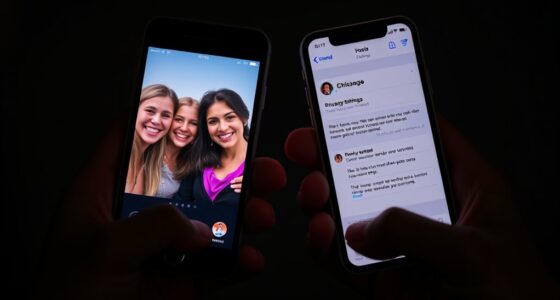

Micro-cultures shape your online world, influencing how you see yourself and others. They create unwritten norms and peer pressures that drive FOMO, making you feel anxious about missing out on events or trends. Nanoships blossom in these environments, often fueled by social comparison and validation. Dating anxiety also stems from these norms, as you feel pressure to appear perfect and meet unspoken expectations. Exploring how these micro-cultures influence your perceptions can help you better navigate your social life.
Key Takeaways
- Micro-cultures shape perceptions of social norms, influencing feelings of FOMO and pressure to conform in online dating contexts.
- Digital norms and peer pressure reinforce the pursuit of nanoships, often amplifying dating anxiety and comparison.
- FOMO stems from social media comparison within micro-cultures, driving individuals to seek validation and fear missing out on trends.
- Conformity to online trends and peer expectations can distort self-image, increasing anxiety about social standing and romantic connections.
- Micro-cultures influence dating behaviors by emphasizing curated online personas, heightening anxiety, and shaping perceptions of success and attractiveness.
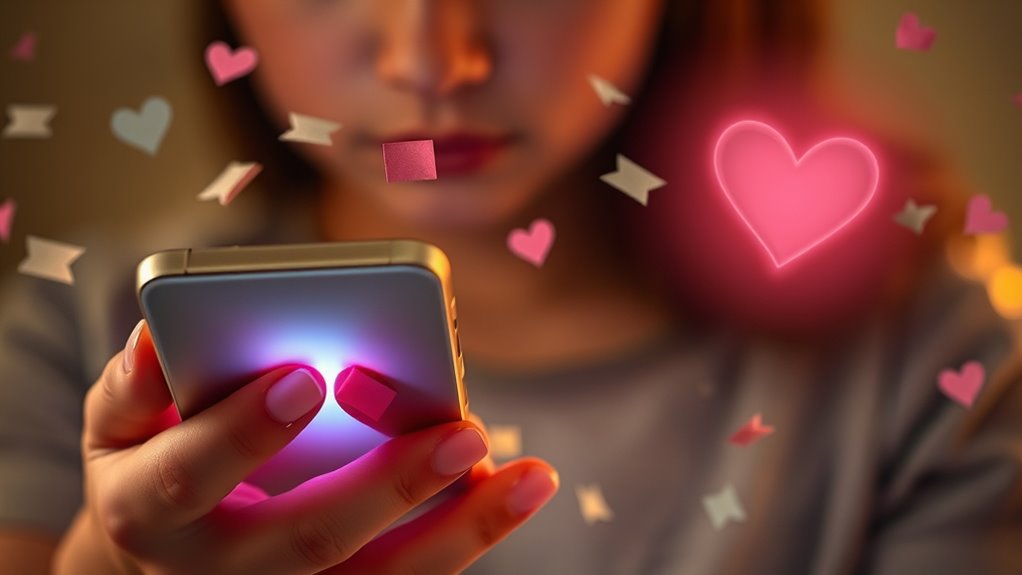
Micro-cultures shape how individuals perceive the world and interact with others within their community. They influence your daily experiences, especially when it comes to social media and online interactions. Digital norms, which are the unwritten rules about how you behave online, play a significant role in shaping your perceptions and actions. You might feel compelled to constantly check your feeds, post updates, or respond quickly to messages because of these norms. Sometimes, these expectations create peer pressure, pushing you to present a certain image or keep up with others’ online lives. This pressure can make you feel anxious or left out, especially when you see friends sharing exciting moments or seemingly perfect relationships. As a result, you may experience FOMO—fear of missing out—which fuels your desire to stay connected and be part of every trending event or conversation.
In your micro-culture, the pressure to conform can be intense. When everyone seems to be participating in the latest online trends or responding in a certain way, it’s easy to feel like you’re falling behind if you don’t keep up. Peer pressure isn’t always overt; it’s often subtle, embedded in the way others comment, like, or share their lives. This environment can distort your perceptions, making you believe that everyone else is happier, more successful, or more loved than you are. It can lead to feelings of inadequacy or anxiety about your own relationships and social standing. You might even start to compare your real-life experiences to curated online personas, which rarely reflect the full story.
In the domain of dating, these micro-cultural influences become even more evident. Digital norms dictate how you approach dating and communicate with potential partners. The pressure to appear perfect online can heighten dating anxiety—fear of rejection, not measuring up, or making the wrong impression. You might feel compelled to craft a certain image, hide your insecurities, or constantly seek validation through likes and comments. Peer pressure can also influence who you date or how openly you share your feelings, often pushing you toward conforming to what’s considered acceptable or popular within your micro-culture. This environment can make dating feel like a high-stakes game, where you’re always trying to meet unspoken expectations, which only deepens your anxiety and fear of missing out on meaningful connections.

Online Dating: Top Online Dating Mistakes Women Are Cringing at, Leaving Your Inbox Empty! (Dating Advice, Online Dating, Dating, Relationships, Self-confidence, Self-esteem, Romance)
As an affiliate, we earn on qualifying purchases.
As an affiliate, we earn on qualifying purchases.
Frequently Asked Questions
How Do Micro-Cultures Differ Across Various Age Groups?
You’ll notice micro-cultures differ across age groups through generation gaps and language differences. Younger people often embrace digital slang and social media trends, while older groups stick to traditional communication styles. These cultural nuances shape your social interactions, values, and dating behaviors. Understanding these differences helps you navigate relationships better, as each age group’s unique micro-culture influences their approach to connection, communication, and social expectations.
What Role Does Social Media Play in Fostering FOMO?
You might think social media is just for fun, but it’s actually fueling your FOMO. It creates virtual peer pressure, making you compare your life to everyone’s highlight reel. You’re encouraged to curate a perfect self-presentation, which only deepens your anxiety about missing out. Ironically, the more you scroll, the more you feel left out, even when you’re surrounded by digital “friends.”
Can Nanoships Develop Into Long-Term Relationships?
Nanoships can develop into long-term relationships if both partners commit to building trust and open communication. While nanoship commitment might be initially casual, consistent effort and shared values can foster relationship longevity. You should focus on understanding each other’s needs and setting clear expectations. With mutual dedication, what starts as a nanoship has the potential to grow into a meaningful, lasting partnership.
How Does Dating Anxiety Vary Between Different Micro-Cultures?
You’ll find that dating anxiety varies by micro-culture because of different cultural norms and communication styles. In some cultures, directness and openness are encouraged, which can ease anxiety, while others value indirect communication, increasing uncertainty. You might feel more comfortable in cultures that promote individual expression, but in more reserved communities, you could experience heightened anxiety due to fear of miscommunication or social judgment.
Are There Specific Micro-Cultures More Prone to FOMO?
Did you know that teenage tribes and professional cliques are more prone to FOMO? You’re more likely to experience it if you’re part of groups that emphasize social status and constant connectivity. These micro-cultures often foster fear of missing out because of peer pressure and social comparisons. So, if you’re in such a group, you might find yourself obsessively checking social media, fearing you’re missing out on something better.

Social Media Content Planner: Youtuber Planner
As an affiliate, we earn on qualifying purchases.
As an affiliate, we earn on qualifying purchases.
Conclusion
As you navigate this digital maze, remember that micro-cultures are like tiny constellations guiding your way. FOMO, nanoships, and dating anxiety are just shadows cast by the flickering lights of your online world. Embrace your unique constellation, knowing that these influences are fleeting stars in your vast universe. Trust your inner compass, and let your authentic self shine brighter than any digital illusion. Your story is yours to write—boldly and without fear.
As an affiliate, we earn on qualifying purchases.

The DarkMom Consortium Presents: The Unofficial Gamer's Guide to Star Trek Online: Volume One: Character Creation
As an affiliate, we earn on qualifying purchases.
As an affiliate, we earn on qualifying purchases.