

Relationship communication tools come in many shapes — structured workbooks, daily practice guides, psychoeducational references, and skill-based frameworks — and the right one depends on how you and your partner actually learn. The Mechanism Between Us earns my best overall pick for its diagnostic approach: it helps couples identify their specific relational pattern before prescribing fixes, which makes the guidance land with more precision than generic advice. Nonviolent Communication remains the strongest single framework if you want a transferable language skill rather than a couples-only program, and Love More, Fight Less is the most accessible entry point for couples who resist anything that feels like homework. The core tradeoff in this category is depth versus doability: the richest programs demand weeks of consistent effort, while the lighter guides get used more often but dig less deep. Another tension is whether a tool targets conflict resolution or day-to-day connection, since few do both equally well. Read on for the full breakdown of all ten tools and who each one suits best.

Get gifts for the two of you delivered free with Prime
- Fast, free delivery on millions of items
- Prime Video, Amazon Music and more included
- Member-only deals all year
Key Takeaways
- The top picks separated themselves by matching the tool to a diagnosis rather than offering universal advice — The Mechanism Between Us and The Couples Therapy Flip Chart both start by identifying your couple type or disconnection pattern before prescribing changes.
- Program length emerged as the biggest practical differentiator: 8- and 12-week structured workbooks (like the 8-Week Couples Therapy Workbook and Couples Communication Workbook) deliver deeper change but see more abandonment, while short daily-format guides get finished more often.
- Nonviolent Communication is the only pick whose skills transfer beyond the relationship — to workplaces, parenting, and friendships — making it the best value per page despite not being couples-specific.
- Tools that focus on what to say in the moment (Communicate Your Feelings, Love More, Fight Less) suit couples in active conflict, while habit-building tools (Emotional Intimacy for Couples) suit couples drifting apart without fighting.
- Several titles overlap heavily in structure; the meaningful difference is tone — clinical, therapeutic workbooks fit couples serious about repair, while conversational guides fit couples who feel awkward with therapy-adjacent language.
| The Mechanism Between Us |  | Best for Diagnosing Your Couple Type | Format: Paperback / eBook | Content Type: Book with integrated relationship workbook | Core Framework: Five couple types and their hidden patterns | VIEW LATEST PRICE | See Our Full Breakdown |
| The Couples Therapy Flip Chart |  | Best Therapist-Grade Visual Tool | Format: Spiral-bound flip chart | Content Type: Psychoeducational discussion tool | Designed For: Couples and therapy professionals | VIEW LATEST PRICE | See Our Full Breakdown |
| Emotional Intimacy for Couples |  | Best for Rebuilding Closeness | Format: Paperback / eBook | Content Type: Skills and habits guide | Focus Areas: Emotional intimacy, communication, trust-building | VIEW LATEST PRICE | See Our Full Breakdown |
| 8-Week Couples Therapy Workbook |  | Best Structured Program | Format: Paperback workbook | Program Length: 8 weeks | Content Type: Structured exercises and strategies | VIEW LATEST PRICE | See Our Full Breakdown |
| Nonviolent Communication: A Language of Life |  | Best Foundational Classic | Format: Paperback / eBook / Audiobook | Content Type: Communication methodology book | Core Framework: Observation, feeling, need, request (NVC) | VIEW LATEST PRICE | See Our Full Breakdown |
| Communicate Your Feelings (Without Starting a Fight): What to Say and What Not to Say to Your Partner |  | Best for Defusing Hot-Button Conversations | Format: Paperback / eBook | Type: Advice and scripting guide (not a workbook) | Primary focus: Conflict-free emotional expression | VIEW LATEST PRICE | See Our Full Breakdown |
| Relationship Workbook for Couples: 8-Week Program and Proven Strategies to Rebuild Trust, Resolve Conflict, Improve Communication, and Rekindle Intimacy |  | Best for Deep Repair Work | Format: Workbook, paperback / eBook | Program length: 8 weeks | Primary focus: Trust rebuilding, conflict, communication, intimacy | VIEW LATEST PRICE | See Our Full Breakdown |
| Practical At-Home Couples Therapy Workbook: Guided Relationship Toolkit for Honest Communication, Restored Intimacy, and Conflict Repair |  | Best Flexible Toolkit | Format: Workbook, paperback / eBook | Program length: Self-paced, modular | Primary focus: Honest communication, intimacy, conflict repair | VIEW LATEST PRICE | See Our Full Breakdown |
| Couples Communication Workbook: 20 Minutes a Day for 12 Days to Improve Listening, Resolve Conflicts, and Strengthen Your Relationship |  | Best Low-Commitment Starter | Format: Workbook, paperback / eBook | Program length: 12 days | Daily time: 20 minutes per day | VIEW LATEST PRICE | See Our Full Breakdown |
| Love More, Fight Less: Communication Skills Every Couple Needs | 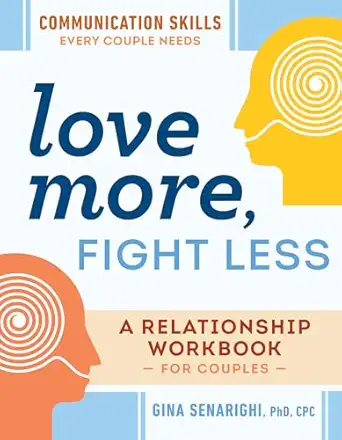 | Best Mainstream All-Rounder | Format: Paperback / eBook / audiobook | Publisher: Major trade publisher (Ten Speed Press imprint) | Type: Communication skills workbook | VIEW LATEST PRICE | See Our Full Breakdown |
| relationship communication tool | Format | Content Type | Focus Areas | Includes Exercises |
|---|---|---|---|---|
| The Mechanism Between Us | Paperback / eBook | Book with integrated relationship workbook | Communication, trust, conflict resolution, reconnection | Yes — workbook section |
| The Couples Therapy Flip Chart | Spiral-bound flip chart | Psychoeducational discussion tool | Disconnection patterns, conflict management, partnership building | Guided discussion prompts |
| Emotional Intimacy for Couples | Paperback / eBook | Skills and habits guide | Emotional intimacy, communication, trust-building | Practical tools and habits |
| 8-Week Couples Therapy Workboo | Paperback workbook | Structured exercises and strategies | Connection, communication, conflict resolution | Yes — weekly step-by-step |
| Nonviolent Communication: A La | Paperback / eBook / Audiobook | Communication methodology book | Compassionate communication, empathy, conflict de-escalation | Practice examples and dialogues |
| Communicate Your Feelings | Paperback / eBook | — | — | — |
| Relationship Workbook for Coup | Workbook, paperback / eBook | — | — | — |
| Practical At-Home Couples Ther | Workbook, paperback / eBook | — | — | — |
| Couples Communication Workbook | Workbook, paperback / eBook | — | — | — |
| Love More | Paperback / eBook / audiobook | — | — | — |
More Details on Our Top Picks
The Mechanism Between Us
This pick stands out for doing something none of the workbooks in this roundup attempt: categorizing couples into five distinct types and tailoring advice to each pattern. Compared with the 8-Week Couples Therapy Workbook, which treats all readers with the same weekly sequence, this book helps partners figure out why their conflicts repeat before assigning exercises. The built-in companion workbook adds a hands-on layer that pure-theory books lack. The tradeoff is pace: results depend on couples honestly mapping their own dynamics, which takes patience and effort. This option makes the most sense for analytical couples who want a framework rather than a generic checklist of communication tips.
Pros:- Five-type framework makes advice feel tailored rather than generic
- Included workbook converts insight into practice
- Addresses trust-building and conflict resolution alongside communication
- Helps couples name hidden patterns that fuel recurring arguments
Cons:- Requires real time and effort before results appear
- Typology approach may feel overly clinical for casual readers
- Less useful for couples in acute crisis who need immediate de-escalation tactics
Best for: Couples stuck in repeating conflict cycles who want a diagnostic framework before doing exercises
Not ideal for: Couples wanting quick daily exercises — the typology-first approach demands reflection before any payoff
- Format:Paperback / eBook
- Content Type:Book with integrated relationship workbook
- Core Framework:Five couple types and their hidden patterns
- Focus Areas:Communication, trust, conflict resolution, reconnection
- Includes Exercises:Yes — workbook section
- Reading Approach:Self-paced with reflective exercises
- Intended Audience:Couples seeking pattern-level insight
Our verdict“Choose this if you and your partner want to understand your recurring dynamic first and fix it second.”
The Couples Therapy Flip Chart
Every other entry here is a book you read privately; this one is a flip chart built for conversation. Modeled on the psychoeducational tools therapists use in session, it turns abstract concepts like patterns of disconnection into pages you can literally point at together. Compared with Nonviolent Communication, which teaches a broad personal skill, this tool is narrower and more situational — designed for guided dialogue in the moment rather than deep study. The tradeoff is real: without some facilitation instinct, couples may leaf through it without knowing where to start. This pick makes the most sense for pairs who learn visually and want a structured, screen-free discussion aid rather than another book on the nightstand.
Pros:- Visual format makes complex relationship concepts immediately discussable
- Grounded in professional psychoeducational practice
- Works equally well for couples at home or therapists in session
- Zero reading commitment — open it and start talking
Cons:- May require outside guidance or facilitation skills to use effectively
- Less content depth than a full book or workbook
- Physically less portable and less private than a paperback
Best for: Couples and counselors who want a tangible, visual discussion aid for sessions or structured talks
Not ideal for: Self-directed readers who prefer narrative depth — it’s a facilitation tool, not a full communication course
- Format:Spiral-bound flip chart
- Content Type:Psychoeducational discussion tool
- Designed For:Couples and therapy professionals
- Focus Areas:Disconnection patterns, conflict management, partnership building
- Includes Exercises:Guided discussion prompts
- Learning Style:Visual and interactive
Our verdict“Buy this if you want a therapist-style visual aid that gets you talking instead of reading.”
Emotional Intimacy for Couples
Where the 8-Week Couples Therapy Workbook is about structure and schedules, this book targets something softer: emotional intimacy as the engine of good communication. The argument is that listening skills fail when the underlying connection is thin, so it pairs trust-building habits with conversation techniques rather than treating communication as a standalone skill. Compared with The Mechanism Between Us, it skips diagnostic frameworks entirely and goes straight to daily habits, which makes it friendlier for couples who don’t want to analyze themselves. The tradeoff is that it won’t resolve entrenched conflict patterns — it assumes a relationship that’s drifting, not one in active crisis. This option suits couples who still like each other but have stopped feeling close.
Pros:- Connects communication skills directly to underlying emotional closeness
- Habit-based approach is easy to adopt without a rigid schedule
- Trust-building focus addresses root causes, not just surface arguments
- Accessible tone for couples new to relationship books
Cons:- Lighter on conflict-resolution technique than workbook-based rivals
- Thin track record with few reader reviews to validate the approach
- Content depth on specific skills is limited
Best for: Couples in stable relationships who feel emotionally distant and want habits, not homework
Not ideal for: Couples in high-conflict situations — it lacks the de-escalation and repair tools that crisis-stage pairs need
- Format:Paperback / eBook
- Content Type:Skills and habits guide
- Focus Areas:Emotional intimacy, communication, trust-building
- Includes Exercises:Practical tools and habits
- Time Commitment:Self-paced
- Intended Audience:Couples seeking deeper connection
Our verdict“Pick this if your fights are rare but your connection feels thin and you want gentle daily habits to fix that.”
8-Week Couples Therapy Workbook
This is the roundup’s clearest answer to the question what do we actually do each week? The eight-week progressive structure turns vague intentions into a calendar, moving from connection exercises toward communication and conflict skills. Compared with Nonviolent Communication, which teaches a philosophy you must self-apply, this workbook removes decision fatigue — every week has a defined job. The tradeoff is commitment: pairs who miss weeks lose the thread, and the structure can feel like more obligations for already-busy couples, a drawback it shares with the similarly programmed Relationship Workbook for Couples. This pick makes the most sense for couples who do best with accountability and a clear finish line rather than open-ended reading.
Pros:- Eight-week schedule eliminates guesswork about what to work on
- Exercises progress logically from connection to conflict skills
- Therapy-derived strategies without the therapy price tag
- Step-by-step format suits couples who need external structure
Cons:- Requires sustained eight-week commitment from both partners
- Pace is fixed — faster or slower couples may feel mismatched
- Few reader reviews to confirm long-term results
Best for: Disciplined couples who want a dated, week-by-week program with a defined endpoint
Not ideal for: Couples with unpredictable schedules or low follow-through — the program collapses if weeks get skipped
- Format:Paperback workbook
- Program Length:8 weeks
- Content Type:Structured exercises and strategies
- Focus Areas:Connection, communication, conflict resolution
- Includes Exercises:Yes — weekly step-by-step
- Time Commitment:Weekly sessions over two months
- Intended Audience:Couples wanting a guided program
Our verdict“Choose this if you and your partner commit to programs better than you commit to open-ended reading.”
Nonviolent Communication: A Language of Life
This is the only entry here with decades of track record, translations, and a place on therapists’ shelves — the foundational text of compassionate communication. Its observation-feeling-need-request method applies far beyond your marriage, covering workplace and family friction too, which no couple-specific workbook can claim. The tradeoff is fit: compared with Love More, Fight Less or the Couples Communication Workbook, it wasn’t written for couples, so partners must translate the concepts into their own arguments themselves. Some readers also find the language formula stilted in real fights. This pick makes the most sense for readers who want to master a lifelong communication skill at the root level, not patch one relationship.
Pros:- Decades of validation and widespread professional endorsement
- Method applies to work, family, and friendships beyond romance
- Teaches root-level empathy skills, not surface-level scripts
- Free library of supporting workshops and translations exists
Cons:- Not couple-specific — requires self-directed translation to marital conflict
- The four-step formula can feel mechanical mid-argument
- Concepts take sustained practice to internalize
Best for: Readers who want a proven, universal communication framework that improves all relationships, not just one
Not ideal for: Couples wanting ready-made scripts for partner arguments — this teaches principles you must adapt yourself
- Format:Paperback / eBook / Audiobook
- Content Type:Communication methodology book
- Core Framework:Observation, feeling, need, request (NVC)
- Focus Areas:Compassionate communication, empathy, conflict de-escalation
- Scope:Personal and professional relationships
- Includes Exercises:Practice examples and dialogues
- Track Record:Long-established, widely translated classic
- Learning Curve:Moderate — requires ongoing practice
Our verdict“Pick this if you want to change how you communicate everywhere, and accept that couples-specific scripts aren’t included.”
Communicate Your Feelings (Without Starting a Fight): What to Say and What Not to Say to Your Partner
Where most entries in this lineup are workbooks, this one zero in on a single, high-stakes moment: saying what you feel without triggering a blowup. Its script-based approach — literally what to say and what not to say — makes it the most immediately actionable pick here for couples stuck in repetitive arguments. Compared with Love More, Fight Less, which spreads its attention across many skills, this book is narrower and faster to apply mid-conflict. The tradeoff is depth: it won’t guide you through weeks of structured rebuilding the way the 8-Week Relationship Workbook for Couples does, and readers wanting exercises will find fewer of them. It also lacks verified reader feedback, so expect less social proof than better-known titles.
Pros:- Script-based advice you can use mid-conversation
- Tight focus on conflict prevention rather than general theory
- Emphasizes emotional wellness alongside technique
- Quick to read compared with full workbook programs
Cons:- Narrower scope than multi-week workbook rivals
- Fewer hands-on exercises than comparable titles
- Little verified reader feedback available
Best for: Couples who keep having the same fight and need ready-made phrasing to defuse arguments quickly
Not ideal for: Couples seeking a long-term structured program with weekly exercises — this is a reference guide, not a curriculum
- Format:Paperback / eBook
- Type:Advice and scripting guide (not a workbook)
- Primary focus:Conflict-free emotional expression
- Approach:What-to-say / what-not-to-say scripts
- Time commitment:Self-paced, short read
- Best pairing:Works well alongside a structured workbook
- Reader level:Beginner-friendly
Our verdict“Buy this if you need better words for the fights you’re already having, not a months-long relationship overhaul.”
Relationship Workbook for Couples: 8-Week Program and Proven Strategies to Rebuild Trust, Resolve Conflict, Improve Communication, and Rekindle Intimacy
This is the heavyweight of the batch. Its eight-week structured program covers trust rebuilding, conflict resolution, communication, and intimacy — a wider repair arc than the Practical At-Home Couples Therapy Workbook, which leans more on standalone exercises. This pick makes the most sense for couples recovering from a serious rupture, such as a breach of trust, because the sequencing gives damaged relationships a gradual path back. The tradeoff is time and emotional stamina: two months of guided work demands real commitment, and compared with the Couples Communication Workbook‘s 12-day sprint, some pairs will abandon it halfway. Content descriptions are also thin, so buyers are trusting the framework sight-unseen.
Pros:- Longest and most structured program in this batch
- Addresses trust repair, not just communication drills
- Sequenced weekly arc that builds progressively
- Combines exercises across four relationship dimensions
Cons:- Two-month commitment is too much for casual users
- May feel heavy for couples with only mild friction
Best for: Couples recovering from a major breach of trust who can commit to two months of structured work
Not ideal for: Busy couples or those wanting a quick communication tune-up — the length will feel like a burden, not a benefit
- Format:Workbook, paperback / eBook
- Program length:8 weeks
- Primary focus:Trust rebuilding, conflict, communication, intimacy
- Structure:Weekly sequenced exercises
- Intensity:High — sustained commitment required
- Reader level:Intermediate to advanced repair work
- Comparable to:8-Week Couples Therapy Workbook (same program length)
Our verdict“This is the pick when the relationship needs rebuilding, not just better conversation habits.”
Practical At-Home Couples Therapy Workbook: Guided Relationship Toolkit for Honest Communication, Restored Intimacy, and Conflict Repair
Positioned between the rigid 8-Week Relationship Workbook and the ultra-short Couples Communication Workbook, this option stands out for its pick-and-choose toolkit format. Rather than forcing a fixed calendar, it lets couples pull out exercises when a specific issue surfaces — honesty gaps, intimacy drift, or a fresh conflict. That flexibility suits couples with unpredictable schedules who can’t commit to daily practice. The cost is coherence: without a prescribed sequence, progress depends heavily on the couple’s own discipline and honesty, and loosely organized material can stall without external structure. Publishing details like page count are thin too, so it’s harder to gauge depth before buying.
Pros:- Flexible, on-demand exercise format
- Covers communication, intimacy, and conflict repair in one place
- Therapy-informed framing without the therapist’s price
- Works for both ongoing maintenance and acute issues
Cons:- Lacks the guided sequencing of timed programs
- Results depend heavily on both partners’ honesty and follow-through
- Minimal published detail on content volume
Best for: Couples with irregular schedules who want therapy-style exercises they can use on demand
Not ideal for: Couples who need external structure and a clear roadmap — self-directed toolkits are easy to shelve unfinished
- Format:Workbook, paperback / eBook
- Program length:Self-paced, modular
- Primary focus:Honest communication, intimacy, conflict repair
- Structure:Toolkit of standalone exercises
- Intensity:Moderate — scales with usage
- Reader level:All levels
- Setting:Designed for at-home use
Our verdict“Choose this if you want a grab-when-needed toolkit rather than a curriculum with deadlines.”
Couples Communication Workbook: 20 Minutes a Day for 12 Days to Improve Listening, Resolve Conflicts, and Strengthen Your Relationship
The 20-minutes-a-day, 12-day format is the smartest commitment design in this roundup. It lowers the barrier far below the 8-Week Relationship Workbook and pairs daily habit-building with a clear finish line — a structure that suits skeptical partners who would resist a two-month program. Compared with Communicate Your Feelings (Without Starting a Fight), it trades script-level specificity for listening skills and conflict habits practiced together. The obvious tradeoff: twelve short sessions can’t touch deep trust repair, so couples with serious damage should look to the longer workbooks instead. With limited ratings and little pricing visibility, buyers are also gambling a bit on fit.
Pros:- Very low daily time commitment (20 minutes)
- Clear 12-day endpoint builds completion momentum
- Strong emphasis on listening, an often-skipped skill
- Easiest way to get a reluctant partner on board
Cons:- Too brief for serious relationship repair
- Sparse review and pricing data available
Best for: Hesitant or time-pressed couples who want a short, finishable program to build momentum
Not ideal for: Couples dealing with deep-seated conflict or trust wounds — 12 days of light exercises won’t reach them
- Format:Workbook, paperback / eBook
- Program length:12 days
- Daily time:20 minutes per day
- Primary focus:Listening, conflict resolution, connection
- Structure:Daily sequenced exercises
- Intensity:Low — designed for accessibility
- Reader level:Beginner
Our verdict“The best first step for couples who’ve never done relationship work and want a program they’ll actually finish.”
Love More, Fight Less: Communication Skills Every Couple Needs
Backed by a major publisher, this is the most polished and widely circulated title in this half of the roundup. Its broad skill-based curriculum covers the communication fundamentals every couple encounters, which makes it a safer default than the niche Communicate Your Feelings — but that breadth is also its limitation: it goes wider than that book’s conflict scripts yet shallower than the 8-Week Relationship Workbook‘s repair arc. Couples wanting a trusted, well-edited starting point will find the production quality and mainstream credibility reassuring. The catch is engagement: like most workbooks, it only pays off if both partners actually do the exercises, and it doesn’t specialize enough for couples in crisis.
Pros:- Professional editing and mainstream publisher backing
- Broad coverage of core couple communication skills
- Balanced blend of insight and practical exercises
- Accessible tone for couples new to relationship books
Cons:- Generalist scope means less depth on any single issue
- Requires genuine effort from both partners to produce results
Best for: Couples wanting a credible, general-purpose communication workbook from an established publisher
Not ideal for: Couples in acute crisis who need targeted repair material — this generalist approach may feel too gentle
- Format:Paperback / eBook / audiobook
- Publisher:Major trade publisher (Ten Speed Press imprint)
- Type:Communication skills workbook
- Primary focus:Conflict reduction and connection skills
- Structure:Skills-based chapters with exercises
- Time commitment:Self-paced
- Reader level:Beginner to intermediate
- Credibility:Established title with broad distribution
Our verdict“A dependable default pick for couples building communication skills — just don’t expect specialized crisis repair.”

How We Picked
I evaluated each tool against five buyer-relevant criteria. First, actionability: does the tool give concrete phrases, exercises, or scripts a couple can use that same week, or does it stay theoretical? Second, time commitment and structure: I noted the required pace — daily, weekly, or open-ended — because the best program abandoned after week two helps no one. Third, suitability for different relationship states: a couple in frequent conflict needs different tools than a couple who has drifted into polite distance, and I flagged which state each product serves. Fourth, accessibility of tone: whether the language invites a skeptical partner in or makes them feel lectured. Finally, value: price relative to depth, reusability, and whether the material stands up to repeat visits.
The ranking logic follows a simple hierarchy: tools that diagnose before prescribing rank highest because personalized guidance consistently outperforms generic exercises. Structured programs rank above loose collections of tips for couples serious about change, but I placed genuinely completable short programs above ambitious ones likely to be abandoned. Single-framework books that build a lifelong skill earn high placement even without couple-specific exercises, while narrowly targeted or derivative titles fill supporting roles for specific buyer situations.
| relationship communication tool | Format | Content Type | Focus Areas | Includes Exercises |
|---|---|---|---|---|
| The Mechanism Between Us | Paperback / eBook | Book with integrated relationship workbook | Communication, trust, conflict resolution, reconnection | Yes — workbook section |
| The Couples Therapy Flip Chart | Spiral-bound flip chart | Psychoeducational discussion tool | Disconnection patterns, conflict management, partnership building | Guided discussion prompts |
| Emotional Intimacy for Couples | Paperback / eBook | Skills and habits guide | Emotional intimacy, communication, trust-building | Practical tools and habits |
| 8-Week Couples Therapy Workboo | Paperback workbook | Structured exercises and strategies | Connection, communication, conflict resolution | Yes — weekly step-by-step |
| Nonviolent Communication: A La | Paperback / eBook / Audiobook | Communication methodology book | Compassionate communication, empathy, conflict de-escalation | Practice examples and dialogues |
| Communicate Your Feelings | Paperback / eBook | — | — | — |
| Relationship Workbook for Coup | Workbook, paperback / eBook | — | — | — |
| Practical At-Home Couples Ther | Workbook, paperback / eBook | — | — | — |
| Couples Communication Workbook | Workbook, paperback / eBook | — | — | — |
| Love More | Paperback / eBook / audiobook | — | — | — |
Factors to Consider When Choosing Relationship Communication Tools
Before choosing a specific title, it helps to understand what actually separates a tool that changes how you communicate from one that sits on a nightstand unfinished. These are the factors I weighed — and the common mistakes I saw buyers make repeatedly.
Diagnose Your Problem Before Buying a Solution
The single most common mistake is buying a conflict-resolution tool when the real issue is emotional distance, or vice versa. Couples who argue frequently need scripts, de-escalation techniques, and repair strategies — the kind of in-the-moment language Communicate Your Feelings (Without Starting a Fight) and Love More, Fight Less teach. Couples who rarely fight but feel like roommates need intimacy-building habits and vulnerability exercises instead, which is a completely different skill set. If you are unsure which category you fall into, a diagnostic-first tool like The Mechanism Between Us or the Couples Therapy Flip Chart saves you from buying three books that each solve a third of the problem. Ask yourselves honestly: when things go wrong, do we fight, or do we go quiet? The answer should drive the purchase more than any review score.
Match the Time Commitment to Your Real Habits
An eight-week program only works if you will actually do eight weeks, and completion rates for structured couples workbooks are famously low. Be realistic: if you and your partner struggle to protect twenty minutes together, a 12-day, 20-minutes-a-day format will serve you far better than a dense workbook demanding an hour of joint reflection each week. The Couples Communication Workbook earns its place precisely because its daily format fits into existing routines rather than competing with them. A related trap is buying the longest, most thorough option assuming depth equals results — depth only converts to results through repetition. A shorter tool you complete twice beats a longer one you abandon, and you can always graduate to a deeper program later once the habit exists.
Consider Your Partner’s Willingness Level
Many of these tools require two participants, and buying a therapy-adjacent workbook for a reluctant partner often backfires — it can feel like an accusation wrapped in a book cover. If your partner is skeptical, clinical framing like psychoeducational or therapy workbook on the cover may create resistance before page one. In that situation, a conversational, low-pressure guide such as Love More, Fight Less is easier to introduce casually, and skill-based books like Nonviolent Communication let one partner practice independently and model the behavior. One partner changing their communication patterns genuinely shifts the dynamic, so solo-friendly tools are undervalued. If both partners are motivated and actively seeking repair, the more demanding therapeutic workbooks become viable and worth their higher commitment.
Framework Versus Exercises — Know Which You Learn From
Some people internalize a framework and apply it everywhere; others need repeated written exercises until a behavior becomes automatic. Framework books like Nonviolent Communication teach a four-step language you can use at work, with kids, and with your partner — but they require you to do the translating yourself. Exercise-driven workbooks like the Practical At-Home Couples Therapy Workbook hand you the prompts, which lowers the cognitive load but produces skills tied to the specific situations practiced. Neither approach is superior; it depends on whether you learn principles or habits. If past self-improvement attempts stalled because you understood the concept but never practiced it, choose exercises. If you found workbooks tedious but remember concepts easily, choose the framework.
When a Book Is Not Enough
A written tool can help with communication patterns, but there are situations where self-guided material is the wrong instrument entirely. If your relationship involves untreated addiction, ongoing betrayal, contempt that pervades everyday interactions, or any form of abuse, a workbook will not substitute for a licensed couples therapist, and delay can make things worse. Books work best for couples with goodwill intact who lack skills — not couples where trust in the process itself has collapsed. A reasonable hybrid approach: use a therapist for the ruptures and a structured workbook like the 8-Week Couples Therapy Workbook for the between-session practice that makes therapy stick. Some couples also use a flip chart or workbook as a low-cost first step to test willingness before investing in therapy, which is a legitimate use case — just set a timeframe for evaluating whether it is working rather than drifting indefinitely.
Frequently Asked Questions
Can a workbook or book really improve communication, or do we need actual therapy?
For couples whose core problem is missing skills — poor listening, criticism habits, avoidance — a well-structured tool can produce genuine change, because these are learnable behaviors that respond to practice. Research on guided self-help for couples shows meaningful improvement for mild to moderate relationship dissatisfaction, especially when both partners engage. The honest limit is that a book cannot read your dynamic, notice what you cannot see, or interrupt a destructive cycle in real time the way a trained therapist can. If there has been infidelity, addiction, or a long-standing pattern of contempt, self-guided tools tend to plateau early. A practical middle path is starting with a structured workbook for six to eight weeks and treating lack of progress as a signal to bring in a professional rather than buying another book.
What if my partner won’t do a couples workbook with me?
This is one of the most common situations, and the good news is that roughly half the tools in this roundup work for a solo practitioner. Framework-based books like Nonviolent Communication and skill guides like Love More, Fight Less can be read and practiced by one partner, and communication dynamics measurably shift when one person stops criticizing, starts reflecting, and changes how conflict unfolds. Solo practice also removes the resistance problem — a reluctant partner who feels pressured into homework often digs in harder. What I would avoid is presenting the workbook itself as evidence the relationship needs work, which converts a tool into an accusation. Let visible changes in your own behavior open the door instead; many initially reluctant partners join in once the exercises stop feeling like a demand.
Is an 8-week program better than a shorter 12-day format?
Depth almost always favors the longer program — more weeks mean more repetition, more practice scenarios, and more time for insights to settle into actual behavior change. But effectiveness is depth multiplied by completion, and longer programs get abandoned at much higher rates. If your shared calendar is already a source of stress, the 12-day, 20-minute format in the Couples Communication Workbook is more likely to be finished and produces a habit you can extend afterward. The 8-week programs in this lineup make more sense for couples who have already demonstrated they can sustain a joint routine, or who are working through a specific rupture that needs sustained attention. There is no shame in starting short and graduating to a longer program once the nightly practice habit exists — sequencing beats ambition.
Do we need a couples-specific book, or is a general communication framework like Nonviolent Communication enough?
It depends on whether your struggles are couple-specific or global. If you communicate reasonably well at work and with friends but fall into old patterns only with your partner, a couples-specific tool that addresses intimate dynamics — triggers, repair after conflict, vulnerability — will target the actual problem. If you notice the same communication failures everywhere, a general framework like Nonviolent Communication offers better leverage, because you learn one system and apply it across every relationship. General frameworks also have staying power: NVC’s four-step process remains useful for decades, while workbook exercises tend to be completed once. Many couples in this roundup’s audience end up pairing one of each — a framework book for the underlying skill and a couples workbook for the guided practice — which is a legitimate strategy rather than overbuying.
How do we pick between workbooks that all promise better communication and trust?
Ignore the subtitle promises — nearly every title in this category promises communication, trust, and conflict resolution, and those words tell you almost nothing about fit. Instead, check three things: the time structure, the method, and the tone. Time structure tells you whether completion is realistic for your schedule; method tells you whether it uses diagnostic questionnaires, scripted exercises, reflective prompts, or education, which suit different learning styles; tone tells you whether a skeptical partner will engage. A five-minute preview of the first chapter is worth more than a hundred reviews, because you will immediately sense whether the voice invites you in or lectures you. Finally, pick the tool that matches your current problem — conflict, distance, or rebuild after a rupture — rather than the one with the most impressive table of contents.
Conclusion
After comparing all ten tools, the decision comes down to your situation rather than a single winner for everyone. Best overall goes to The Mechanism Between Us, because identifying your couple type before prescribing fixes makes every subsequent exercise more relevant — it is the strongest choice for couples who want real change, not just tips. Best value is Nonviolent Communication: for the price of a paperback you gain a lifelong communication framework that extends far beyond your relationship. Best for beginners is Love More, Fight Less, whose approachable tone and low commitment suit couples new to relationship work or partners wary of anything therapy-flavored. Best premium-style pick — the deepest, most therapist-adjacent option — is The Couples Therapy Flip Chart, built for couples serious about understanding their disconnection patterns. For specific needs: choose the Couples Communication Workbook if you need a completable short program, Communicate Your Feelings (Without Starting a Fight) if conflict is your daily reality, and Emotional Intimacy for Couples if quiet distance is the problem rather than fighting. Whatever you choose, commit to actually finishing it — the difference between these tools is far smaller than the difference between a tool used and a tool abandoned.
Halloween Picks
halloween
As an affiliate, we earn on qualifying purchases.